
Johnston County is a county located in the U.S. state of Oklahoma. As of the 2020 census,the population was 10,272. Its county seat is Tishomingo. It was established at statehood on November 16,1907,and named for Douglas H. Johnston,a governor of the Chickasaw Nation.
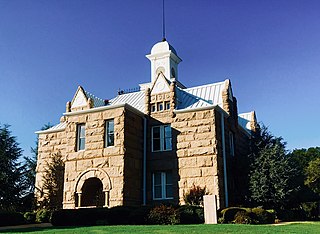
Tishomingo is the largest city in,and the county seat of,Johnston County,Oklahoma,United States. The population was 3,101 as of the 2020 Census,an increase of 2.2% over the population of 3,034 reported at the 2010 census. It was the first capital of the Chickasaw Nation,from 1856 until Oklahoma statehood in 1907. The city is home to Murray State College,a community college with an annual enrollment of 3,015 students. Tishomingo is part of the Texoma region.

Agnes Grey,A Novel is the first novel by English author Anne Brontë,first published in December 1847,and republished in a second edition in 1850. The novel follows Agnes Grey,a governess,as she works within families of the English gentry. Scholarship and comments by Anne's sister Charlotte Brontësuggest the novel is largely based on Anne Brontë's own experiences as a governess for five years. Like her sister Charlotte's 1847 novel Jane Eyre,it addresses what the precarious position of governess entailed and how it affected a young woman.

William Henry Davis "Alfalfa Bill" Murray was an American educator,lawyer,and politician who served as the first Speaker of the Oklahoma House of Representatives,a U.S. Congressman from Oklahoma,and as the 9th Governor of Oklahoma. He was a Southern Democratic member of the Democratic Party who opposed the New Deal and supported racial segregation.

Johnston Murray was an American lawyer,politician,and the 14th governor of Oklahoma from 1951 to 1955. He was a member of the Democratic Party. In 1956,Murray switched parties and joined the Republican Party.

The Chickasaw Nation is an Indigenous nation formally recognized by the United States government. The Chickasaw citizenry descends from the historical population of a Chickasaw-speaking Indigenous nation established in the American Southeast whose original territory was appropriated by the United States in the 19th century and subsequently organized into what is now the northern Mississippi and Alabama and the western reaches of Tennessee and Kentucky. As of 2023,the Chickasaw Nation is the 12th largest Indigenous nation in the United States by population,counting a total worldwide population exceeding 80,000 citizens,the majority of which reside in Oklahoma,where the Chickasaw national government is established in Ada.
Murray State College is a public community college in southcentral Oklahoma with the main campus located in Tishomingo,Oklahoma. It is named in honor of former Oklahoma Governor William H. "Alfalfa Bill" Murray.
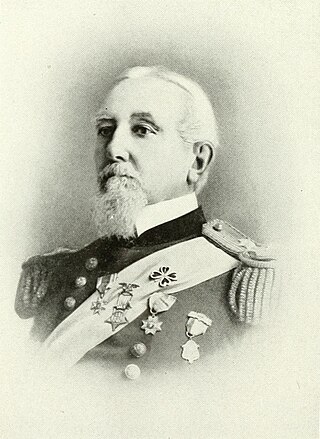
William Montrose Graham was a career soldier in the United States Army,reaching the rank of major general. He was a veteran of both the American Civil War and the Spanish–American War.
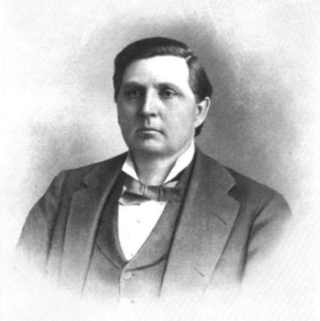
Douglas Hancock Cooper Johnston,also known as "Douglas Henry Johnston",was a tribal leader who served as the last elected governor of the Chickasaw Nation from 1898 to 1902. He was re-elected in 1904.
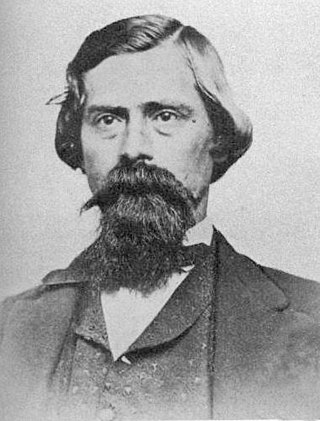
Holmes Colbert was a 19th-century leader of the Chickasaw Nation in Indian Territory. Of mixed European and Chickasaw ancestry,Colbert was born to his mother's Chickasaw clan and gained significance in the tribe's history through his family's privileged mixed-race status.

Bloomfield Academy was a Chickasaw school for girls founded in 1852 by the Reverend John Harpole Carr,located in the Chickasaw Nation in Indian Territory,about 3 miles (4.8 km) southeast of the present town of Achille,Oklahoma. A boarding school funded by both the Missouri Conference of the Methodist Church and the government of the Chickasaw Nation,it operated there until 1914,which a major fire destroyed most buildings. Now privately owned,the site of the former academy near Achille was listed on the National Register of Historic Places in 1972.

The Sequoyah Constitutional Convention was an American Indian-led attempt to secure statehood for Indian Territory as an Indian-controlled jurisdiction,separate from the Oklahoma Territory. The proposed state was to be called the State of Sequoyah.
The White House of the Chickasaws in Milburn,Oklahoma was built in 1895. It was designed by Dallas architect W.A. Waltham in the Queen Anne style. The house is also known as Gov. Douglas H. Johnston House,because Chickasaw Governor Douglas Hancock Johnston and his descendants resided in the mansion from 1898 to 1971 when the building was listed on the National Register of Historic Places. At the time of its construction,the house was on the north edge of the community of Emet,Oklahoma,where Johnston operated a store,but its formal street address is now 6379 E. Mansion Dr.,Milburn,Oklahoma
Mary Frances Thompson Fisher,best known as Te Ata,was an actress and citizen of the Chickasaw Nation known for telling Native American stories. She performed as a representative of Native Americans at state dinners before President Franklin D. Roosevelt in the 1930s. She was inducted into the Oklahoma Hall of Fame in 1957 and was named Oklahoma's first State Treasure in 1987.

Sophia Alice Callahan was a novelist and teacher of Muscogee heritage. Her novel,Wynema,a Child of the Forest (1891) is thought "to be the first novel written by a Native American woman." Shocked about the Massacre at Wounded Knee at the Pine Ridge Indian Reservation,which took place about six months before she published her book,Callahan added an account of this and the 1890 Ghost Dance of the Lakota to her book in the first fictional treatment of these subjects. This may have been "the first novel written in Oklahoma," which was at the time Indian Territory. Callahan wrote in a romantic novel style but she also clearly intended what has been called a "reform novel," identifying many wrongs suffered by Native Americans in United States society. After being discovered in the late 20th century,the novel was reprinted in 1997. It has been the subject of scholarly studies.
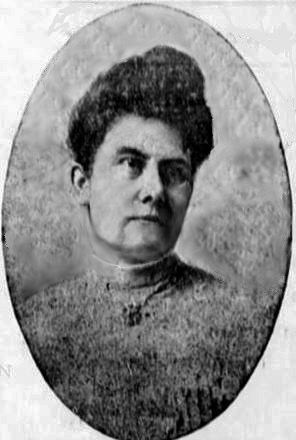
Czarina Conlan (1871-1958) was a Native American archivist and museum curator. She worked at the Oklahoma Historical Society museum for 24 years. She founded the first woman's club in Indian Territory and served as the chair of the Oklahoma Indian Welfare Committee of the Oklahoma State Federation of Women's Clubs for 12 years. She was the first woman elected to serve on a school board in the state. Although the Attorney General of Oklahoma ruled she could not serve,she defied the order and completed a two-year term on the Lindsay School Board.
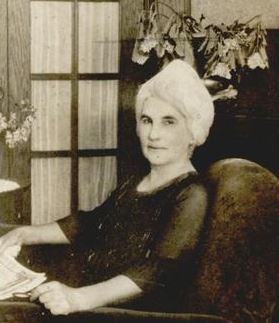
Estelle Chisholm Ward was a Chickasaw teacher,journalist,and magazine publisher from Oklahoma. She was active in politics both civic and tribal and was elected as county treasurer of Johnston County,Oklahoma. Ward was the first woman to represent the Chickasaw Nation as a delegate to Washington,DC.
Montford T. Johnson was Chickasaw and a cattleman who lived in Indian Territory,what is now the present-day state of Oklahoma. Johnson was a well-known and respected entrepreneur,noted for his successful ranching operation that spanned a large area of central Oklahoma,including parts of what would eventually become Oklahoma City.

Ann Eliza Worcester Robertson was an American linguist and Christian missionary. Her daughter was the activist and Congresswoman Alice Mary Robertson.
Betsy Love Allen was a Chickasaw merchant and planter who ran a trading post on the Natchez Trace and maintained a large cattle plantation. Born into a wealthy and influential family,she owned property in her own right under Chickasaw law. When an attorney attempted to seize one of the people her children enslaved to pay off a debt that her husband owed,a trial ensued. The verdict—that Allen was in effect a feme soleunder Chickasaw law and not subject to coverture—established the legal precedent for the State of Mississippi to pass the first Married Women's Property Act in the United States.
