
Groenlo is a city in the municipality of Oost Gelre, situated in the eastern part of the Netherlands, on the German border, within a region in the province of Gelderland called the Achterhoek. Groenlo was a municipality until 1 January 2005, when it merged with Lichtenvoorde. Until 19 May 2006 Groenlo was the official name of Oost Gelre. As of 1 January 2006 Groenlo, including its hamlet Zwolle, counted a population of 10,067. Groenlo is known locally and historically as Grolle, Groll or Grol.

Ambrogio Spinola Doria, 1st Marquess of Los Balbases and 1st Duke of Sesto was an Italian condottiero and nobleman of the Republic of Genoa, who served as a Spanish general and won a number of important battles. He is often called "Ambrosio" by Spanish-speaking people and is considered one of the greatest military commanders of his time and in the history of the Spanish army. His military achievements earned him the title of Marquess of Los Balbases in the Spanish peerage, as well as the Order of the Golden Fleece and Order of Santiago.

Frederick Henry was the sovereign prince of Orange and stadtholder of Holland, Zeeland, Utrecht, Guelders, and Overijssel in the Dutch Republic from 1625 until his death in 1647. In the last seven years of his life, he was also the stadtholder of Groningen (1640-1647).

Kiliaen van Rensselaer was a Dutch diamond and pearl merchant from Amsterdam who was one of the founders and directors of the Dutch West India Company, being instrumental in the establishment of New Netherland.
Events from the year 1570 in art.
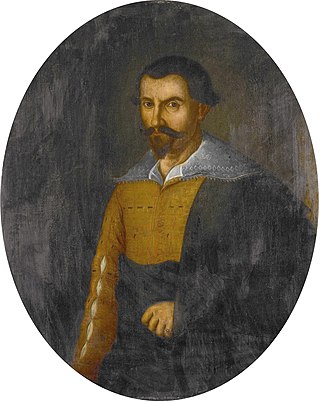
Pieter de Carpentier was a Dutch administrator of the Dutch East India Company (VOC) who served as Governor-General there from 1623 to 1627. The Gulf of Carpentaria in northern Australia is named after him.
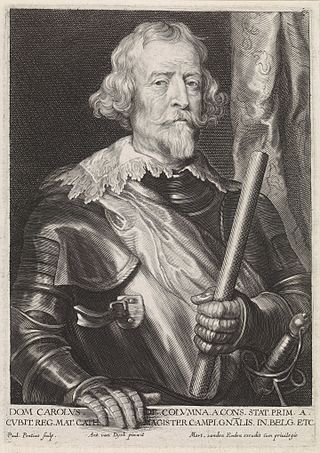
Don Carlos II Coloma y de Saa, knight of Santiago, 1st Marquess of Espinar was a Spanish military commander, diplomat and author. He is also known as a translator of Tacitus.

Laurens Reael was an employee of the Dutch East India Company, Governor-General of the Dutch East Indies from 1616 to 1619, and an admiral of the Dutch Republican Navy from 1625 to 1627.

The siege of Grol in 1627 was a battle between the Army of the Dutch Republic, commanded by Frederick Henry, Prince of Orange, and the Spanish-controlled fortified city of Grol, during the Eighty Years War and the Anglo–Spanish War in 1627. The Spanish Army, led by Hendrik van den Bergh, came to relieve Grol but too late. The siege lasted from 20 July until 19 August 1627, resulting in the surrender of the city to the Dutch army.
Sir Robert Ducie, 1st Baronet was an English merchant who was Lord Mayor of London in 1631. He was banker to King Charles I.
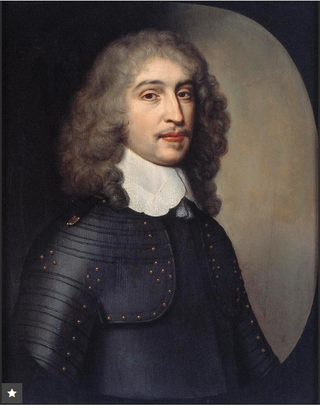
Louis of Nassau, Lord of De Lek and Beverweerd was a Dutch soldier. He was the illegitimate son of Margaretha van Mechelen and Maurice, Prince of Orange, and so a collateral member of the House of Orange-Nassau. He was a Lord of the heerlijkheid van De Lek, as well as the Beverweerd Castle and its heerlijkheid from his father.
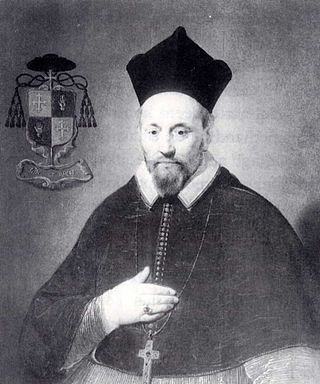
Philippus Rovenius was apostolic vicar of the Dutch Mission from 1614 to 1651.
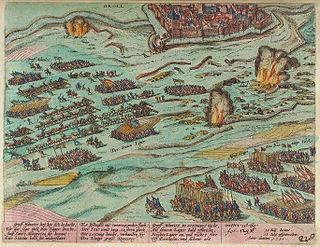
The siege of Grol or Groenlo in 1595 was a siege of Groenlo by States forces under Maurice of Nassau during the Eighty Years' War in an attempt to capture it from the Spanish Empire. It lasted from 14 to 24 July 1595, ending with the arrival of a Spanish relief force under Cristóbal de Mondragón and Maurice's retreat. Two years later, in 1597, Maurice returned to carry out another siege of Groenlo. Both these sieges formed part of what would later be called the Ten Glorious Years.

The siege of Groenlo was a 10-day siege of the Dutch town of Groenlo from 1 to 10 June 1672 by the combined forces of France, the Elector of Cologne and the Prince-Bishop of Münster during the Franco-Dutch War. It ended in the town's surrender.
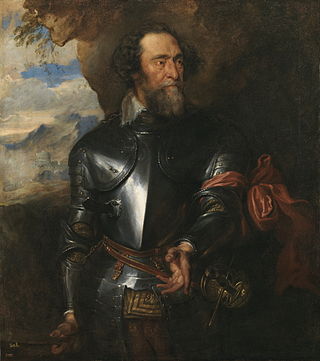
Hendrik van den Bergh, 1573 to 22 May 1638, was a Flemish noble and professional soldier. Hereditary lord of Stevensweert, from 1618 to 1637 he was also stadtholder of Upper Guelders, the only part of Guelders to remain loyal to Habsburg Spain during the Eighty Years War. Known as a brave and resourceful cavalry commander, he spent most of his career with the Spanish Army of Flanders and became its Maestre de campo in 1628. Accused of treachery after the loss of Den Bosch in 1629, he defected to the Dutch Republic following the 1632 Conspiracy of Nobles.

The Vision of the Blessed Hermann Joseph or The Mystical Engagement of the Blessed Hermann Joseph to the Virgin Mary is a 1629-1630 painting by the Flemish Baroque painter Anthony van Dyck.