
In vitro fertilisation (IVF) is a process of fertilisation in which an egg is combined with sperm in vitro. The process involves monitoring and stimulating a woman's ovulatory process, then removing an ovum or ova from her ovaries and enabling a man's sperm to fertilise them in a culture medium in a laboratory. After a fertilised egg (zygote) undergoes embryo culture for 2–6 days, it is transferred by catheter into the uterus, with the intention of establishing a successful pregnancy.
GLBTQ Legal Advocates & Defenders (GLAD) is a non-profit legal rights organization in the United States. The organization works to end discrimination based on sexual orientation, HIV status, and gender identity and expression. The organization primarily achieves this goal through litigation, advocacy, and education work in all areas of LGBTQ rights and the rights of people living with HIV. In addition, GLAD operates a legal information line, GLAD Answers, where LGBTQ & HIV+ residents of New England can receive attorney referrals and information about their rights. The organization changed its name to GLBTQ Legal Advocates & Defenders in February 2016.
Same-sex adoption is the adoption of children or adults by same-sex couples. It may take the form of a joint adoption by the couple, or of the adoption by one partner of the other's biological child or adult.
Same-sex marriage has been legal in Ireland since 16 November 2015. A referendum on 22 May 2015 amended the Constitution of Ireland to provide that marriage is recognised irrespective of the sex of the partners. The measure was signed into law by the President of Ireland, Michael D. Higgins, as the Thirty-fourth Amendment of the Constitution of Ireland on 29 August 2015. The Marriage Act 2015, passed by the Oireachtas on 22 October 2015 and signed into law by the Presidential Commission on 29 October 2015, gave legislative effect to the amendment. Same-sex marriages in Ireland began being recognised from 16 November 2015, and the first marriage ceremonies of same-sex couples in Ireland occurred the following day. Ireland was the eighteenth country in the world and the eleventh in Europe to allow same-sex couples to marry nationwide.
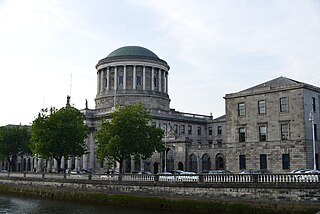
The Supreme Court of Ireland is the highest judicial authority in Ireland. It is a court of final appeal and exercises, in conjunction with the Court of Appeal and the High Court, judicial review over Acts of the Oireachtas. The Supreme Court also has appellate jurisdiction to ensure compliance with the Constitution of Ireland by governmental bodies and private citizens. It sits in the Four Courts in Dublin.

A sperm bank, semen bank, or cryobank is a facility or enterprise which purchases, stores and sells human semen. The semen is produced and sold by men who are known as sperm donors. The sperm is purchased by or for other persons for the purpose of achieving a pregnancy or pregnancies other than by a sexual partner. Sperm sold by a sperm donor is known as donor sperm.

The Connecticut Supreme Court, formerly known as the Connecticut Supreme Court of Errors, is the highest court in the U.S. state of Connecticut. It consists of a Chief Justice and six Associate Justices. The seven justices sit in Hartford, across the street from the Connecticut State Capitol. The court generally holds eight sessions of two to three weeks per year, with one session each September through November and January through May. Justices are appointed by the governor and then approved by the Connecticut General Assembly.

Lesbian, gay, bisexual, transgender, and queer (LGBTQ) rights in the Republic of Ireland are regarded as some of the most progressive in Europe and the world. Ireland is notable for its transformation from a country holding overwhelmingly conservative attitudes toward LGBTQ issues, in part due to the opposition by the Roman Catholic Church, to one holding overwhelmingly liberal views in the space of a generation. In May 2015, Ireland became the first country to legalise same-sex marriage on a national level by popular vote. The New York Times declared that the result put Ireland at the "vanguard of social change". Since July 2015, transgender people in Ireland can self-declare their gender for the purpose of updating passports, driving licences, obtaining new birth certificates, and getting married. Both male and female expressions of homosexuality were decriminalised in 1993, and most forms of discrimination based on sexual orientation are now outlawed. Ireland also forbids incitement to hatred based on sexual orientation. Article 41 of the Constitution of Ireland explicitly protects the right to marriage irrespective of sex.

Same-sex parenting is the parenting of children by same-sex couples generally consisting of gay, lesbian, or bisexual people who are often in civil partnerships, domestic partnerships, civil unions, or same-sex marriages.
Sperm donation is the provision by a man of his sperm with the intention that it be used in the artificial insemination or other "fertility treatment" of one or more women who are not his sexual partners in order that they may become pregnant by him. Where pregnancies go to full term, the sperm donor will be the biological father of every baby born from his donations. The man is known as a sperm donor and the sperm he provides is known as "donor sperm" because the intention is that the man will give up all legal rights to any child produced from his sperm, and will not be the legal father. Sperm donation may also be known as "semen donation".
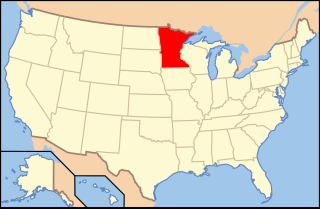
Lesbian, gay, bisexual, transgender, and queer (LGBTQ) people in the U.S. state of Minnesota have the same legal rights as non-LGBTQ people. Minnesota became the first U.S. state to outlaw discrimination based on sexual orientation and gender identity in 1993, protecting LGBTQ people from discrimination in the fields of employment, housing, and public accommodations. In 2013, the state legalized same-sex marriage, after a bill allowing such marriages was passed by the Minnesota Legislature and subsequently signed into law by Governor Mark Dayton. This followed a 2012 ballot measure in which voters rejected constitutionally banning same-sex marriage.

The legal aspects of surrogacy in any particular jurisdiction tend to hinge on a few central questions:
Until 2017, laws related to LGBTQ+ couples adopting children varied by state. Some states granted full adoption rights to same-sex couples, while others banned same-sex adoption or only allowed one partner in a same-sex relationship to adopt the biological child of the other.
The Thirty-first Amendment of the Constitution (Children) Act 2012 amended the Constitution of Ireland by inserting clauses relating to children's rights and the right and duty of the state to take child protection measures. It was passed by both Houses of the Oireachtas (parliament) on 10 October 2012, and approved at a referendum on 10 November 2012, by 58% of voters on a turnout of 33.5%. Its enactment was delayed by a High Court case challenging the conduct of the referendum. The High Court's rejection of the challenge was confirmed by the Supreme Court on 24 April 2015. It was signed into law by the President on 28 April 2015.
Forced fatherhood or imposed paternity, occurs when a man becomes a father against his will or without his consent. It can include deception by a partner about her ability to get pregnant or use of contraceptives, birth control sabotage, paternity fraud and sexual assaults of males that result in pregnancy.
LGBT parents in Canada have undergone significant progress in terms of both legal and social acceptance. Same-sex couples who wish for parenthood now enjoy equally the possibilities, responsibilities and rights of opposite-sex couples. Following the nationwide legalization of same-sex marriage in 2005, the number of LGBT families in Canada has increased substantially, paving the way for same-sex couples' aspirations of having their own children. Legal methods of assisted reproduction range from insemination via IVF through to surrogacy arrangements.

The Supreme Court of the United States handed down nine per curiam opinions during its 2016 term, which began October 3, 2016 and concluded October 1, 2017.
J. McD v P.L and B.M[2007] IESC 28, [2008] ILRM 81 is an Irish Supreme Court case the rights of a sperm donor to access a child born through his donation. The Appellant, who was the biological donor, questioned whether he could be a guardian of the infant despite never having had a romantic relationship with the first named respondent who was the mother. The case raised important questions around the Irish legal definition of "family." The case is also important because the Supreme Court over-turned a High Court ruling that had relied on Article 8 of the European Convention of Human Rights.

Lesbian, gay, bisexual, and transgender people people wishing to have children may use assisted reproductive technology. In recent decades, developmental biologists have been researching and developing techniques to facilitate same-sex reproduction.
