Related Research Articles

Bruce Robert Jacob is a former Assistant Attorney General for the State of Florida during the early 1960s. He represented Louie L. Wainwright,the Director of the Florida Division of Corrections,in the Supreme Court case of Gideon v. Wainwright,decided in March 1963,regarding the right to counsel of indigent defendants in non-capital felony cases in state courts. The attorney representing the Petitioner,Clarence Gideon,was Abe Fortas,a Washington,D.C. lawyer who later became a Justice of the Supreme Court. The previous 1942 Supreme Court case of Betts v. Brady required the appointment of counsel for an indigent defendant at state expense if there was a “special circumstance”present in the case which made it necessary for counsel to be provided for the defendant to receive a fair trial. For example,if the defendant was indigent and was extremely young,or lacked education or experience,was unfamiliar with court procedures,or if the charges against him were complex,the trial court was required under the Due Process Clause of the Fourteenth Amendment to appoint counsel. Jacob argued against any extension of the defendant's right to counsel. The Court in Gideon overruled Betts and required state courts to appoint attorneys for defendants in all felony prosecutions.

The New York Court of Appeals is the highest court in the Unified Court System of the State of New York. The Court of Appeals consists of seven judges:the Chief Judge and six Associate Judges who are appointed by the Governor and confirmed by the State Senate to 14-year terms. The Chief Judge of the Court of Appeals also heads administration of the state's court system,and thus is also known as the Chief Judge of the State of New York. Its courthouse is located in New York's capital,Albany. The court of appeals was found in 1847
The Alaska Court System is the unified,centrally administered,and totally state-funded judicial system for the state of Alaska. The Alaska District Courts are the primary misdemeanor trial courts,the Alaska Superior Courts are the primary felony trial courts,and the Alaska Supreme Court and the Alaska Court of Appeals are the primary appellate courts. The chief justice of the Alaska Supreme Court is the administrative head of the Alaska Court System.

The Connecticut Supreme Court,formerly known as the Connecticut Supreme Court of Errors,is the highest court in the U.S. state of Connecticut. It consists of a Chief Justice and six Associate Justices. The seven justices sit in Hartford,across the street from the Connecticut State Capitol. The court generally holds eight sessions of two to three weeks per year,with one session each September through November and January through May. Justices are appointed by the governor and then approved by the Connecticut General Assembly.
The Superior Court is the state court in the U.S. state of New Jersey,with statewide trial and appellate jurisdiction. The New Jersey Constitution of 1947 establishes the power of the New Jersey courts. Under the State Constitution,"'judicial power shall be vested in a Supreme Court,a Superior Court,County Courts and inferior courts of limited jurisdiction.'" The Superior Court has three divisions:the Appellate Division is essentially an intermediate appellate court while the Law and Chancery Divisions function as trial courts. The State Constitution renders the New Jersey Superior Court,Appellate Division the intermediate appellate court,and "[a]ppeals may be taken to the Appellate Division of the Superior Court from the law and chancery divisions of the Superior Court and in such other causes as may be provided by law." Each division is in turn divided into various parts. "The trial divisions of the Superior Court are the principal trial courts of New Jersey. They are located within the State's various judicial geographic units,called 'vicinages,' R. 1:33-2(a),and are organized into two basic divisions:the Chancery Division and the Law Division".

The Connecticut Appellate Court is the court of first appeals for all cases arising from the Connecticut Superior Courts. Its creation in 1983 required Connecticut's voters and legislature to amend the state's constitution. The court heard its first cases on October 4,1983. The Appellate Court was also a partial successor to the former Appellate Session of the Superior Court,a court established to hear appeals in minor matters
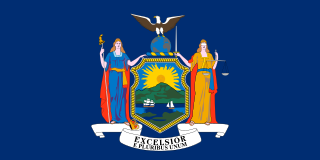
The Judiciary of New York is the judicial branch of the Government of New York,comprising all the courts of the State of New York.
The judiciary of Massachusetts is the branch of the government of Massachusetts that interprets and applies the law of Massachusetts,ensures equal justice under law,and provides a mechanism for dispute resolution. The judicial power in Massachusetts is reposed in the Supreme Judicial Court,which superintends the entire system of courts.
Dennis Gene Eveleigh is an American lawyer and former justice of the Connecticut Supreme Court.
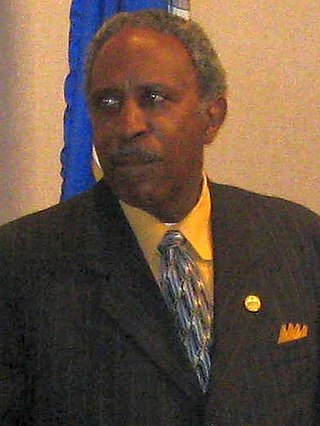
Lubbie Harper Jr. is an American lawyer and judge who was the third African American to become a justice of the Connecticut Supreme Court,serving from 2011 through 2012. While seconded to the court in 2008,he cast the deciding vote in Kerrigan v. Commissioner of Public Health,a ruling that legalized same-sex marriage in Connecticut. Harper also served as a justice on the Connecticut Superior Court (1997–2005) and on the Connecticut Appellate Court (2005–2011).

Richard A. Robinson is an American lawyer and judge,who has served as chief justice of the Connecticut Supreme Court since 2018,and previously as an associate justice from 2013 to 2018.
Raheem L. Mullins is an American lawyer and judge who has served as an Associate Justice of the Connecticut Supreme Court since 2017.

Maria Araújo Kahn is an American lawyer who is serving as a United States circuit judge of the United States Court of Appeals for the Second Circuit. She previously served as an associate justice of the Connecticut Supreme Court from 2017 to 2023.
Christine Elyse Keller is an American lawyer and judge from Connecticut. She is a Senior Justice of the Connecticut Supreme Court.
Eliot Dalton Prescott is an American lawyer and Judge on the Connecticut Appellate Court.
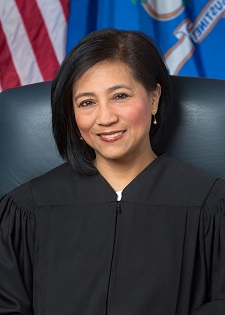
Nina F. Elgo is an American lawyer who serves as a judge of the Connecticut Appellate Court. She is the first Asian Pacific American to be appointed to the Connecticut Appellate Court and the Connecticut Superior Court.
William H. Bright Jr. is the chief judge of the Connecticut Appellate Court.
Ingrid Lynn Moll is an American lawyer who has served as a judge of the Connecticut Appellate Court since 2018.
Robert J. Devlin Jr. is a former Judge of the Connecticut Appellate Court and former Judge of the Connecticut Superior Court. He was nominated to the Appellate court by Governor Ned Lamont and began his term on May 15,2019. Devlin retired in April 2020,after reaching the mandatory retirement age of 70.
Melanie L. Cradle is a Judge of the Connecticut Appellate Court.
References
- 1 2 March 12, Robert Storace; PM, Robert Storace. "Michael Sheldon to Step Down From Bench, Become Judge Trial Referee". Connecticut Law Tribune.
- 1 2 3 "Biographies of Appellate Court Judges: Judge Michael R. Sheldon".
- ↑ Pazniokas, Mark (October 20, 2011). "Malloy nominates two judges to appellate and trial courts" . Retrieved April 15, 2018.
- ↑ Owens, David (25 April 2019). "Judge Robert Devlin nominated to Appellate Court". courant.com.
- ↑ "Honorable Alexandra Davis DiPentima - Biography". www.jud.ct.gov.
