See also
 | This disambiguation page lists articles associated with the title Middle Eastern mythology. If an internal link led you here, you may wish to change the link to point directly to the intended article. |
Middle East mythology includes:
| | This disambiguation page lists articles associated with the title Middle Eastern mythology. If an internal link led you here, you may wish to change the link to point directly to the intended article. |

Asia is Earth's largest and most populous continent, located primarily in the Eastern and Northern Hemispheres. It shares the continental landmass of Eurasia with the continent of Europe and the continental landmass of Afro-Eurasia with both Europe and Africa. Asia covers an area of 44,579,000 square kilometres (17,212,000 sq mi), about 30% of Earth's total land area and 8.7% of the Earth's total surface area. The continent, which has long been home to the majority of the human population, was the site of many of the first civilizations. Asia is notable for not only its overall large size and population, but also dense and large settlements, as well as vast barely populated regions. Its 4.5 billion people constitute roughly 60% of the world's population.
The history of religion refers to the written record of human religious experiences and ideas. This period of religious history begins with the invention of writing about 5,220 years ago. The prehistory of religion involves the study of religious beliefs that existed prior to the advent of written records. One can also study comparative religious chronology through a timeline of religion. Writing played a major role in standardizing religious texts regardless of time or location, and making easier the memorization of prayers and divine rules. A small part of the Bible involves the collation of oral texts handed down over the centuries.

Muslims are people who follow or practice Islam, a monotheistic Abrahamic religion. Muslims consider the Quran, their holy book, to be the verbatim word of God as revealed to the Islamic prophet and messenger Muhammad. The majority of Muslims also follow the teachings and practices of Muhammad (sunnah) as recorded in traditional accounts (hadith). "Muslim" is an Arabic word meaning "submitter".
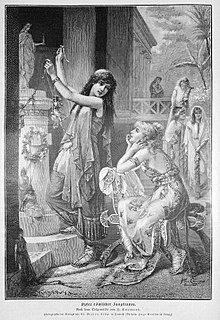
Paganism is a term first used in the fourth century by early Christians for people in the Roman Empire who practiced polytheism. This was either because they were increasingly rural and provincial relative to the Christian population, or because they were not milites Christi. Alternate terms in Christian texts for the same group were hellene, gentile, and heathen. Ritual sacrifice was an integral part of ancient Graeco-Roman religion and was regarded as an indication of whether a person was pagan or Christian.
Religion is a social-cultural system of designated behaviors and practices, morals, worldviews, texts, sanctified places, prophecies, ethics, or organizations, that relates humanity to supernatural, transcendental, or spiritual elements. However, there is no scholarly consensus over what precisely constitutes a religion.

Comparative religion is the branch of the study of religions concerned with the systematic comparison of the doctrines and practices of the world's religions. In general the comparative study of religion yields a deeper understanding of the fundamental philosophical concerns of religion such as ethics, metaphysics, and the nature and forms of salvation. Studying such material facilitates a broadened and more sophisticated understanding of human beliefs and practices regarding the sacred, numinous, spiritual, and divine.
Many Wikipedia articles on religious topics are not yet listed on this page. If you cannot find the topic you are interested in on this page, it still may already exist; you can try to find it using the "Search" box. If you find that it exists, you can edit this page to add a link to it.
Hubal was a god worshipped in pre-Islamic Arabia, notably by Quraysh at the Kaaba in Mecca. The god's idol was a human figure believed to control acts of divination, which was performed by tossing arrows before the statue. The direction in which the arrows pointed answered questions asked of the idol. The origins of the cult of Hubal are uncertain, but the name is found in Nabataean inscriptions in northern Arabia. The specific powers and identity attributed to Hubal are equally unclear.
The religions of the ancient Near East were mostly polytheistic, with some examples of monolatry. Some scholars believe that the similarities between these religions indicate that the religions are related, a belief known as patternism.
Prehistoric religions are the religious beliefs and practices of prehistoric peoples. The term may cover Paleolithic religion, Mesolithic religion, Neolithic religion and Bronze Age religions.

Turkic mythology features Tengriist and Shamanist strata of belief along with many other social and cultural constructs related to the nomadic existence of the Turkic peoples in early times. Later, especially after the Turkic migration, some of the myths were embellished to some degree with Islamic symbolism. Turkic mythology shares numerous points in common with Mongol mythology and both of these probably took shape in a milieu in which an essentially nationalist mythology was early syncretised with elements deriving from Tibetan Buddhism. Turkic mythology has also been influenced by other local mythologies. For example, in Tatar mythology elements of Finnic and Indo-European mythologies co-exist. Beings from Tatar mythology include Äbädä, Alara, Şüräle, Şekä, Pitsen, Tulpar, and Zilant. The early Turks apparently practised all the then-current major religions, such as Buddhism, Christianity, Judaism and Manichaeism, before the majority converted to Islam; often syncretising these other religions into their prevailing mythological understanding.
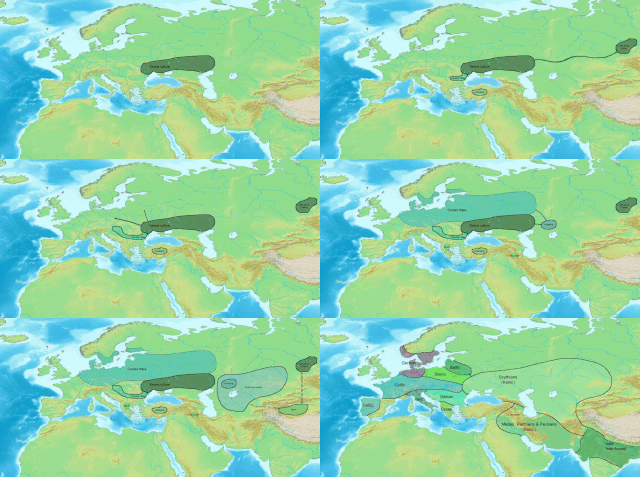
Yazdânism, or the Cult of Angels, is a proposed pre-Islamic, native religion of the Kurds. The term was introduced by Kurdish scholar Mehrdad Izady to represent what he considers the "original" religion of the Kurds.

The traditional African religions are a set of highly diverse beliefs that includes various ethnic religions. Generally, these traditions are oral rather than scriptural, include belief in an amount of higher and lower gods, sometimes including a supreme creator, belief in spirits, veneration of the dead, use of magic and traditional African medicine. Most religions can be described as animistic with various polytheistic and pantheistic aspects. The role of humanity is generally seen as one of harmonizing nature with the supernatural. According to the author Lugira, "it is the only religion that can claim to have originated in Africa. Other religions found in Africa have their origins in other parts of the world."
European folklore or Western folklore refers to the folklore of the western world, especially when discussed comparatively. There is no single European culture, but the common history of Christendom during the Middle Ages and the Early Modern period has resulted in a number of traditions that are shared in many ethnic or regional cultures of Europe.
The Three major religious groups originated in the Middle East. Smaller minority religions, such as the Bahá'í Faith, Druze, Nusairism, Manichaeism, Sabianism, Bábism, Yazidism, Mandaeism, Gnosticism, Yarsanism, Samaritanism, Shabakism, Ishikism, Ali-Illahism, Alevism, Yazdânism and Zoroastrianism are also present in the Middle East.

Adherents of Islam constitute the world's second largest religious group. According to a study in 2015, Islam has 1.8 billion adherents, making up about 24.1% of the world population. Most Muslims are either of two denominations: Sunni or Shia. Islam is the dominant religion in Central Asia, Indonesia, Middle East, North Africa, the Sahel and some other parts of Asia. The diverse Asia-Pacific region contains the highest number of Muslims in the world, easily surpassing the Middle East and North Africa.