Mirza-Charbagh Residence

Last updated
Mirzachorbogh residence
KarmanaMirzochorbog 07.jpg
KarmanaMirzochorbog03092022 01.jpg
KarmanaMirzochorbog03092022 02.jpg
KarmanaMirzochorbog03092022 04.jpg
KarmanaMirzochorbog03092022 06.jpg
KarmanaMirzochorbog03092022 05.jpg
Mirza-Charbagh Residence
General information
StatusHistorical heritage
TypeResidence
AddressIntersections of Amir Olimkhan and Mirzachorbogh Streets
Town or cityKarmana
CountryUzbekistan
Construction startedIn 1900
Construction stoppedIn 1905
Demolishedapproximately in 1983
Height11 meters
Technical details
MaterialBaked brick, wood, mud, sand
Floor count2
Design and construction
Developer Usta Shirin Murodov
EngineerAbdurahim Gʻozgʻoniy
Mirza-Charbagh Residence
Mirzachorbogʻ qarorgohi xaritada

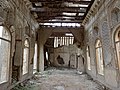
Mirzachorbogh residence (Mirzachorbogh khangarargohi, Mirza chorbogh palace, Mirza chorbogh; built in 1900-1905) is a palace built in Karmana by the emir of Bukhara, 'Abd al-Ahad Khan. It was considered as a summer residence of the last Bukhara emirs. It is located in the northern part of the town of Karmana, near the Zarafshan river, at the intersection of Amir Olimkhan and Mirzachorbogh streets of the Kokhnakurgan neighborhood. It has become a ruin due to neglect and looting. The fact that the state of the palace is dilapidated and neglected has been covered several times in the media and social networks, [1] [2] [3] in response to which the state authorities have made official statements that the restoration of the palace is included in the state plan, but nothing has actually been done. [4] [5]

Contents

The residence of Mirzachorbog is under de jure state protection, de facto neglected. [1] [2] [3]

Construction

Choosing a place

Several factors were taken into account when choosing a place for the construction of a settlement, such as: the coolness of the air near the Zarafshan River, the fertility of the soil for creating a garden, the constant blowing of a cool wind from the Nurota mountain range, and the ease of hunting. [1]

Engineers

Abdurahim Ghazgoni was involved to the construction of the Mirzachorbog residence, [1] and the palace was decorated with ganch and carvings by craftsman Shirin Muradov. Najjor Tora from Karmana, master Latif, master Dost, master Sultan Qori took part in its construction. In addition, about a thousand craftsmen were involved in the construction of the palace. [6]

Architecture

The palace was rebuilt mainly in wood and brick style. It is structurally divided into two. The first part is a 6x20 m building with a height of 11 meters, it consists of a two-room hall and a 15-bed hotel. At the top of the corridor was a bolokhana. The interior of both rooms is decorated with carvings and paintings. A large arched mihrab and arches were built on both sides of the hotel. The upper parts of the northern and southern walls of the room have four arches. The eight windows of the building are in the European style, and their upper part is made in the form of a bell. The building is entered from the north side through two doors. The doors are decorated with carvings. [7]

To the west of the hotel there is another ten-room building. Architecturally, it looks a bit plain. The foundation of the building was restored to 1 m of 25 rows of 28x28x4 bricks. The bricks of the 26th row were stacked upright, taking into account their earthquake resistance. Sinch and zavarav are placed in a polygonal shape, their edges are hidden from view. The interior of the building's rooms is decorated in oriental style. There was a 9-12-meter well on the edge of the platform on the surface of the yard, which was later buried. [7]

State

In 1942-1943, the palace was used as barracks for Polish soldiers. After the war, it was used as a collective farm office. [8] From the 1960s to 1974–1975, it was a cocooning office. [1]

In the decree of the President of the Republic of Uzbekistan, signed on May 27, 1999, it was ordered that a program for the renovation of the Mirzachorbog residence, along with a number of historical objects in Karmana, should be developed within two months. [9]

In 2009, it was planned to start the renovation of the palace, [4] but nothing was actually done.

On May 13, 2020, the state institution "Customer service for construction, reconstruction, perfect repair and current repair of objects" under the Ministry of Culture of the Republic of Uzbekistan submitted to the public procurement site the development of project-estimate documents for the repair of the Mirzachorbog residence, along with several historical objects in Uzbekistan. a tender was announced. [10]

A stone tablet dated 2022 was placed on the southern wall of the Mirzachorbogh residence KarmanaMirzochorbog03092022 03.jpg
A stone tablet dated 2022 was placed on the southern wall of the Mirzachorbogh residence

Even in 2021, the state of the residence was highlighted on social networks and the official organizations came under sharp criticism from social network users. After that, Navoi Region Tourism and Sports General Administration announced that the renovation of the Mirzachorbog residence was included in the 2021 program, and 3.1 billion soums were allocated for this work. announced that it was separated. [5]

The residence of Mirzachorbog has been kept in ruins today. The courtyard of the palace was lost, the well was buried, part of the palace was destroyed and became a complete ruin. In 2017-2018, when a rumor spread among the people that "a chest of gold was found in Mirzachorbog's residence", the local residents destroyed the wall and ganchkor patterns of the residence, excavated the old throne seat, destroyed the entrance stairs to the rooms, and looked for gold underneath. [2]

In April 2019, the wooden slatted foundation of the palace's waiting room collapsed (it had been leaning for four months). Only fragments of the pattern remained at the crash site. [11] Thick wooden pillars and beams, doors and windows made of precious cedar and walnut wood with carved patterns were transported by local residents. [11]

The dilapidated condition of the palace was covered in the press in different years, but it was not put into practical use. Even the area where the palace is located is not fenced for protection. [1] [2] [3]

Related Research Articles

<span class="mw-page-title-main">Navoiy</span> City in Navoiy Region, Uzbekistan

Navoiy is a city and the capital of Navoiy Region in the southwestern part of Uzbekistan. Administratively, it is a district-level city, that includes the urban-type settlement Tinchlik. It is located at latitude 40° 5' 4N; longitude 65° 22' 45E, at an altitude of 382 meters. The city is named after Ali-Shir Nava'i. As of 2024, its population was 161,300 inhabitants.
<span class="mw-page-title-main">Karmana</span> Town in Navoiy Region, Uzbekistan

Karmana is a rural-type settlement and seat of Karmana District in Navoiy Region in central Uzbekistan. The town population in 1989 was 16,767 people.

<span class="mw-page-title-main">Qashqadaryo Region</span> Region of southeastern Uzbekistan

Qashqadaryo Region is one of the regions of Uzbekistan, located in the south-eastern part of the country in the basin of the river Qashqadaryo and on the western slopes of the Pamir-Alay mountains. It borders with Tajikistan, Turkmenistan, Samarqand Region, Bukhara Region and Surxondaryo Region. It covers an area of 28,570 km2. The population is an estimated 3,408,345 (2022), with 57% living in rural areas. The regional capital is Qarshi.

<span class="mw-page-title-main">Bukhara Region</span> Region of Uzbekistan

Bukhara Region is a region of Uzbekistan located in the southwest of the country. The Kyzyl Kum desert takes up a large portion of its territory. It borders Turkmenistan, Navoiy Region, Qashqadaryo Region, a small part of the Xorazm Region, and the Karakalpakstan Republic. It covers an area of 40,216 km2. The population is estimated at 1,976,823, with 63% living in rural areas.
<span class="mw-page-title-main">Navoiy Region</span> Region of Uzbekistan

Navoiy Region is one of the regions of Uzbekistan. It is located in the central north/northwest of the country. It covers an area of 111,095 km2 (42,894 sq mi), which makes it the largest of the regions of Uzbekistan. The Navoiy region borders with Kazakhstan, Samarqand Region, Buxoro Region, Jizzakh Region, and the Karakalpakstan Republic. The population is estimated to be 1,033,857 in 2022, with 51% living in rural areas. The capital is Navoiy. The region and its capital are named after the poet Ali-Shir Nava'i.

<span class="mw-page-title-main">Mir-Sayid Bakhrom Mausoleum</span> World Heritage site in Uzbekistan

Mir-Sayid Bakhrom Mausoleum is a 10th-11th century mausoleum in the city of Karmana near Navoiy, Uzbekistan. Mir-Sayid Bakhrom has features similar to the Samanid Mausoleum in Bukhara, Arab-Ata Mausoleum in the Samarkand Region, and to the mausoleum of Oq Ostona Bobo in the Surxondaryo Region. This structure is the smallest mausoleum in Uzbekistan. The mausoleum of Mir Said Bahrom was discovered in 1942 by the archaeologist and orientalist Antonina Pisarchik. After that, the mausoleum was repaired several times. It was completely restored in 1976.
<span class="mw-page-title-main">'Abd al-Ahad Khan mausoleum</span> Mausoleum in Qasim Sheikh ensemble, Uzbekistan

'Abd al-Ahad Khan's mausouleum is an architectural monument that is part of the Qasim Sheikh complex in Karmana. It was built in 1911 by the emir of Bukhara Sayyid Mir Muhammad Alim Khan around the grave of his father 'Abd al-Ahad Khan. It is located in the southwestern part of Muhammad ibn al-Qasim Sheikh complex. Archaeologists have studied and said that there are no corpses (bones). It was restored in 2000-2001, and again restored in 2017, during the restoration in 2017, the rooms on the north side of the mausoleum were completely demolished and then again restored.

<span class="mw-page-title-main">Burquttepa</span> Object of cultural heritage in Uzbekistan

Burquttepa is an archaeological monument and a site of cultural heritage in Uzbekistan, located in the Karmana District of the Navoiy Region. The site dates back to the periods of the 3rd–2nd and 5th–8th centuries BC. It is situated in the village of Kyzyltom, within the "Yangi Ariq" MFY. The site is state-owned and managed by the Department of Cultural Heritage of the Navoi Region.

<span class="mw-page-title-main">Said Otaliq Madrasa</span> Uzbek madrasa

Said Otaliq Madrasa is a two-story madrasa located on Mustaqillik Street in the center of Denov, a city in Uzbekistan's Surxondaryo Region.

<span class="mw-page-title-main">Hakim at-Termizi Mausoleum</span> Mausoleum in Uzbekistan

The Hakim at-Termizi Mausoleum is a historical funerary monument located in the Sherobod district of Surxondaryo Region, Uzbekistan. It serves as a memorial to Islamic scholar Al-Hakim at-Termizi. The mausoleum was constructed on top of his grave.

<span class="mw-page-title-main">Termiziy Mausoleum</span> Building in Surxondaryo Region, Uzbekistan

The Termiziy Mausoleum is an architectural monument built between 11th and 12th centuries, located in Sherobod district of Surxondaryo Region, Uzbekistan. The mausoleum was built over the grave of the famous hadith scholar Abu Iso Muhammad Termiziy.

<span class="mw-page-title-main">Qosim Sheikh Complex</span> Building in Navoiy Region, Uzbekistan

The Qosim Sheikh Complex is an architectural ensemble located in the city of Karmana, Navoiy Region, Uzbekistan. The complex includes the Qosim Sheikh Khanqah, the Qosim Sheikh Mausoleum, the Abdulahad Khan Mausoleum, and other architectural monuments. The Qosim Sheikh Complex and most of the monuments there are named after Qosim Sheikh Azizon, who lived in Karmana in the 15th century.

<span class="mw-page-title-main">Ogʻoch Sardoba</span> Building in Sirdaryo region, Uzbekistan

The Ogʻoch Sardoba is a historical monument located in Gumbaz village of Sardoba district, Sirdaryo region of Uzbekistan, near the M39 highway that connects the cities of Tashkent, Samarkand and Bukhara. It is a type of ancient water reservoir that was built in Central Asia to store water for travelers and caravans. It is one of the three sardobas that existed in Mirzachul and the only one of its kind in the region.

The Hazrati Bashir Mausoleum is a cultural heritage object located in Uzbekistan. The object was built in the 18th century. Hazrati Bashir mausoleum is located in the Bashir village of Kitob district, Qashqadaryo region. According to the rights of immovable property, it is considered state property on the basis of the operational management right of the Qashqadaryo region cultural heritage administration.

The mausoleum of Sheikh Khoja Khisrav is a pilgrimage site located in the Karmana District of Navoiy Region. This pilgrimage site has been included in the national list of intangible cultural heritage objects of Uzbekistan.

<span class="mw-page-title-main">Termizi Memorial Complex</span>

Termizi Memorial Complex, Hakim Termezi Mausoleum, is a historical site in Termez, Uzbekistan. Al-Hakim al-Termezi Mausoleum, considered sacred for Muslims, is situated in the ancient part of Termez. It houses the tomb of Abu Abdullah Muhammad Hakim Termezi, a prominent Islamic scholar, author of various philosophical and religious works, and the founder of a group of dervishes. The complex is associated with Abu Abdullah Muhammad Hakim Termezi. This mausoleum houses the grave of Termezi. The Termezi Memorial Complex has been reconstructed several times throughout the centuries. Today, this complex is considered one of the primary pilgrimage sites for visitors and guests of the province.
<span class="mw-page-title-main">Amir Tora Madrasah</span> Madrasah in Khiva, Uzbekistan

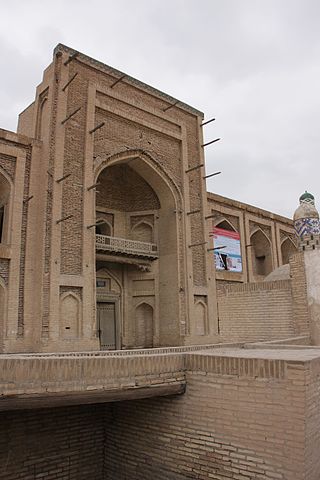
Amir Tora madrasah is a cultural heritage object located in the historical center of Khiva region in Uzbekistan. It was taken under state protection as an architectural monument. It is located in the northern part of the Itchan Kala.

<span class="mw-page-title-main">Abdullakhan Madrasah (Bukhara)</span> Madrasah in Bukhara Region, Uzbekistan

Abdullakhan madrasah is an architectural monument located in the north of the Koshmadrasa ensemble in Bukhara, Uzbekistan. This madrasah, which is a perfect example of the architecture of the Uzbek ruler Abdullah II, demonstrates all the creative achievements of Bukhara architecture in the 16th century.
<span class="mw-page-title-main">Ulugbek Madrasah (Bukhara)</span> Madrasah in Bukhara Region, Uzbekistan

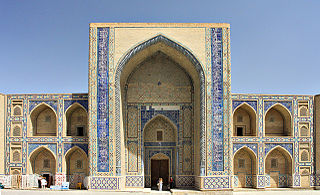
Ulugbek madrasah is an architectural monument (1417) in Bukhara, Uzbekistan. It is the oldest preserved madrasah in Central Asia. It is the oldest of the madrasahs built by Ulugbek. During the reign of Abdullah Khan II, major renovation works were carried out (1586).
<span class="mw-page-title-main">Shamsuddin Kulol Mausoleum</span> Historic site in Qashqadaryo Region, Uzbekistan

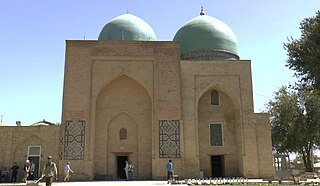
Shamsuddin Kulol Mausoleum is an architectural monument located in the city of Shahrisabz, Qashqadaryo Region, Uzbekistan. It was built on the grave of Amir Temur's father Amir Taragoi and Shamsuddin Kulol, Temur's teacher. The Shamsuddin Kulol Mausoleum is the first example of a new architectural style formed during the period of Amir Temur, especially the structure under the dome inside the building – intersecting arches and shield-like decorations between them had an important influence on the architectural style. Shamsuddin Kulol mausoleum is located in the "Dorut Tilavat" complex.

References

  1. 1 2 3 4 5 6 "Амир қароргоҳи хорликка юз тутмоқда". Xalq soʻzi. 2018-01-18.
  2. 1 2 3 4 "Бухоро амирининг Карманадаги қароргоҳи: поляк аскарлари казармаси, пиллачилик идораси, бугун эса харобазор". Kun.uz.
  3. 1 2 3 "Харобага айланган сарой: Карманадаги Мирзачорбоғ эътибордан четда қолмоқда". Bugun.uz.
  4. 1 2 "В Узбекистане открыли исторический памятник пропагандисту учения Накшбанди". ИА Regnum.
  5. 1 2 "OzodDayjest: "Ўзбекнефтгаз" тизимида "мисли кўрилмаган" талон-торож кузатилаётгани айтилмоқда". Ozodlik.
  6. Hotamov, A.; Halilov, Sh. (1995). Yillar sadosi[The sound of years] (in Uzbek). Tashkent: Adolat. pp. 23–24.
  7. 1 2 Hotamov & Halilov 1995, p. 24.
  8. "Резиденция бухарского эмира в Кармане". uzbloknot.com. Узбекистан: блокнот исследователя. 16 November 2020.
  9. "O'zbekiston Respublikasi Prezidentining Farmoni. Navoiy viloyati Navoiy shahri tarkibida Karmana tumanini tashkil etish to'g'risida (PF-2323)". lex.uz. LexUZ on-line. — Navoiy viloyati hokimligi, Oʻzbekiston Respublikasi Madaniyat ishlari vazirligi bilan birgalikda homiylar va byudjet mablagʻlarini jalb etgan holda Mirsaid Bahrom maqbarasi, Hazrat Qosim Shayx maqbarasi majmui, Shayx Xoʻja Husrav maqbarasi, Mirza-chorbogʻ yodgorliklarini qayta taʼmirlash dasturini ikki oy muddatda ishlab chiqsin va tasdiqlasin.
  10. "№ ЛОТА №3136369". dxarid.uzex.uz. O'zbekiston Respublikasi tovar xom-ashyo birjasi.
  11. 1 2 "ҚУЛАЁТГАН САРОЙ ёхуд олтин васвасасида олиб кетилган Амир тахти ва талон-торож қилинаётган тарихий мерос". Hidoyat.uz.