
Pan-Slavism, a movement that took shape in the mid-19th century, is the political ideology concerned with promoting integrity and unity for the Slavic people. Its main impact occurred in the Balkans, where non-Slavic empires had ruled the South Slavs for centuries. These were mainly the Byzantine Empire, Austria-Hungary, the Ottoman Empire, and Venice.

Pannonia was a province of the Roman Empire bounded on the north and east by the Danube, coterminous westward with Noricum and upper Italy, and southward with Dalmatia and upper Moesia. Pannonia was located in the territory that is now western Hungary, western Slovakia, eastern Austria, northern Croatia, north-western Serbia, northern Slovenia, and northern Bosnia and Herzegovina.

Gratian was emperor of the Western Roman Empire from 367 to 383. The eldest son of Valentinian I, Gratian was raised to the rank of Augustus as a child and inherited the West after his father's death in 375. He nominally shared the government with his infant half-brother Valentinian II, who was also acclaimed emperor in Pannonia on Valentinian's death. The East was ruled by his uncle Valens, who was later succeeded by Theodosius I.

Valentinian I, sometimes called Valentinian the Great, was Roman emperor from 364 to 375. He ruled the Western half of the empire, while his brother Valens ruled the East. During his reign, he fought successfully against the Alamanni, Quadi, and Sarmatians, strengthening the border fortifications and conducting campaigns across the Rhine and Danube. His general Theodosius defeated a revolt in Africa and the Great Conspiracy, a coordinated assault on Roman Britain by Picts, Scoti, and Saxons. Valentinian founded the Valentinianic dynasty, with his sons Gratian and Valentinian II succeeding him in the western half of the empire.

Ľudevít Štúr, also known as Ľudovít Velislav Štúr, was a Slovak revolutionary, politician, and writer. As a leader of the Slovak national revival in the 19th century, and the author of the Slovak language standard, he is lauded as one of the most important figures in Slovak history.

Juraj Jánošík was a Slovak highwayman. Jánošík has been the main character of many Slovak novels, poems, and films. According to the legend, he robbed nobles and gave the loot to the poor, a deed often attributed to the famous Robin Hood. The legend is known in neighboring Poland and the Czech Republic as well as Slovakia. The actual robber had little to do with the modern legend, whose content partly reflects the ubiquitous folk myths of a hero taking from the rich and giving to the poor. However, the legend was also shaped in important ways by the activists and writers in the 19th century when Jánošík became the key highwayman character in stories that spread in the north counties of the Kingdom of Hungary and among the local Gorals inhabitants of the Podhale region north of the Tatras. The image of Jánošík as a symbol of resistance to oppression was reinforced when poems about him became part of the Slovak and Czech middle and high school literature curriculum, and then again with the numerous films that propagated his modern legend in the 20th century. During the anti-Nazi Slovak National Uprising, one of the partisan groups bore his name.
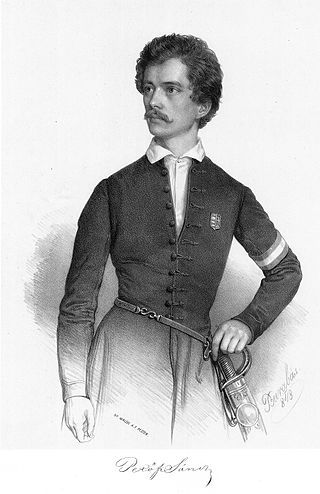
Sándor Petőfi was a Hungarian poet and liberal revolutionary. He is considered Hungary's national poet, and was one of the key figures of the Hungarian Revolution of 1848. He is the author of the Nemzeti dal, which is said to have inspired the revolution in the Kingdom of Hungary that grew into a war for independence from the Austrian Empire. It is most likely that he died in the Battle of Segesvár, one of the last battles of the war.

Dziady is a poetic drama by the Polish poet Adam Mickiewicz. It is considered one of the greatest works of both Polish and European Romanticism. To George Sand and Georg Brandes, Dziady was a supreme realization of Romantic drama theory, to be ranked with such works as Goethe's Faust and Byron's Manfred.

Pavel Jozef Šafárik was an ethnic Slovak philologist, poet, literary historian, historian and ethnographer in the Kingdom of Hungary. He was one of the first scientific Slavists.
Minjung is a Korean word that combines the two hanja characters min (民) and jung (衆). Min is from inmin, which may be translated as "the people", and jung is from daejung, which may be translated as "the public". Thus, minjung can be translated to mean "the masses" or "the people."
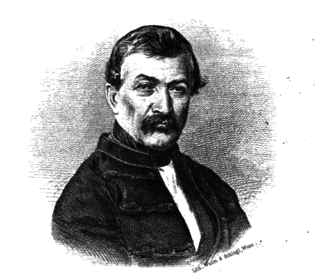
Samo Chalupka was a Slovak Lutheran priest and romantic poet.

Lāčplēsis is an epic poem by Andrejs Pumpurs, a Latvian poet, who wrote it between 1872 and 1887 based on local legends. It is set during the Livonian Crusades telling the story of the mythical hero Lāčplēsis "the Bear Slayer". Lāčplēsis is regarded as the Latvian national epic.
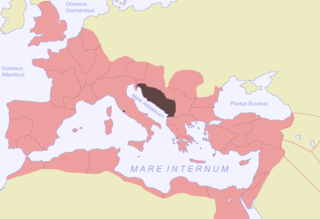
Illyricum was a Roman province that existed from 27 BC to sometime during the reign of Vespasian. The province comprised Illyria/Dalmatia in the south and Pannonia in the north. Illyria included the area along the east coast of the Adriatic Sea and its inland mountains, eventually being named Dalmatia. Pannonia included the northern plains that now are a part of Serbia, Croatia and Hungary. The area roughly corresponded to part or all of the territories of today's Albania, Kosovo, Montenegro, Serbia, Bosnia and Herzegovina, Croatia, and Slovenia.
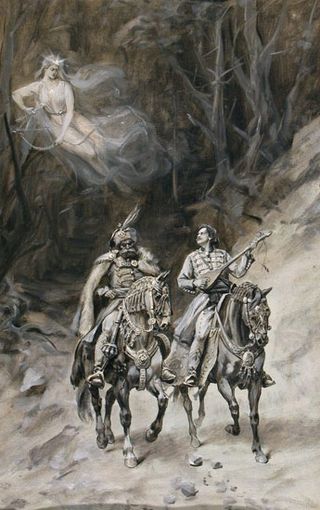
A vila, or víla is a Slavic fairy similar to a nymph.
Dengizich, was a Hunnic ruler and son of Attila. After Attila's death in 453 AD, his empire crumbled and its remains were ruled by his three sons, Ellac, Dengizich and Ernak. He succeeded his older brother Ellac in 454 AD, and probably ruled simultaneously over the Huns in dual kingship with his brother Ernak, but separate divisions in separate lands.
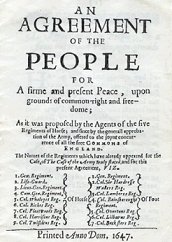
An Agreement of the People was a series of manifestos, published between 1647 and 1649, for constitutional changes to the English state. Several versions of the Agreement were published, each adapted to address not only broad concerns but also specific issues during the fast changing revolutionary political environment of those years. The Agreements of the People have been most associated as the manifestos of the Levellers but were also published by the Agitators and the General Council of the New Model Army.

Samo Tomášik, also known as Samuel Tomášik, pseudonyms Kozodolský, Tomášek; February 8, 1813 – September 10, 1887) was a Slovak romantic poet and prosaist.

The Hungarian Revolution of 1848, also known in Hungary as Hungarian Revolution and War of Independence of 1848–1849 was one of many European Revolutions of 1848 and was closely linked to other revolutions of 1848 in the Habsburg areas. Although the revolution failed, it is one of the most significant events in Hungary's modern history, forming the cornerstone of modern Hungarian national identity—the anniversary of the Revolution's outbreak, 15 March, is one of Hungary's three national holidays.
Romanticism originated in the second half of the 18th century at the same time as the French Revolution. Romanticism continued to grow in reaction to the effects of the social transformation caused by the Revolution. There are many signs of these effects of the French Revolution in various pieces of Romantic literature. By examining the influence of the French Revolution, one can determine that Romanticism arose as a reaction to the French Revolution. Instead of searching for rules governing nature and human beings, the romantics searched for a direct communication with nature and treated humans as unique individuals not subject to scientific rules.
The Popular Greek Patriotic Union , known more commonly by its acronym, LEPEN (Λ.Ε.Π.ΕΝ.), is a nationalist and far-right political party in Greece.

