
Ayatollah Mohammad Mofatteh was an Iranian philosopher, theologian, and political activist, born in Famenin, Hamadan, Iran. After he finished his primary education in Hamadan, he left for the Islamic Seminary in Qom, where he was taught by reputable teachers such as Ayatollah Muhammad Hujjat Kuh-Kamari, Ayatollah Sayyed Hossein Tabatabei Borujerdi, Grand Ayatollah Sayyid Ruhollah Mūsavi Khomeini, Ayatollah Mohammad-Reza Golpaygani, Ayatollah Marashi, and Allameh Tabatabie. He continued his studies at seminary and at the same time studied philosophy at Tehran University, where he earned his PhD and became a professor and a dean of colleague.

Grand Ayatollah Naser Makarem Shirazi is an Iranian Shia marja' and religious leader.
Haj Seyyed Ahmad Khansari (1891–1950/51), son of Seyyed Yusef Khansari, was one of the conspicuous jurisprudents.

Grand Ayatollah Sayyid Muhammad-Sadiq Husayni Rohani was an Iranian Shia marja'.

Grand Ayatollah Mohammad-Reza Golpaygani was an Iranian Shia and marja' scholar. He was born in 1899 in Gogad village near the city of Golpaygan, Iran. He was taught preliminary studies by his father, Mohammad Bagher. At the age of 9, his father died and he later on moved to Golpaygan to continue his studies. He was one of the highest-ranking Shia clergies to participate in the Iranian Revolution, and a one-time serious contender to succeed Ruhollah Khomeini in the 1989 Iranian Supreme Leader election. However, his candidacy was voted down by the Assembly of Experts, in favor of the eventual successor, Ali Khamenei.

Ayatollah Sayyid Mohammad-Ali Mousavi Jazayeri is an Iranian Twelver Shia cleric, who was the representative of Vali-Faqih in Khuzestan province from 1983 to 2019. He was elected by the order of Sayyid Ruhollah Khomeini, who was the previous Supreme Leader of Iran.

The Qom Seminary is the largest Islamic seminary (hawza) in Iran, established in 1922 by Grand Ayatollah Abdul-Karim Haeri Yazdi in Qom. It trains Usuli scholars.

Seyyed Nematollah Jazayeri was a prominent Shia Akhbari scholar born in 1640 and died in 1700, in one of the islands around Basra. He was one of the grandchildren of Musa al-Kadhim. His paternal lineage is as follows: Seyyed Ne'mat Allah son of Seyyed Abd Allah son of Mohammad son of Hossein son of Ahmad son of Mahmoud son of Ghias Aldin son of Majd Aldin son of Noor Aldin son of Saad Allah son of Issa son of Musa son of Abdallah son of Musa al-Kadhim.
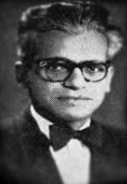
Seyyed Mohammad-Ali Emam-Shooshtari was a prominent Iranian historian and religious scholar.

Ayatollah Ata'ollah Ashrafi Esfahani was an Iranian religious leader. He was born near Esfahan and educated in Esfahan and at the Qom Seminary. He became a mojtahed when he was 40. After the Islamic Revolution of 1979, he was selected as the Imam Jumu'ah for the city of Kermanshah. He was killed during Friday prayer on 15 October 1982.
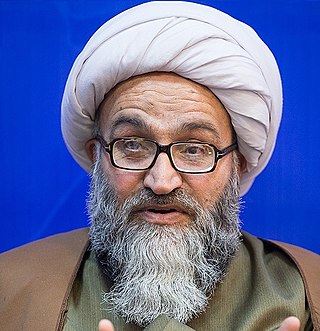
Ayatollah Mohsen Heidari AleKasir is an Iranian Shia Islamic cleric who was born in 1957 in a middle-class rural family in the village of Hor Riyahi Abadi which is located near to Shush in Khuzestan province. He is one of Khuzestan current members in Assembly of Experts.

Mir Ahmad Reza Hajati who is famous as "Ayatollah-Hajati", "Hujjat al-Islam Hajati" or "Hujjatul-Islam wal Muslimin Hajati" is one of Ahwaz temporary Imam Jom'ah . He was born in 1967 in Masjed Soleyman; his father's name is Hajat Morad. Ayatollah Hajati is the author of the book "Asr (era) of Imam Khomeini" which is considered/taught as a reference book in some universities, and it has been translated in 3 prominent languages of the world; this expresses the personality of the founder of the Islamic revolution.
Seyyed Mohammad Jafar Moravej whose complete name/fame is "Seyyed Muhammad Jafar Jazaeri Moravej al-Shariah", was an Iranian Shia scholar who was born in 1910 and died in 1999, in a religious family in Shushtar. His father was Seyyed Muhammad Ali Moravej, and he is among the descendants of Seyyed Nematollah Jazayeri who was a prominent Shia scholar. This Shia scholar is commonly known as "Ayatollah Seyyed Muhammad Jafar Moravej".

Sayyid Abdul-Nabi Mousavi Fard is an Iranian Twelver Shi'a cleric, who has served as the representative of Wali-Faqih in Khuzestan province and likewise as the Imam of Friday Prayer of Ahwaz by the order of Sayyid Ali Khamenei, the supreme leader of Iran since 30 April 2019.

Seyyed Ali Shafiei is an Iranian Twelver Shia scholar, who is a member of Assembly of Experts from Khuzestan province. He is a/the son of Seyyed Mohammad Reza (Shafiei) who was from the known Islamic scholars of Khuzestan. Seyyed Ali Shafiei commenced his educations from Maktabkhaneh (Kuttab), and began to peruse Quran and Islamic issues. Afterwards, he entered a new school. Later on, he went to educate Hawzah lessons in the city of Ahwaz. Then, Seyyed-Ali departed to the Seminary of Najaf, in Iraq. After Najaf, he came back to Ahwaz; and was appointed as a/the Imam of Jama'ah in Ahwaz, and commenced to promote Islamic rulings.

Mohammad Hadi Mofatteh is a Twelver Shia Muslim cleric. From September 2018 until July 2024, he was the head and director of the Islamic Centre Hamburg, the center of Shia Islam in Germany, which operated between 1965 until its banning in July 2024.

Ayatollah Sayyid Mohammad Khamenei is an Iranian cleric and politician. He is the older brother of Ali Khamenei, the current Supreme Leader of Iran, and Hadi Khamenei. Currently, he is the president of Iranology Foundation, and Sadra Islamic Wisdom Foundation, he is a professor at Allameh Tabataba'i University, School of International Relations and Al-Zahra University. He was also one of the compilers of the Constitution of the Islamic Republic of Iran and a member for the Islamic Consultative Assembly representing Mashhad.

Ayatollah Seyyed Mohammad Ziaabadi was an Iranian Mujtahid that was based in the Tehran Islamic Seminary. He specialised in Islamic ethics and interpretation of the Quran.

Seyed Mahdi Hosseini Rohani Persian: سید مهدی حسینی روحانی was an Iranian Ayatollah born in Qom. He served in the First, Second, and Third terms of the Assembly of Experts.


