Nigizubi

Last updated

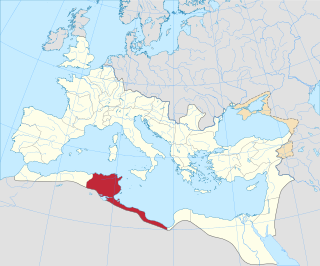
Nigizubi was a Roman Berber town in the province of Numidia. It was located in modern Algeria. [1] It was also the seat of an ancient bishopric. [2] [3] during the Vandal Kingdom and Roman Empire. [4] The exact location of the ancient town is now lost but it was somewhere in north-eastern Algeria.
Roman Empire Period of Imperial Rome following the Roman Republic (27 BC–476 AD)

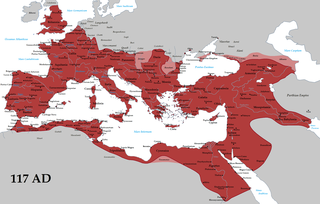
The Roman Empire was the post-Roman Republic period of the ancient Roman civilization. Ruled by emperors, it had large territorial holdings around the Mediterranean Sea in Europe, North Africa, the Middle East, and the Caucasus. From the constitutional reforms of Augustus to the military anarchy of the third century, the Empire was a principate ruled from the city of Rome. The Roman Empire was then ruled by multiple emperors and divided in a Western Roman Empire, based in Milan and later Ravenna, and an Eastern Roman Empire, based in Nicomedia and later Constantinople. Rome remained the nominal capital of both parts until 476 AD, when Odoacer deposed Romulus Augustus after capturing Ravenna and the Roman Senate sent the imperial regalia to Constantinople. The fall of the Western Roman Empire to barbarian kings, along with the hellenization of the Eastern Roman Empire into the Byzantine Empire, is conventionally used to mark the end of Ancient Rome and the beginning of the Middle Ages.

Berbers Ethnic group indigenous to North Africa

Berbers, or Amazighs are an ethnic group of several nations indigenous mostly to North Africa and in some northern parts of Western Africa.

Roman province Major Roman administrative territorial entity outside of Italy

The Roman provinces were the lands and people outside of Rome itself that were controlled by the Republic and later the Empire. Each province was ruled by a Roman who was appointed as governor. Although different in many ways, they were similar to the states in Australia or the United States, the regions in the United kingdom or New Zealand, or the prefectures in Japan. Canada refers to some of its territory as provinces.
Bishopric

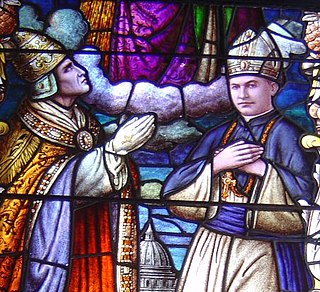
The only known bishop of this diocese was the Donatist bishop, Gaudenzio, who took part in the Council of Carthage (411), [5] between Catholic and Donatist bishops in Numidia. The diocese ceased to effectively function following the Muslim conquest of the Maghreb in the 7th century. Today Nigizubi Diocese survives as titular bishopric [6] [7] and the current bishop is Adolfo Eduardo José Bittschi Mayer, of Sucre.

Diocese Christian district or see under the supervision of a bishop

The word diocese is derived from the Greek term dioikesis (διοίκησις) meaning "administration". Today, when used in an ecclesiastical sense, it refers to the ecclesiastical district under the jurisdiction of a bishop.

Catholic Church Christian church led by the Bishop of Rome

The Catholic Church, also known as the Roman Catholic Church, is the largest Christian church, with approximately 1.3 billion baptised Catholics worldwide as of 2017. As the world's "oldest continuously functioning international institution", it has played a prominent role in the history and development of Western civilisation. The church is headed by the Bishop of Rome, known as the pope. Its central administration, the Holy See, is in the Vatican City, an enclave within the city of Rome in Italy.

Muslim conquest of the Maghreb Military campaign

The Muslim conquest of the Maghreb continued the century of rapid Muslim conquests following the death of Muhammad in 632 AD and into the Byzantine-controlled territories of Northern Africa. In a series of three stages, the conquest of the Maghreb commenced in 647 and concluded in 709 with the "Byzantine" Roman Empire losing its last remaining strongholds to the then-Umayyad Caliphate.

The location of the diocese seat and cathedra is not known but presumably was called Naratcatensis and was somewhere in today's Algeria.

<i>Cathedra</i> seat of a bishop

A cathedra or bishop's throne is the seat of a bishop. It is a symbol of the bishop's teaching authority in the Catholic Church, the Orthodox Church, and the Anglican Communion churches. Cathedra is the Latin word for a chair with armrests, and it appears in early Christian literature in the phrase "cathedrae apostolorum", indicating authority derived directly from the apostles; its Roman connotations of authority reserved for the Emperor were later adopted by bishops after the 4th century. A church into which a bishop's official cathedra is installed is called a cathedral.

Algeria country in North Africa

Algeria, officially the People's Democratic Republic of Algeria, is a country in the Maghreb region of North Africa. The capital and most populous city is Algiers, located in the far north of the country on the Mediterranean coast. With an area of 2,381,741 square kilometres (919,595 sq mi), Algeria is the tenth-largest country in the world, the world's largest Arab country, and the largest in Africa. Algeria is bordered to the northeast by Tunisia, to the east by Libya, to the west by Morocco, to the southwest by the Western Saharan territory, Mauritania, and Mali, to the southeast by Niger, and to the north by the Mediterranean Sea. The country is a semi-presidential republic consisting of 48 provinces and 1,541 communes (counties). It has the highest human development index of all non-island African countries.

Naratcata, was also the seat of an ancient episcopal see of the Roman province of Numidia. There are two known bishops of Naratcata:

Numidia Ancient Berber kingdom in North Africa

Numidia was an ancient Berber kingdom of the Numidians, located in what is now Algeria and a smaller part of Tunisia and Libya in the Berber world, in North Africa. The polity was originally divided between Massylii in the east and Masaesyli in the west. During the Second Punic War, Massinissa, king of the Massylii, defeated Syphax of the Masaesyli to unify Numidia into one kingdom. The kingdom began as a sovereign state and later alternated between being a Roman province and a Roman client state. It was bordered by Atlantic ocean to the west, Africa Proconsularis to the east, the Mediterranean Sea to the north, and the Sahara Desert to the south. It is considered to be one of the first major states in the history of Algeria and the Berber world.

A bishop is an ordained, consecrated, or appointed member of the Christian clergy who is generally entrusted with a position of authority and oversight.

Vandal Kingdom Kingdom existed in North Africa from 429 to 534

The Vandal Kingdom or Kingdom of the Vandals and Alans was established by the Germanic Vandal people under Genseric, and ruled in North Africa and the Mediterranean from 435 AD to 534 AD.

Huneric or Hunneric or Honeric was King of the Vandal Kingdom (477–484) and the oldest son of Genseric. He abandoned the imperial politics of his father and concentrated mainly on internal affairs. He was married to Eudocia, daughter of western Roman Emperor Valentinian III (419–455) and Licinia Eudoxia. The couple had one child, a son named Hilderic.

The diocese ceased to function with the Muslim conquest of the Maghreb but was re-established in name at least in 1933. [8] Today Naratcata survives as a titular bishopric and the bishop is Jean-Pierre Kwambamba Masi, of Kinshasa. The location of the diocese seat and cathedra is not known but presumably was a place called Naratcatensis and was somewhere in today's Algeria. [9] The current bishop is Jean-Pierre Kwambamba Masi who replaced Fernando Bascopé Müller in 2014.

A titular bishop in various churches is a bishop who is not in charge of a diocese. By definition, a bishop is an "overseer" of a community of the faithful, so when a priest is ordained a bishop, the tradition of the Roman Catholic and Orthodox churches is that he be ordained for a specific place. There are more bishops than there are functioning dioceses. Therefore, a priest appointed not to head a diocese as its diocesan bishop but to be an auxiliary bishop, a papal diplomat, or an official of the Roman Curia is appointed to a titular see.

Related Research Articles

Girus Tarasii

Girus Tarasii was a town in the Roman province of Numidia that became a residential episcopal see. It is tentatively identified with ruins situated at what is now called Henchir-Tarsa in Algeria.

The city of Rusticiana was located in the Roman province of Numidia. Its location and the corresponding modern city are unknown.

Hospita is former Ancient city and Roman bishopric, in present Algeria, now a Latin Catholic titular see.

Vagrauta also known as Vagrautensis was a Roman and Byzantine era settlement in the Berber kingdom of Numidia. The site has not been satisfactorily identified though it is in modern Algeria.

Tabunia

Tabunia, is an ancient city and former bishopric of Roman North Africa, which remains a Latin Catholic titular see.

Taborenta, Mauretania Caesariensis was a Berber civitas (town) and bishopric in Roman North Africa. It disappeared during the 7th century, and is assumed to be near Saida in modern Algeria. It was nominally restored in 1933 as a titular see.

Tabaicara

Tabaicara was a Roman-Berber civitas and bishopric in Mauretania Caesariensis. It is now a Latin Catholic titular see.

Thagamuta titular see in Tunisia

Thagamuta was a Roman–Berber city in the province of Byzacena. The location of the town is not definitively known, but it was on the plain of Guemouda in modern Tunisia.

Buleliana was a civitas (town) and bishopric in Roman North Africa and remains a Latin Catholic titular see.

Utimmira titular see in Tunisia

Utimmira, was an ancient Roman town of the Roman province of Africa Proconsularis near Carthage in today's Tunisia, the exact location of which has been lost to history.

Aquae in Byzacena titular see in Tunisia

The Diocese of Aquensis in Byzacena is a home suppressed and titular see of the Roman Catholic Church.

Tagarbala titular see in Tunisia

Tagarbala was a Roman–Berber civitas of the province of Byzacena during late antiquity. It was a Roman Catholic diocese.

Diocese of Dices

The Diocese of Dices, is a titular see of the Roman Catholic Church. The location of the seat of the diocese is unknown for certain, but is perhaps identifiable with Henchir-Sidi-Salah, Tunisia. Henchir Sidi Salah was an ancient diocese in the Roman-Berber province of Byzacena.

Media was an ancient city and former bishopric in Roman North Africa, now a Latin Catholic titular see in Algeria.

Panatoria

Panatoria was an ancient city in the Roman province of Mauretania Caesariensis, during the Roman Empire. An exact location of the city is not known but it was in what is today the north of Algeria.

The Diocese of Fronta Latin: Dioecesis Frontensis) is a suppressed and titular see of the Roman Catholic Church.

The Diocese of Sita was a Christian diocese in Africa Proconsularis. It is presently a bishopric of the Roman Catholic Church.

The diocese of Garba is a suppressed and titular see of the Roman Catholic Church.

Rufiniana Archaeological site in Tunisia

The diocese of Rufiniana is a suppressed and titular bishopric of the Roman Catholic Church.

The diocese of Presidio is a suppressed and titular see of the Roman Catholic Church.

References

  1. Titular Episcopal See of Nigizubi at GCatholic.org.
  2. Pius Bonifacius Gams, Series Episcoporum Ecclesiae Catholicae, (Leipzig, 1931), p. 467.
  3. Stefano Antonio Morcelli, Africa Christiana, Volume I (Brescia, 1816), p. 239.
  4. Titular Episcopal See of Naratcata, at Gcatholic.org.
  5. Optatus, Sancti Optati Milevitani episcopi Opera cum observationibus et notis (1679).
  6. Stefano Antonio Morcelli, Africa Christiana, Volume I, (Brescia 1816), p. 244
  7. Pius Bonifacius Gams, Series Episcoporum Ecclesiae Catholicae, Leipzig 1931, p. 467.
  8. Titular Episcopal See of Naratcata at Gcatholic.org.
  9. Naratcata at catholic-hierarchy.org.