Related Research Articles

Trick-or-treating is a traditional Halloween custom for children and adults in some countries. During the evening of Halloween, on October 31, people in costumes travel from house to house, asking for treats with the phrase "trick or treat". The "treat" is some form of confectionery, usually candy/sweets, although in some cultures money is given instead. The "trick" refers to a threat, usually idle, to perform mischief on the resident(s) or their property if no treat is given. Some people signal that they are willing to hand out treats by putting up Halloween decorations outside their doors; houses may also leave their porch lights on as a universal indicator that they have candy; some simply leave treats available on their porches for the children to take freely, on the honor system.

A Christmas carol is a carol (a song or hymn) on the theme of Christmas, traditionally sung at Christmas itself or during the surrounding Christmas and holiday season. The term noel has sometimes been used, especially for carols of French origin. Christmas carols may be regarded as a subset of the broader category of Christmas music.

Nowruz is the Iranian New Year or Persian New Year. Historically, it has been observed by Persians and other Iranian peoples, but is now celebrated by many ethnicities worldwide. It is a festival based on the Northern Hemisphere spring equinox, which marks the first day of a new year on the Solar Hijri calendar; it usually coincides with a date between 19 March and 22 March on the Gregorian calendar.
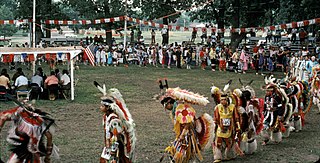
A powwow is a gathering with dances held by many Native American and First Nations communities. Inaugurated in 1923. Powwows today are an opportunity for Indigenous people to socialize, dance, sing, and honor their cultures. Powwows may be private or public, indoors or outdoors. Dancing events can be competitive with monetary prizes. Powwows vary in length from single-day to weeklong events.

Wren Day, or Hunt the Wren Day, is an Irish and Manx custom on 26 December, Saint Stephen's Day. Traditionally, men and boys hunted a wren, which was revered as the 'king of the birds'. They displayed it on top of a staff decorated with holly, ivy and ribbons, or in a decorated box on top of a pole. This was paraded around the neighbourhood by a group of 'Wrenboys'—typically dressed in straw masks, greenery and colourful motley clothing—who sang songs and played music in exchange for donations. This was meant to ensure prosperity for the coming year. Afterwards, the wren was buried. On the Isle of Man, they held a funeral for the wren and danced around a 'wren pole'.

The observance of Christmas around the world varies by country. The day of Christmas, and in some cases the day before and the day after, are recognized by many national governments and cultures worldwide, including in areas where Christianity is a minority religion which are usually found in Africa and Asia. In some non-Christian areas, periods of former colonial rule introduced the celebration ; in others, Christian minorities or foreign cultural influences have led populations to observe the holiday.
Calennig is a Welsh word meaning "New Year celebration/gift", although it literally translates to "the first day of the month", deriving from the Latin word kalends. The English word "calendar" also has its root in this word.
In Scottish, Northern English, and Manx folklore, the first-foot is the first person to enter the home of a household on New Year's Day and is seen as a bringer of good fortune for the coming year. Similar practices are also found in Greek, Vietnamese, and Georgian new year traditions.

The Yule goat is a Scandinavian and Northern European Yule and Christmas symbol and tradition. Its origin is from Germanic paganism and has existed in many variants during Scandinavian history. Modern representations of the Yule goat are typically made of straw.

Julebukking is a Christmas tradition of Scandinavian origin.

Hāji Firuz or Khwāje Piruz is a fictional character in Iranian folklore who appears in the streets by the beginning of Nowruz. His face is covered in soot, and he is clad in bright red clothes and a felt hat. He dances through the streets while singing and playing a tambourine.
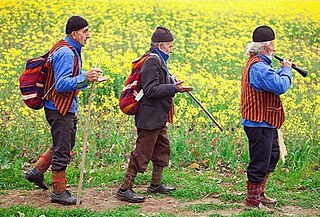
The Tabarian New Year, or Neowrez, occurs in the pintek days of the Tabarian Calendar.
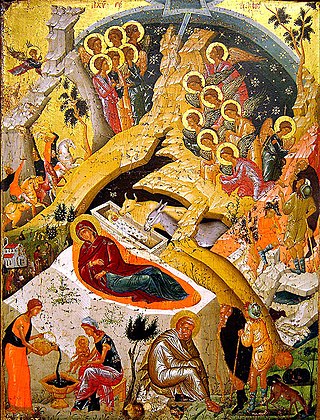
Serbian Christmas traditions are customs and practices of the Serbs associated with Christmas and a period encompassing it, between the third Sunday before Christmas Day and Epiphany. Serbian Christmas is celebrated on January 7th. There are many, complex traditions connected with this period. They vary from place to place, and in many areas have been updated or watered down to suit modern living. The Serbian name for Christmas is Božić, which is the diminutive form of the word bog ("god"), and can be translated as "young god". Christmas is celebrated for three consecutive days, starting with Christmas Day, which the Serbs call the first day of Christmas. On these days, one is to greet another person by saying "Christ is Born," which should be responded to with "Truly He is Born," or in Serbian: "Hristos se rodi" – "Vaistinu se rodi".
Sean-nós singing is unaccompanied, traditional Irish vocal music usually performed in the Irish language. Sean-nós singing usually involves very long melodic phrases with highly ornamented and melismatic melodic lines, differing greatly from traditional folk singing elsewhere in Ireland, although there is significant regional variation within Ireland. Sean-nós songs cover a range of genres, from love song to lament to lullaby, traditionally with a strong focus on conveying the relevant emotion of the given song. The term sean-nós, which simply means '[in the] old way', is a vague term that can also refer to various other traditional activities, musical and non-musical.
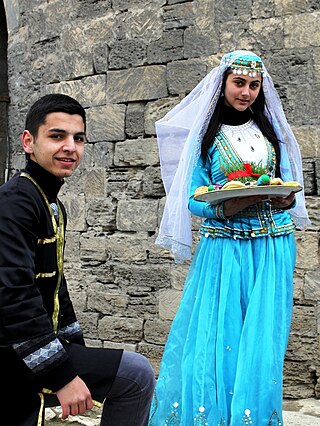
Novruz in Azerbaijan is a traditional holiday which celebrates the astronomical spring equinox and the coming of Spring. When Azerbaijan was part of the Soviet Union, the celebration of Novruz was generally unofficial and at times even prohibited. Currently in Azerbaijan, Novruz is treated as an official public holiday. In accordance with Article 105 of the Labour Code of Azerbaijan passed in 2006, workers receive five days off for Novruz. After neighbouring Iran, Azerbaijan hosts the longest observance and number of public days related to Novruz, with a total of five days.

The culture of the Assyrians is both distinct from those of neighbouring ethnic groups as well as ancient. Many Assyrians still speak, read and write various Akkadian-influenced dialects of Eastern Aramaic, labelled by linguists as Northeastern Neo-Aramaic and Central Neo-Aramaic. They are predominantly adherents of several denominations of Syriac Christianity, notably the Ancient Church of the East, the Assyrian Church of the East, the Chaldean Catholic Church, the Syriac Catholic Church and the Syriac Orthodox Church. Some are followers of the Assyrian Pentecostal Church and Assyrian Evangelical Church. A minority are secular or irreligious.
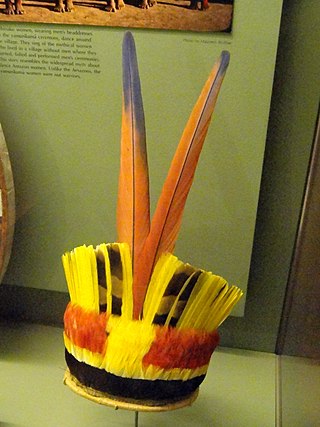
The Wauja or Waura are an indigenous people of Brazil. Their language, Waurá, is an Arawakan language. They live in the region near the Upper Xingu River, in the Xingu Indigenous Park in the state of Mato Grosso, and had a population of 487 in 2010.
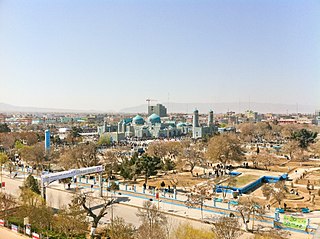
Nowruz is the beginning of springtime and a cultural holiday in Afghanistan. It is also celebrated by the majority of the Afghan diaspora around the world. Farmer's Day, which starts around the same time as the Afghan New Year, is celebrated nationwide alongside Nowruz and usually lasts around two weeks. Among other things, the celebration involves planting saplings and flowers throughout the country.

Siuda Baba is an old Polish folk custom, celebrated on Easter Monday and surviving today in only a handful of villages surrounding Kraków. The character of Siuda Baba is performed by a local man who dresses up as a shabbily clothed woman whose face is blackened with soot. Siuda Baba walks from house to house, accompanied by other characters – a Gypsy and Krakowiacy. The group visits houses, collecting donations and smearing girls' faces with soot.
National traditions are well preserved in Azerbaijan. They have a long history, namely originates from the formation of the Azerbaijani people. There are several traditions in Azerbaijan, some customs and traditions differ from region to region.
References
- ↑ "@newsTitle". Shabestan.ir. 19 March 2015. Retrieved 16 May 2018.
 | This folk song–related article is a stub. You can help Wikipedia by expanding it. |
 | This article about a tradition is a stub. You can help Wikipedia by expanding it. |