
Nyarubuye is a sector (imirenge) of the Kirehe District, Eastern Province in Rwanda. Its area is 85.91 km2, and its population in 2022 was 22,660. [1]
Nyarubuye is a sector (imirenge) of the Kirehe District, Eastern Province in Rwanda. Its area is 85.91 km2, and its population in 2022 was 22,660. [1]
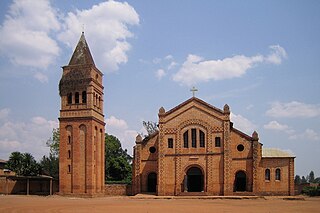
In April 1994, many Tutsis sought refuge in a Catholic church in Nyarubuye. The local mayor, Sylvestre Gacumbitsi, was later found guilty of participating in the attack at the church and convicted of the crime of genocide and crimes against humanity. The ICTR found that between 15 and 17 April 1994, he had directed attacks against the Tutsi civilian refugees who had gathered at the Nyarubuye Parish and that he had personally took part in the attacks. On 15 April, he killed a Tutsi called Murefu. On 15, 16 and 17 April, he directed attacks by giving clear instructions to assailants to attack Tutsi who had sought refuge in the church. Among the assailants of 15 April were the Interahamwe, the gendarmes and the communal police. [2]
On 7 July 2006, the Appeals Chamber of the ICTR sentenced Gacumbitsi to life imprisonment. [3]
The church is now a memorial to the genocide. [4]
A similar event occurred in a Catholic church in Nyange, Kibuye, which was bulldozed and attacked on 16 April 1994, killing more than 1,500 displaced Tutsis inside. The parish priest, Father Athanase Seromba, was convicted in 2006 of genocide for that crime at the ICTR. [5]
The International Criminal Tribunal for Rwanda was an international court established in November 1994 by the United Nations Security Council in Resolution 955 in order to adjudicate people charged for the Rwandan genocide and other serious violations of international law in Rwanda, or by Rwandan citizens in nearby states, between 1 January and 31 December 1994. The court eventually convicted 61 individuals and acquitted 14.

The Rwandan genocide, also known as the genocide against the Tutsi, occurred from 7 April to 19 July 1994 during the Rwandan Civil War. Over a span of around 100 days, members of the Tutsi ethnic group, as well as some moderate Hutu and Twa, were systematically killed by Hutu militias. While the Rwandan Constitution states that over 1 million people were killed, most scholarly estimates suggest between 500,000 and 662,000 Tutsi died. The genocide was marked by extreme violence, with victims often murdered by neighbors, and widespread sexual violence, with between 250,000 and 500,000 women raped.
The Nyarubuye massacre is the name which is given to the killing of an estimated 20,000 civilians on April 15, 1994 at the Nyarubuye Roman Catholic Church in Kibungo Province, 140 km (87 mi) east of the Rwandan capital Kigali. The victims were Tutsis. Men, women, and children were reported to have been indiscriminately killed, with the attackers allegedly using spears, machetes, clubs, hand grenades and automatic weapons. Local Interahamwe, acting in concert with the authorities, used bulldozers to knock down the church building. The militia used machetes and rifles to kill every person who tried to escape.
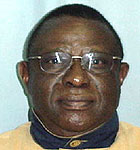
Théoneste Bagosora was a Rwandan military officer. He was chiefly known for his key role in the 1994 Rwandan genocide for which he was sentenced to life imprisonment by the International Criminal Tribunal for Rwanda (ICTR). In 2011, the sentence was reduced to 35 years' imprisonment on appeal. He was due to be imprisoned until he was 89. According to René Lemarchand, Bagosora was "the chief organizer of the killings". On 25 September 2021, he died in a prison hospital in Mali, where he was being treated for heart issues.
Elizaphan Ntakirutimana was a Rwandan pastor of the Seventh-day Adventist Church. He was the first clergyman to be convicted for a specific leadership role in the 1994 Rwandan genocide.
Protais Zigiranyirazo commonly known as Monsieur Zed, is a Rwandan businessman and politician and was governor of the Ruhengeri prefecture in northwestern Rwanda from 1974 to 1989. Zigiranyirazo was a member of the Akazu, an elite circle of relatives and friends of former President Juvénal Habyarimana who pushed the Hutu Power ideology.
Jean-Paul Akayesu is a former teacher, school inspector, and Republican Democratic Movement (MDR) politician from Rwanda, convicted of genocide for his role in inciting the 1994 genocide against the Tutsi.
Simon Bikindi was a Rwandan musician and singer who was formerly very popular in Rwanda. His patriotic and nationalist songs were playlist staples on the national radio station Radio Rwanda during the Rwandan Civil War. For his actions during the Rwandan genocide, he was tried and convicted for incitement to genocide by the International Criminal Tribunal for Rwanda (ICTR) in 2008. He died of diabetes at a Beninese hospital in December 2018.
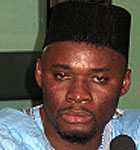
Hassan Ngeze is a Rwandan journalist and convicted war criminal best known for spreading anti-Tutsi propaganda and Hutu superiority through his newspaper, Kangura, which he founded in 1990. Ngeze was a founding member and leadership figure in the Coalition for the Defence of the Republic (CDR), a Rwandan Hutu Power political party that is known for helping to incite the genocide.
Athanase Seromba is a Catholic priest from Rwanda who was found guilty of committing genocide and of crimes against humanity during the Rwandan genocide.
Ferdinand Nahimana is a Rwandan historian, who was convicted of incitement to genocide for his role in the 1994 Genocide against Tutsi in Rwanda.

Father Wenceslas Munyeshyaka is a Rwandan priest working in France who was convicted of genocide by a Rwandan military court. Munyeshyaka was pursued in the French courts but in October 2015 the case was not continued because of the quality of the evidence. Despite the controversy and his Rwandan conviction he has been employed as a priest in France since 2001.
Christianity is the largest religion in Rwanda, with Protestantism and Catholicism being its main denominations. Around 3% of the population claims no religious affiliation, while another 3% practices other religions including traditional faiths. Approximately 2% of the populace is Muslim.
Fulgence Kayishema is a Rwandan Hutu militiaman arrested for war crimes in relation to his role in the 1994 Rwandan genocide. Born in Kivumu, he was the inspector of the judicial police there at the time of the genocide. His indictment cites his involvement in massacres from April 6, 1994, until April 20, along with Athanase Seromba, Grégoire Ndahimana, Télesphore Ndungutse, the judge Joseph Habiyambere and the assistant mayor Vedaste Mupende.
Charles Sikubwabo was a Rwandan fugitive war criminal wanted for his role in the 1994 Rwandan genocide. He was indicted following by the United Nations' International Criminal Tribunal for Rwanda for genocide, crimes against humanity, and other violations of international humanitarian law. He served as mayor of Gishyita commune, Kibuye prefecture, from 1993 till July 1994. According to the indictment against him, Sikubwabo played an instrumental role in the murder of Tutsis in the Kibuye region during the genocide, including personally participating in killings. During this period, in contact with Clement Kayishema, Obed Ruzindana, and Aloys Ndimbati, amongst others, he facilitated the murders of Tutsis who sought refuge in the Bisesero hills. On April 30th 2024 the war crimes tribunal for Rwanda declared it had enough evidence to confirm Sikubwabo's death. He is believed to have been buried in an unmarked grave in central Africa.
Grégoire Ndahimana is the former mayor of Kivumu, Rwanda. Indicted and arrested for alleged war crimes by the International Criminal Tribunal for Rwanda (ICTR), Ndahimana is thought to be one of the key figures in the 1994 Rwandan genocide, and is claimed to have had up to 6,000 Tutsi killed. In 2013, he was convicted of genocide and crimes against humanity and sentenced to 25 years in prison.
Emmanuel Rukundo is a Rwandan Roman Catholic priest who, in 2009, was convicted of genocide and crimes against humanity by the International Criminal Tribunal for Rwanda (ICTR) for his participation in the 1994 Rwandan Genocide.
Jean de Dieu Kamuhanda is a Rwandan politician who was sentenced to life imprisonment by the International Criminal Tribunal for Rwanda (ICTR) for his role in the 1994 Rwandan Genocide.
The Musha Church massacre refers to the killing of more than a thousand Tutsi civilians in April 1994 by Interahamwe, a Hutu paramilitary organization.

Kantano Habimana, commonly referred to as Kantano, was a presenter (animateur) on the Rwandan radio station RTLM, which played a significant role in promoting the genocide against the Tutsi. Like the station's other broadcasters, Habimana incited violence against Tutsi and moderate Hutu on the air.