
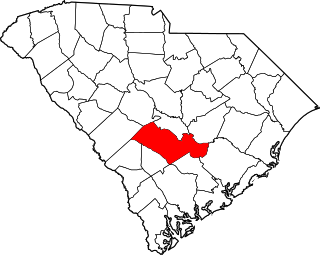
Orangeburg County is a county located in the U.S. state of South Carolina. As of the 2020 census, the population was 84,223. Its county seat is Orangeburg. The county was created in 1769.

Orangeburg, also known as The Garden City, is the principal city in and the county seat of Orangeburg County, South Carolina, United States. The population of the city was 13,964 according to the 2020 census. The city is located 37 miles southeast of Columbia, on the north fork of the Edisto River.

U.S. Highway 178 is a spur of U.S. Highway 78. It currently runs for 240.49 miles (387.03 km) from Dorchester, South Carolina, at U.S. Highway 78 to Rosman, North Carolina, at U.S. Highway 64. It passes through the states of South Carolina and North Carolina. It goes through the cities of Pickens, Anderson, North, Orangeburg, Harleyville, South Carolina and Bowman, South Carolina.

The Orangeburg Massacre was the killing of student protesters that took place on February 8, 1968, on the campus of South Carolina State College in Orangeburg, South Carolina. Nine Highway Patrolmen and one city police officer opened fire on a crowd of students, killing three and injuring twenty-eight. The shootings were the culmination of a series of protests against racial segregation at a local bowling alley, and marked the first instance of police killing student protestors at an American university.

The Midlands region of South Carolina is the middle area of the state. The region's main center is Columbia, the state's capital. The Midlands is so named because it is halfway point between the Upstate and the Lowcountry. The main area code is 803.
The Times and Democrat is a daily newspaper in Orangeburg, South Carolina. The Times and Democrat is owned by Lee Enterprises, a company based in Davenport, Iowa.
Orangeburg–Calhoun Technical College (OCtech) is a public community college in Orangeburg, South Carolina. It is part of the South Carolina Technical College System and serves Orangeburg and Calhoun counties.
Beverly "Bevo" Howard was an American aerobatic pilot and aviation businessman.
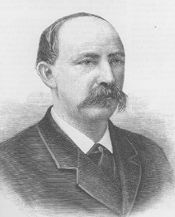
Samuel Dibble was a lawyer, educator and Confederate Civil War veteran who served several terms as U.S. Representative from South Carolina during the 1880s.

C. Bradley Hutto, is an American politician currently serving as a Democratic member of the South Carolina Senate, representing the Senate District 40 since 1996. Senate District 40 encompasses all or portions of the counties of Allendale, Bamberg, Barnwell, Colleton, Hampton, and Orangeburg.
Orangeburg-Wilkinson High School is located in Orangeburg, South Carolina.
This is a list of the National Register of Historic Places listings in Orangeburg County, South Carolina.

Orangeburg Municipal Airport is a city-owned, public-use airport located two nautical miles (4 km) south of the central business district of Orangeburg, a city in Orangeburg County, South Carolina, United States. It is included in the National Plan of Integrated Airport Systems for 2011–2015, which categorized it as a general aviation facility. The airport does not have scheduled commercial airline service.
Gloria Blackwell, also known as Gloria Rackley, was an African-American civil rights activist and educator. She was at the center of the Civil Rights Movement in Orangeburg, South Carolina during the 1960s, attracting some national attention and a visit by Dr. Martin Luther King of the Southern Christian Leadership Conference. Her activities were widely covered by the local press.
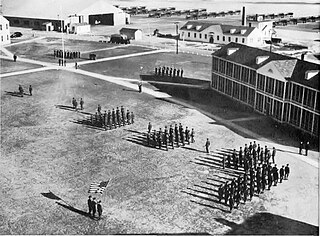
Hawthorne School of Aeronautics was a flying school and airport located 5 miles south of Orangeburg, South Carolina. The school was closed in 1945. Today the land is being used for non-aviation purposes.

South Carolina Highway 172 (SC 172) is a nine-point-zero-zero-zero-mile-long (14.484 km) state highway in the U.S. state of South Carolina. The highway travels through rural areas of Orangeburg and Calhoun counties.
Prior to the civil rights movement in South Carolina, African Americans in the state had very few political rights. South Carolina briefly had a majority-black government during the Reconstruction era after the Civil War, but with the 1876 inauguration of Governor Wade Hampton III, a Democrat who supported the disenfranchisement of blacks, African Americans in South Carolina struggled to exercise their rights. Poll taxes, literacy tests, and intimidation kept African Americans from voting, and it was virtually impossible for someone to challenge the Democratic Party, which ran unopposed in most state elections for decades. By 1940, the voter registration provisions written into the 1895 constitution effectively limited African-American voters to 3,000—only 0.8 percent of those of voting age in the state.
The New Year's Day March in Greenville, South Carolina was a 1,000-man march that protested the segregated facilities at the Greenville Municipal Airport, now renamed the Greenville Downtown Airport. The march occurred after Richard Henry and Jackie Robinson were prohibited from using a white-only waiting room at the airport. The march was the first large-scale movement of the civil rights movement in South Carolina and Greenville. The march brought state-wide attention to segregation, and the case Henry v. Greenville Airport Commission (1961) ultimately required the airport's integration of its facilities.
South Carolina Highway 69 may refer to:
