Dinka spirituality is the traditional religion of the Dinka people, an ethnic group of South Sudan. They belong to the Nilotic peoples, which is a group of cultures in Southern Sudan and wider Eastern Africa. The Dinka people largely rejected or ignored Islamic teachings, as Abrahamic religious beliefs were incompatible with their society, culture and traditional beliefs.

The Kakwa people are a Nilotic ethnic group and part of the Karo people found in north-western Uganda, south-western South Sudan, and north-eastern Democratic Republic of the Congo, particularly to the west of the White Nile river.
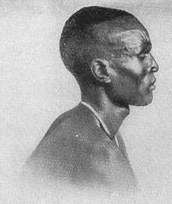
The Dinka people are a Nilotic ethnic group native to South Sudan. The Dinka mostly live along the Nile, from Mangalla-Bor to Renk, in the region of Bahr el Ghazal, Upper Nile, and the Abyei Area of the Ngok Dinka in South Sudan.

The Nuer people are a Nilotic ethnic group concentrated in the Greater Upper Nile region of South Sudan. They also live in the Ethiopian region of Gambella. The Nuer speak the Nuer language, which belongs to the Nilotic language family. They are the second-largest ethnic group in South Sudan and the largest ethnic group in Gambella, Ethiopia. The Nuer people are pastoralists who herd cattle for a living. Their cattle serve as companions and define their lifestyle. The Nuer call themselves "Naath".
Padang is a city in West Sumatra, Indonesia.
Dinka is a Nilotic dialect cluster spoken by the Dinka people, a major ethnic group of South Sudan. There are several main varieties, such as Padang, Rek, Agaar, Ciec, Apaak, Aliab, Bor, Hol, Nyarweng, Twic Bor and Twic Mayardit, which are distinct enough to require separate literary standards. Jaang, Jieng or Muonyjieng is used as a general term to cover all Dinka languages. Recently Akutmɛ̈t Latueŋ Thuɔŋjäŋ has proposed a unified written grammar of Dinka.

The Murle are a Surmic ethnic group inhabiting the Pibor County and Boma area in Greater Pibor Administrative Area, South Sudan, as well as parts of southwestern Ethiopia. They have also been referred as Beir by the Dinka and as Jebe by the Luo and Nuer, among others. The Murle speak the Murle language, which is part of the Surmic language family. The language cluster includes some adjoining groups in Sudan, as well as some non-contiguous Surmic populations in southwestern Ethiopia.
The Ruweng are part of South Sudan's larger Padang fraternity found in both South Sudan and northern Sudan. The Padang consists of Jok, Ruweng and Lual Yak. Ngok is one branch of the ten Dinka groups. The Dinka is the largest Nilotic group in the world.
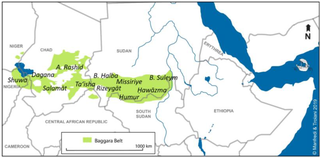
The Messiria, known also under the name of Misseriya Arabs, are a branch of the Baggara ethnic grouping of Arab tribes. Their language is Sudanese Arabic. Numbering over one million, the Baggara are the second largest ethnic group in Western Sudan, extending into Eastern Chad. They are primarily nomadic cattle herders and their journeys are dependent upon the seasons of the year. The use of the term Baggara carries negative connotations as slave raiders, so they prefer to be called instead Messiria.
The Thuri, also known as Shatt, and Luo people of South Sudan. They speak DheThuri, a Luo language that is similar to the Jur and Dinka languages. Having been perceived as close to the Dinka people, the Thuri were targets of ethnic violence during the Second Sudanese Civil War, when the "Army of Peace", a mostly Fertit pro-government militia, attacked them as supporters of the mostly Dinka SPLA rebels. This caused many Thuri to take up arms and to join the SPLA in order to take revenge against other Fertit groups.
Khorfulus County was a county in the former Eastern Nile of South Sudan. Khorfulus County is the Land of Dinka Padang that comprises Luach, Rut, Thoi and Paweny Dinka. These group of people are pastoralist and practice small scale farming. They border Shilluk to the North, Dinka Ngok to the East and Nuer to the South and West.
Luwo, is a language spoken by the Luo people of Bahr el Ghazal region in South Sudan. The language is predominantly spoken in the western and northern parts of Bahr el Ghazal. The Luwo form a majority in the Jur River County.
The Atwot (Reel) are a Nilotic ethnic group of South Sudan who live near Yirol in Lakes State. They comprise a majority of the population in the payam of Yirol West.

South Sudan is home to around 60 indigenous ethnic groups and 80 linguistic partitions among a 2021 population of around 11 million. Historically, most ethnic groups were lacking in formal Western political institutions, with land held by the community and elders acting as problem solvers and adjudicators. Today, most ethnic groups still embrace a cattle culture in which livestock is the main measure of wealth and used for bride wealth.
Ethnic violence in South Sudan has a long history among South Sudan's varied ethnic groups. South Sudan has 64 tribes with the largest being the Dinka, who constitute about 35% of the population and predominate in government. The second largest are the Nuers. Conflict is often aggravated among nomadic groups over the issue of cattle and grazing land and is part of the wider Sudanese nomadic conflicts.
The Luwo are a Nilotic ethnic group that live in the western parts of South Sudan. They are part of a larger group of ethno-linguistically related Luo peoples of East Africa. They speak the Luwo language which is a Northern Luo language.
South Sudanese Americans are an ethnic group of Americans of South Sudanese ancestry, or South Sudanese people who have American citizenship. South Sudanese Americans can include American descendants to South Sudanese ancestors or South Sudanese immigrants who obtained an American citizenship.

The South Sudanese Civil War was a multi-sided civil war in South Sudan between forces of the government and opposition forces. In December 2013, President Salva Kiir accused his former deputy Riek Machar and 10 others of attempting a coup d'état. Machar denied trying to start a coup and fled to lead the Sudan People's Liberation Movement-in-Opposition (SPLM-IO). Fighting broke out between the Sudan People's Liberation Movement (SPLM) and SPLM-IO, igniting the civil war. Ugandan troops were deployed to fight alongside the South Sudanese government. The United Nations has peacekeepers in the country as part of the United Nations Mission in South Sudan (UNMISS).
James Tor Monybuny is a South Sudanese politician who has been the deputy governor of Upper Nile State since January 2021, and was the first governor of Central Upper Nile State from 2017-2019. Monybuny is from Baliet, and is a member of the Ngok Lual Yak section of the Padang Dinka. Earlier in his career, Monybuny was a pastor for the Presbyterian Church in South Sudan and the Baliet County commissioner.
The Dinka and Nuer are the two largest ethnic groups in South Sudan. Conflict over pastures and cattle raids has been happening between these two ethnic groups as they battle for grazing their animals. In 1983, there was a civil war between Southern and Northern Sudan, and Southern Sudan was forced into the lower region, where there was less resources. These actions created conflict between the Dinka and Nuer people in South Sudan.


