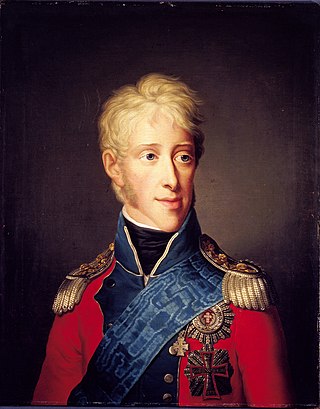
Peter Frederik Rist | |
|---|---|
| | |
| Born | 7 July 1844 Copenhagen, Denmark |
| Died | 25 June 1926 (aged 81) [1] |
| Allegiance | Denmark |
| Branch | Royal Danish Army |
| Years of service | 1864–1904 |
| Rank | Lieutenant Colonel |
| Battles / wars | Second Schleswig War |
| Other work | Author |
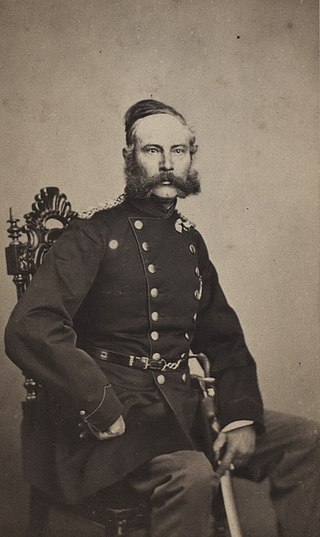
Peter Frederik Rist (1844-1926) was a Danish officer and author that participated in the Second Schleswig War and is the author of several fiction and non-fiction books about his experiences in the war.
Rist was born in Copenhagen; his parents were chamberlain August Ahlert Rist (died 1884) and Charlotte Frederikke born Philipsen (died 1863). Rist studied in the Det von Westenske Institut as he had his head full of fiction and theater, and even in the autumn of 1863 the view of the artium was probably a little cloudy but when the Second Schleswig War broke out, it was a significant contribution for inspiration for his works.
In January 1864 he became an officer aspirant and was part of the 9th Battalion in Fredericia, followed next month with Paul Ulrich Scharffenberg's brigade to Dybbøl and was wounded during the storming on the fortifications on 18 April. [2] [3] After his wounds were attended, he joined the rest of the campaign as a reserve second lieutenant. He was sent home after the conclusion of the peace and now had to study at the artium again; but for the second time the military stand took him and kept him. In 1866 he became second lieutenant of the 19th Battalion stationed at Nyborg, and in the next year was promoted to First Lieutenant and assigned to the 18th Battalion stationed in Copenhagen and Elsinore, in 1881 as captain and company commander of the 22nd Battalion at Elsinore was transferred 1888 to the 4th Regiment at Copenhagen. Finally, in 1893, he was appointed commander of the 15th Battalion stationed at Kastellet and the following year as a lieutenant colonel. He was posthumously promoted to Colonel after his retirement in 1904. [2]
He was most famously known a writer as during his career in the long Helsingør garrison, he often had leave to the capital, where i.a. Georg Brandes' lectures inspired him to produce poetry. He wrote a lot but he seemed easily captivated by self-critical discouragement, and all that was written was burned. He made his writing debut as a historical writer. After partially exploiting his historical studies in some popular journal treatises, in 1884 he published his vivid depictions of the 18th-century military service with the publication of From the Boot Age. Later he became co-editor of the deserving popular historical magazine Musæum in 1889. Just as he from 1888 had become an employee of Messages from the War Archives and from 1896 became head of the General Staff's war history works. He then published the book Olaf Rye's Saga (1899), which is a depiction based on letters, etc. [4] In 1890, he was an editor on the book series Soldier Reading and in 1896, arranged the garrison library. Until his death, he was co-editor of the book series Memoirer og Breve (51 volumes, 1905–1927).
As a fiction writer, he has regularly resorted to his historical studies as a way to either seek refuge from fanaticism or to satisfy readers in a relaxed fashion as a slight inclination for the strange or perhaps simply to discern the occasional oppositional tendency through an old-fashioned costume. Thus, some larger and smaller historical short stories and historical pastiches have been created such as the book Pagebreve in 1898. His poetic debut book was A Recruit from 64 (1889). [2] In the book, it contains a depiction of the brutal conditions of the war as well as a twist ending by the end. [3] There were also a number of silhouettes of Danish commanders and privates and an extraordinarily vivid depiction of the sufferings of the war and of the way people deal with them. The publication was considered to be both fresh and gripping which encouraged Rist to publish the short story collection Soldiers (1890). [2] Details were a notable factor within Rist's works as in the short story collection Jonathan (1894) with the depeiction of the young officer's light intoxication or in After Dybbøl (1892) where the story contained a depiction of a newly baked lieutenant's naive first love. [2] In the latter however, Rist's drawing abilities has been criticized for a lack of a greater ability to give the color of environments and a lack to bring figures to life with healthy strokes. His last notable work was Månsson from Skaane which was published in 1903. [2]
Rist had traveled a lot for impressions though these travels did not give inspiration to his poetry, which were primarily about Danish military figures. He had done this 3 times and partly for a long time, had been in Germany or Austria, a few times in Norway, once in the Netherlands and in 1880 at sea to the Mediterranean Sea and Egypt.
In 1874 he married Ida Møller (born 1850), daughter of the town bailiff in Frederikshavn Lorenz Bertelsen Møller and Caroline born Dømler.
Frederick VI was king of Denmark from 13 March 1808 until his death in 1839 and king of Norway from 13 March 1808 to 7 February 1814. He was the last king of Denmark–Norway. From 1784 until his accession, he served as regent during his father's mental illness and was referred to as the "Crown Prince Regent". For his motto he chose God and the just cause and since the time of his reign, succeeding Danish monarchs have also chosen mottos in the Danish language rather than the formerly customary Latin. He was succeeded by his half cousin Christian.
Frederick IV was King of Denmark and Norway from 1699 until his death. Frederick was the son of Christian V of Denmark-Norway and his wife Charlotte Amalie of Hesse-Kassel.
Christoffer Wilhelm Eckersberg was a Danish painter. He was born in Blåkrog in the Duchy of Schleswig. He went on to lay the foundation for the period of art known as the Golden Age of Danish Painting, and is referred to as the "Father of Danish painting".
The Second Schleswig War, also sometimes known as the Dano-Prussian War or Prusso-Danish War, was the second military conflict over the Schleswig-Holstein Question of the nineteenth century. The war began on 1 February 1864, when Prussian and Austrian forces crossed the border into the Danish fief Schleswig. Denmark fought troops of the Kingdom of Prussia and the Austrian Empire representing the German Confederation.
The Isted Lion is a Danish war monument originally intended as a monument of the Danish victory over German-minded Schleswig-Holstein insurgents in the Battle of Isted (Idstedt) on 25 July 1850, during the First Schleswig War which was a civil war within the Danish Realm, although with troops from Prussia supporting the Schleswig-Holstein insurgents. At its time it was the largest battle in Scandinavian history.
Prince Harald of Denmark was a member of the Danish Royal Family. He was the third son and fourth child of Frederick VIII of Denmark and his wife, Lovisa of Sweden, and thus brother to Christian X of Denmark and Haakon VII of Norway.
Joakim Frederik Schouw was a Danish lawyer, botanist and politician. From 1821, professor in botany at the University of Copenhagen — first extraordinary professor, but after the death of J.W. Hornemann in 1841 ordinary. His main scientific field was the new discipline of phytogeography. He also served as director of Copenhagen Botanical Garden in 1841-1852. He was a leading figure in the National Liberal movement and president of the Danish Constituent Assembly in 1848.
Andreas Frederik Krieger was a Danish politician, government minister, professor of law and supreme court judge. He was a member of the National Constitutional Assembly from 1848 to 1849, a member of the Folketing from 1849 to 1852 representing the National Liberal Party and a member of the Landsting from 1863 to 1890 representing first the National Liberal Party and later the conservative party Højre.
Commander Otto Christian Hammer was a Royal Danish Navy officer and businessman who participated in the First Schleswig War and the Second Schleswig War.
Johan Frederik Møller, also J. F. Møller, was a Danish painter and photographer.
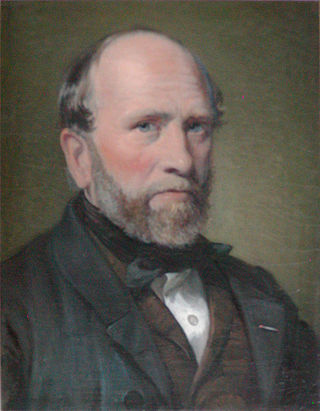
Jørgen Valentin Sonne was a Danish genre painter; known primarily for his battle scenes.
Captain Johan Cornelius Tuxen was a Royal Danish Navy officer, politician and writer. He was a member of the Folketing from 1864 to 1879.
Hans Christopher Georg Friederich Hedemann (1792–1859) was a Danish officer who became lieutenant general in the Danish army.

Werner Hans Frederik Abrahamson Læssøe (1811-1850) was a Danish officer known for his service in the First Schleswig War. He was the son of Margrethe Juliane Signe Læssøe and the brother of the priest Kristian Frederik Læssøe, the painter Thorald Læssøe and the numismatist Ludvig Læssøe.
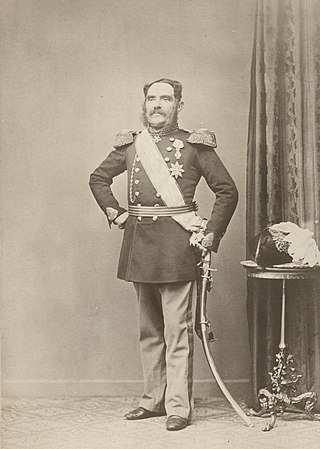
Georg Daniel Gerlach was a Danish officer. He was the son of Captain Molter Christoph Gerlach of the Schleswig Hunters Corps and Anna Sabine Magdalena née Boehn. In 1827 he married Caroline Marie Kromayer (1800-1846), who in the marriage gave birth to eight children, one of whom died in infancy.
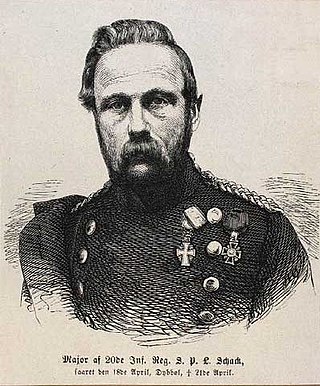
Sophus Peter Lassenius Schack was a Danish painter and officer who served in the First and Second Schleswig Wars.
Peter Frederik Steinmann was a Danish officer and Minister of War who served in the First and Second Schleswig Wars.
Carl Philip Friedemann Maximilian Müller, more commonly known as Max Müller was a Danish officer who served in the First and Second Schleswig Wars.

Niels Christian Lunding was a Danish officer who was known for ordering the Evacuation of Fredericia of the Second Schleswig War as well as being the brother of Conrad Mathias Lunding and Vilhelm Lunding.
Cai Ditlev Hegermann-Lindencrone (1807-1893) was a Danish general and politician who was the main Danish commander at the Battle of Vejle during the Second Schleswig War as well as the personal adjutant general of Frederik VII. He was also the father of Johan Hegermann-Lindencrone and Fritz Hegermann-Lindencrone.
Media related to Peter Frederik Rist at Wikimedia Commons