Phasing (disambiguation)

Last updated

Phasing may refer to:

Contents

Phase music form of music in which the same part (a repetitive phrase) is played on two musical instruments, in steady but not identical tempi

Phase music is a form of music that uses phasing as a primary compositional process. It is an approach to musical composition that is often associated with minimal music, as it shares similar characteristics, but some commentators prefer to treat phase music as a separate category. Phasing is a compositional technique in which the same part is played on two musical instruments, in steady but not identical tempi. Thus, the two instruments gradually shift out of unison, creating first a slight echo as one instrument plays a little behind the other, then a doubling effect with each note heard twice, then a complex ringing effect, and eventually coming back through doubling and echo into unison. Phasing is the rhythmic equivalent of cycling through the phase of two waveforms as in phasing. Note that the tempi of the two instruments are almost identical, so that both parts are perceived as being in the same tempo: the changes only separate the parts gradually. In some cases, especially live performance where gradual separation is extremely difficult, phasing is accomplished by periodically inserting an extra note into the phrase of one of the two players playing the same repeated phrase, thus shifting the phase by a single beat at a time, rather than gradually.

A phaser is an electronic sound processor used to filter a signal by creating a series of peaks and troughs in the frequency spectrum. The position of the peaks and troughs of the waveform being affected is typically modulated so that they vary over time, creating a sweeping effect. For this purpose, phasers usually include a low-frequency oscillator.
Science

Chlorofluorocarbons (CFCs) and hydrochlorofluorocarbons (HCFCs) are fully or partly halogenated paraffin hydrocarbons that contain only carbon (C), hydrogen (H), chlorine (Cl), and fluorine (F), produced as volatile derivative of methane, ethane, and propane. They are also commonly known by the DuPont brand name Freon. The most common representative is dichlorodifluoromethane. Many CFCs have been widely used as refrigerants, propellants, and solvents. Because CFCs contribute to ozone depletion in the upper atmosphere, the manufacture of such compounds has been phased out under the Montreal Protocol, and they are being replaced with other products such as hydrofluorocarbons (HFCs) and R-134a.

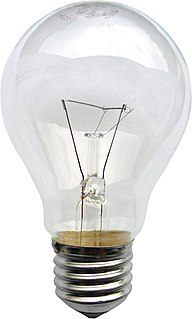
Phase-out of incandescent light bulbs proces to phase out incandescent light bulbs for general lighting in favor of more energy-efficient lighting alternatives

Governments around the world have passed measures to phase out incandescent light bulbs for general lighting in favor of more energy-efficient lighting alternatives. Phase-out regulations effectively ban the manufacture, importation or sale of incandescent light bulbs for general lighting. Use of existing bulbs—which have a relatively short lifespan—is usually not regulated. The regulations are based on efficiency, rather than use of incandescent technology.

Fossil fuel phase-out Stopping burning coal, oil and gas

Fossil fuel phase-out is the gradual reduction of the use of fossil fuels to zero use. Current efforts in fossil fuel phase-out involve replacing fossil fuels with alternative energy sources in sectors such as transport, heating and industry.

Entertainment

See also

Phasor is a phase vector representing a sine wave.

Out-of-body experience type of an experience

An out-of-body experience is an experience in which a person seems to perceive the world from a location outside their physical body. An OBE is a form of autoscopy, although the term autoscopy more commonly refers to the pathological condition of seeing a second self, or doppelgänger.

Related Research Articles

AM may refer to:

Deposition may refer to:

In computer networking, Point-to-Point Protocol (PPP) is a data link layer communications protocol between two routers directly without any host or any other networking in between. It can provide connection authentication, transmission encryption, and compression.

Artifact, or artefact, may refer to:

Chaos magic Belief system

Chaos magic, also spelled chaos magick, is a contemporary magical practice. It was initially developed in England in the 1970s, drawing heavily from the philosophy of artist and occultist Austin Osman Spare. Sometimes referred to as "success magic" or "results-based magic", chaos magic claims to emphasize the attainment of specific results over the symbolic, ritualistic, theological or otherwise ornamental aspects of other occult traditions.

Production may be:

Cancel or cancellation may refer to:

Mind reading may refer to:

Magician or The Magician may refer to:

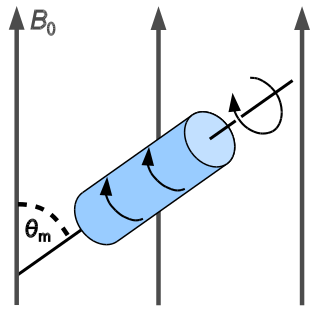
Magic angle spinning technique used in solid state nuclear magnetic resonance spectroscopy

In nuclear magnetic resonance, magic-angle spinning (MAS) is a technique often used to perform experiments in solid-state NMR spectroscopy and, more recently, liquid Proton nuclear magnetic resonance.

Continuity or continuous may refer to:

Bottom dealing or "base dealing" is a sleight of hand technique in which the bottom card from a deck of playing cards is dealt instead of the top card. It is used in card illusions, and as a method of card sharp.

This is a glossary of conjuring terms used by magicians.

Time Spiral is a Magic: The Gathering expert-level block consisting of the expansion sets Time Spiral, Planar Chaos and Future Sight. It is set on the plane of Dominaria, the first time that that plane had been visited since 8th Edition.

Axis & Allies: Battle of the Bulge is a board game which depicts the Battle of the Bulge, the German's "last-ditch" offensive of World War II. It is similar to Axis & Allies: D-Day in that the game is played on a tactical rather than strategic level, although the gameplay is radically different from D-Day or any other previous Axis and Allies game. It is designed by Larry Harris, and published by Avalon Hill.

Seven Magic: The Gathering core sets have been released since 2009: Magic 2010, Magic 2011, Magic 2012, Magic 2013, Magic 2014, Magic 2015, and Magic Origins. Unlike 10th Edition and previous core sets, roughly half of each core set was entirely new cards. Beginning with Magic 2010, Wizards decided to introduce new cards into the Core Set so that they could be relevant for both new players as well as veterans. Starting with Magic 2011, core sets have included "returning mechanics", or non-evergreen keywords with cards printed in just one core set. All of these core sets were released in the summer of the year prior to the year in the title - for example, Magic 2010 was released in 2009.

Khans of Tarkir is a Magic: The Gathering block consisting of Khans of Tarkir, Fate Reforged, and Dragons of Tarkir. The block's setting is based on a mix of cultures of Central and East Asia. It is the last block to have three expansion sets.