Related Research Articles
Douglas, occasionally spelt Douglass, is a Scottish surname. It is thought to derive from the Scottish Gaelic dubh glas, meaning "black stream". There are numerous places in Scotland from which the surname is derived. The surname has developed into the given name Douglas. Douglas is a habitational name, which could be derived from any of the many places so-named. While there are numerous places with this name in Scotland, it is thought, in most cases, to refer to Douglas, South Lanarkshire, the location of Douglas Castle, the chief stronghold of the Lords of Douglas. The Scottish Gaelic form of the given name is Dùbhghlas ; the Irish-language forms are Dúghlas and Dubhghlas, which are pronounced. According to George Fraser Black, in southern Argyllshire the surname is an Anglicised form of the surnames MacLucas, MacLugash.
James Douglas may refer to:

John is a common male given name in the English language ultimately of Hebrew origin. The English form is from Middle English Ion, Ihon, Jon, Jan (mid-12c.), itself from Old French Jan, Jean, Jehan, from Medieval Latin Johannes, altered form of Late Latin Ioannes, or the Middle English personal name is directly from Medieval Latin, which is from the Greek name Ioannis (Ιωάννης), originally borne by Hellenized Jews transliterating the Hebrew name Yochanan, the contracted form of the longer name Yehochanan, meaning "Yahweh is Gracious" or "Yahweh is Merciful". There are numerous forms of the name in different languages; these were formerly often simply translated as "John" in English, but are increasingly left in their native forms.

The Boston Brahmins or Boston elite are members of Boston's traditional upper class. They are often associated with a cultivated New England or Mid-Atlantic dialect and accent, Harvard University, Anglicanism, and traditional British American customs and clothing. Descendants of the earliest English colonists are typically considered to be the most representative of the Boston Brahmins. They are considered White Anglo-Saxon Protestants (WASPs).
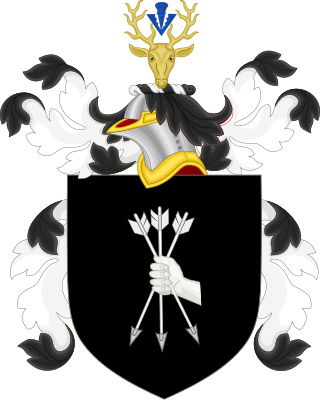
The Lowell family is one of the Boston Brahmin families of New England, known for both intellectual and commercial achievements.
Cochrane is a surname with multiple independent origins, two Scottish and one Irish. One of the Scottish names derives from a place in Scotland; the Irish surname and the other Scottish surname are both anglicisations of surnames from the Irish language and Scottish Gaelic respectively.
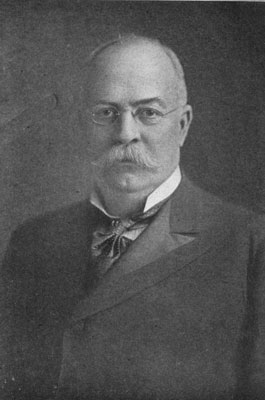
Robert Pitcairn was a Scottish-American railroad executive who headed the Pittsburgh Division of the Pennsylvania Railroad in the late 19th century. He was the brother of the Pittsburgh Plate Glass Company founder, John Pitcairn, Jr.
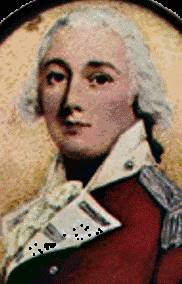
Major John Pitcairn was a Scottish military officer. Born in Dysart, Fife, he enlisted in the Marine Forces at the age of 23 and was stationed in North America during the French and Indian War, serving at the rank of captain. Arriving in Boston in 1774 as part of a British occupation of the city, he fought in the 1775 battles of Lexington and Concord during the outbreak of the American War of Independence. Two months later in June, Pitcairn was killed in action during the battle of Bunker Hill. Respected by both his men and Pitcairn's American opponents, he was buried at Boston's Old North Church.

Green Mount Cemetery is a historic rural cemetery in Baltimore, Maryland, United States. Established on March 15, 1838, and dedicated on July 13, 1839, it is noted for the large number of historical figures interred in its grounds as well as many prominent Baltimore-area families. It retained the name Green Mount when the land was purchased from the heirs of Baltimore merchant Robert Oliver. Green Mount is a treasury of precious works of art, including striking works by major sculptors including William H. Rinehart and Hans Schuler.
Cannon is a surname of Gaelic origin: in Ireland, specifically Tir Chonaill (Donegal). It is also a Manx surname, where it arose from the Goidelic "Mac Canann" meaning "son of a whelp or wolf", related to the Anglo-Irish "Mac Connon", "Connon" and similar names.
Events from the year 1797 in Great Britain.
Gregg and Greg are surnames of English or Scottish origin. In England, they are variant forms of the surname Gregory. The surnames are first recorded as Gregge in 1234, within the Liber feodorum, a document compiled in the reign of Henry II of England. Another early instance of the name is Gregge, recorded in 1306, within the Feet of Fines ; and as Greggez in 1504, within the Register of the Freemen of the City of York.
Osborn is a patronymic surname derived from the Old English first name Osbeorn and possibly the Old Norse name Ásbjörn, such as the Old Norman first name Osbern it sometimes translates and may refer to:
Hugh Pitcairn served as the first United States consul general to Hamburg, German Empire, from 1903 to 1908. He was the brother of Pennsylvania railroad magnate Robert Pitcairn and industrialist John Pitcairn.

William Pitcairn was a Scottish physician and botanist.
Ingram or Ingrams is a surname, from the given name Ingram. Notable people with the surname include:
Robert Pitcairn was a Scottish midshipman in the Royal Navy. Pitcairn Island was named after him: he was the first person to spot the island on 2 July 1767, while serving in a voyage in the South Pacific on HMS Swallow, captained by Philip Carteret.
Robert Pitcairn was a Scottish-American railroad executive.
Skene is a surname of Scottish origin. Notable people with the surname include:
References
- ↑ Sims, Clifford Stanley (1862). The Origin and Signification of Scottish Surnames. With a Vocabulary of Christian Names. Albany, New York: J. Munsell. p. 85. OCLC 1060940902 – via Internet Archive.

If an internal link intending to refer to a specific person led you to this page, you may wish to change that link by adding the person's given name(s) to the link.