
Hygiene is a set of practices performed to preserve health. According to the World Health Organization (WHO), "Hygiene refers to conditions and practices that help to maintain health and prevent the spread of diseases." Personal hygiene refers to maintaining the body's cleanliness. Hygiene activities can be grouped into the following: home and everyday hygiene, personal hygiene, medical hygiene, sleep hygiene, and food hygiene. Home and every day hygiene includes hand washing, respiratory hygiene, food hygiene at home, hygiene in the kitchen, hygiene in the bathroom, laundry hygiene, and medical hygiene at home.
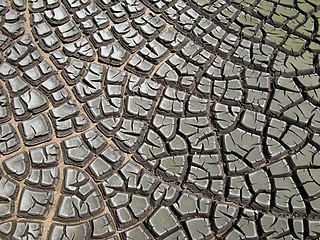
Sewage sludge is the residual, semi-solid material that is produced as a by-product during sewage treatment of industrial or municipal wastewater. The term "septage" also refers to sludge from simple wastewater treatment but is connected to simple on-site sanitation systems, such as septic tanks.

Greywater refers to domestic wastewater generated in households or office buildings from streams without fecal contamination, i.e., all streams except for the wastewater from toilets. Sources of greywater include sinks, showers, baths, washing machines or dishwashers. As greywater contains fewer pathogens than blackwater, it is generally safer to handle and easier to treat and reuse onsite for toilet flushing, landscape or crop irrigation, and other non-potable uses. Greywater may still have some pathogen content from laundering soiled clothing or cleaning the anal area in the shower or bath.
Risk assessment determines possible mishaps, their likelihood and consequences, and the tolerances for such events. The results of this process may be expressed in a quantitative or qualitative fashion. Risk assessment is an inherent part of a broader risk management strategy to help reduce any potential risk-related consequences.

Foodborne illness is any illness resulting from the contamination of food by pathogenic bacteria, viruses, or parasites, as well as prions, and toxins such as aflatoxins in peanuts, poisonous mushrooms, and various species of beans that have not been boiled for at least 10 minutes.

Listeria is a genus of bacteria that acts as an intracellular parasite in mammals. Until 1992, 10 species were known, each containing two subspecies. By 2024, 28 species had been identified. The genus is named in honour of the British pioneer of sterile surgery Joseph Lister. Listeria species are Gram-positive, rod-shaped, and facultatively anaerobic, and do not produce endospores. The major human pathogen in the genus Listeria is L. monocytogenes. It is usually the causative agent of the relatively rare bacterial disease listeriosis, an infection caused by eating food contaminated with the bacteria. Listeriosis can cause serious illness in pregnant women, newborns, adults with weakened immune systems and the elderly, and may cause gastroenteritis in others who have been severely infected.
An antimicrobial is an agent that kills microorganisms (microbicide) or stops their growth. Antimicrobial medicines can be grouped according to the microorganisms they act primarily against. For example, antibiotics are used against bacteria, and antifungals are used against fungi. They can also be classified according to their function. The use of antimicrobial medicines to treat infection is known as antimicrobial chemotherapy, while the use of antimicrobial medicines to prevent infection is known as antimicrobial prophylaxis.

Water reclamation is the process of converting municipal wastewater or sewage and industrial wastewater into water that can be reused for a variety of purposes. It is also called wastewater reuse, water reuse or water recycling. There are many types of reuse. It is possible to reuse water in this way in cities or for irrigation in agriculture. Other types of reuse are environmental reuse, industrial reuse, and reuse for drinking water, whether planned or not. Reuse may include irrigation of gardens and agricultural fields or replenishing surface water and groundwater. This latter is also known as groundwater recharge. Reused water also serve various needs in residences such as toilet flushing, businesses, and industry. It is possible to treat wastewater to reach drinking water standards. Injecting reclaimed water into the water supply distribution system is known as direct potable reuse. Drinking reclaimed water is not typical. Reusing treated municipal wastewater for irrigation is a long-established practice. This is especially so in arid countries. Reusing wastewater as part of sustainable water management allows water to remain an alternative water source for human activities. This can reduce scarcity. It also eases pressures on groundwater and other natural water bodies.
Indicator bacteria are types of bacteria used to detect and estimate the level of fecal contamination of water. They are not dangerous to human health but are used to indicate the presence of a health risk.

Dibutyl phthalate (DBP) is an organic compound which is commonly used as a plasticizer because of its low toxicity and wide liquid range. With the chemical formula C6H4(CO2C4H9)2, it is a colorless oil, although impurities often render commercial samples yellow.
Food microbiology is the study of the microorganisms that inhabit, create, or contaminate food. This includes the study of microorganisms causing food spoilage; pathogens that may cause disease ; microbes used to produce fermented foods such as cheese, yogurt, bread, beer, and wine; and microbes with other useful roles, such as producing probiotics.
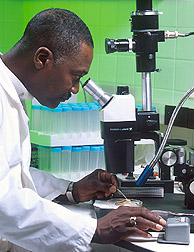
Medical microbiology, the large subset of microbiology that is applied to medicine, is a branch of medical science concerned with the prevention, diagnosis and treatment of infectious diseases. In addition, this field of science studies various clinical applications of microbes for the improvement of health. There are four kinds of microorganisms that cause infectious disease: bacteria, fungi, parasites and viruses, and one type of infectious protein called prion.

Triclocarban is an antibacterial chemical once common in, but now phased out of, personal care products like soaps and lotions. It was originally developed for the medical field. Although the mode of action is unknown, TCC can be effective in fighting infections by targeting the growth of bacteria such as Staphylococcus aureus. Additional research seeks to understand its potential for causing antibacterial resistance and its effects on organismal and environmental health.
Indicator organisms are used as a proxy to monitor conditions in a particular environment, ecosystem, area, habitat, or consumer product. Certain bacteria, fungi and helminth eggs are being used for various purposes.
Raw meat generally refers to any type of uncooked muscle tissue of an animal used for food. In the meat production industry, the term ‘meat’ refers specifically to mammalian flesh, while the words ‘poultry’ and ‘seafood’ are used to differentiate between the tissue of birds and aquatic creatures.
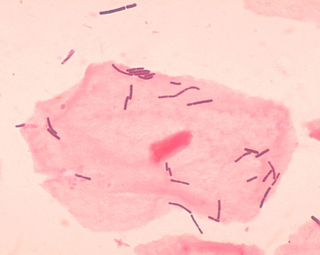
Biopreservation is the use of natural or controlled microbiota or antimicrobials as a way of preserving food and extending its shelf life. The biopreservation of food, especially utilizing lactic acid bacteria (LAB) that are inhibitory to food spoilage microbes, has been practiced since early ages, at first unconsciously but eventually with an increasingly robust scientific foundation. Beneficial bacteria or the fermentation products produced by these bacteria are used in biopreservation to control spoilage and render pathogens inactive in food. There are a various modes of action through which microorganisms can interfere with the growth of others such as organic acid production, resulting in a reduction of pH and the antimicrobial activity of the un-dissociated acid molecules, a wide variety of small inhibitory molecules including hydrogen peroxide, etc. It is a benign ecological approach which is gaining increasing attention.
Microbial food cultures are live bacteria, yeasts or moulds used in food production. Microbial food cultures carry out the fermentation process in foodstuffs. Used by humans since the Neolithic period fermentation helps to preserve perishable foods and to improve their nutritional and organoleptic qualities. As of 1995, fermented food represented between one quarter and one third of food consumed in Central Europe. More than 260 different species of microbial food culture are identified and described for their beneficial use in fermented food products globally, showing the importance of their use.

Reuse of human excreta is the safe, beneficial use of treated human excreta after applying suitable treatment steps and risk management approaches that are customized for the intended reuse application. Beneficial uses of the treated excreta may focus on using the plant-available nutrients that are contained in the treated excreta. They may also make use of the organic matter and energy contained in the excreta. To a lesser extent, reuse of the excreta's water content might also take place, although this is better known as water reclamation from municipal wastewater. The intended reuse applications for the nutrient content may include: soil conditioner or fertilizer in agriculture or horticultural activities. Other reuse applications, which focus more on the organic matter content of the excreta, include use as a fuel source or as an energy source in the form of biogas.
Microbiomes of the built environment is a field of inquiry into the communities of microorganisms that live in human constructed environments like houses, cars and water pipes. It is also sometimes referred to as microbiology of the built environment.
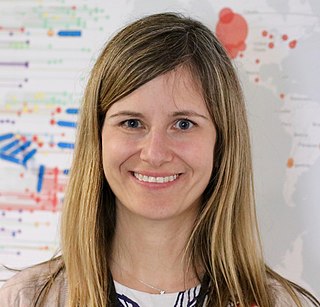
Natalie Anne Prystajecky a Canadian biologist and the Environmental Microbiology program at the British Columbia Centre for Disease Control Public Health Laboratory. She holds a Clinical Assistant Professor position at the University of British Columbia. During the COVID-19 pandemic Prystajecky was involved with the development COVID-19 testing capabilities.

