
Manchego is a cheese made in the La Mancha region of Spain from the milk of sheep of the Manchega breed. It is aged between 60 days and 2 years.
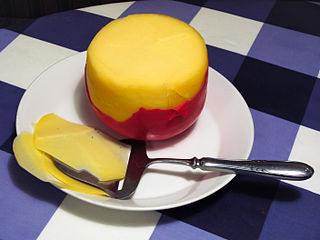
Edam is a semi-hard cheese that originated in the Netherlands, and is named after the town of Edam in the province of North Holland. Edam is traditionally sold in flat-ended spheres with a pale yellow interior and a coat, or rind, of red paraffin wax. Edam ages and travels well, and does not spoil; it only hardens. These qualities made it the world's most popular cheese between the 14th and 18th centuries, both at sea and in remote colonies.

A quesadilla is a Mexican dish consisting of a tortilla that is filled primarily with cheese, and sometimes meats, spices, and other fillings, and then cooked on a griddle or stove. Traditionally, a corn tortilla is used, but it can also be made with a flour tortilla.

Oaxaca cheese, also known as quesillo and queso de hebra, is a white, semihard, low-fat cheese that originated in Mexico. It is similar to unaged Monterey Jack, but with a texture similar to mozzarella or string cheese.
Venezuelan cuisine is influenced by its European, West African, and indigenous traditions. Venezuelan cuisine varies greatly from one region to another. Food staples include corn, rice, plantains, yams, beans and several meats. Potatoes, tomatoes, onions, eggplants, squashes, spinach and zucchini are also common side dishes in the Venezuelan diet. Ají dulce and papelón are found in most recipes. Worcestershire sauce is also used frequently in stews. Venezuela is also known for having a large variety of white cheese, usually named by geographical region.
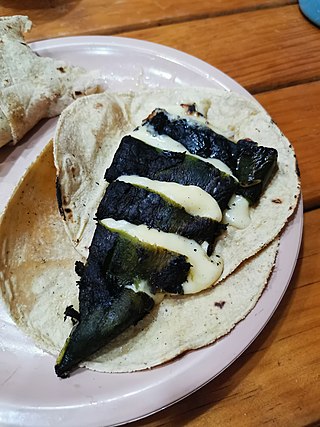
In Mexico, queso Chihuahua is commonly recognized as a soft white cheese available in braids, balls or rounds and originates in the Mexican state of Chihuahua. In Chihuahua and neighboring states, it is called queso menonita, after the Mennonite communities of Northern Mexico that first produced it, while elsewhere it is called queso Chihuahua. This cheese is now made by both Mennonites and non-Mennonites throughout the state and is popular all over the country.
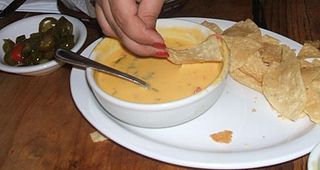
Chile con queso, sometimes simply called queso, is an appetizer or side dish of melted cheese and chili peppers, typically served in Tex-Mex restaurants as a dip for tortilla chips.

Queso de Valdeón is a Spanish blue cheese from León. The cheese is made in Posada de Valdeón, in the northeast of the province of León, and is wrapped in sycamore maple, or chestnut leaves before being sent to market. The cheese has a very intense blue flavor, but is not as yellowed or as biting as its cousin Cabrales.
A mollete is an open-faced sandwich with refried beans and white cheese in Mexican cuisine, served hot.

Queso flameado is a dish of hot melted cheese and spicy chorizo that is often served flambé. Often compared to cheese fondue, it is a party dish; it is popular at cookouts and in restaurants as an appetizer. Almost unique in Mexican cuisine, in the cuisine of the United States this dish has been widely adapted and is considered a native dish in El Paso. In Mexico, it occurs in restaurants more often in the north. Typical main ingredients are melted cheese and a characteristic meat sauce of loose fresh chorizo, tomato, onion, chile and spices. It is served in a small, shallow casserole or other ceramic or metal heat-proof baking dish. The cheese and sauce are prepared separately, and combined just before serving. This may be done at the table, especially if finished with a flambé: high alcohol liquor is poured on the cheese and ignited, and as it burns the server folds in the sauce. If not flambéed, the mixture may be quickly broiled. Either way, the finished dish is presented while it is still bubbling hot, and it is spooned onto small soft tortillas for individual servings.

Cheese soup is a type of soup prepared using cheese as a primary ingredient, along with milk, broth and/or stock to form its basis. Various additional ingredients are used in its preparation, and various types and styles of cheese soup exist. It is a part of some cuisines in the world, such as American, Colombian, Mexican, Swiss, French, and Tibetan cuisines. Mass-produced cheese soups may be prepared with the addition of food additives to preserve them and enhance flavor. A list of cheese soups is included in this article.

Cheeses in Mexico have a history that begins with the Spanish conquest, as dairy products were unknown in pre-Columbian Mesoamerica. The Spanish brought dairy animals, such as cattle, sheep, and goats, as well as cheesemaking techniques. Over the colonial period, cheesemaking was modified to suit the mixed European and indigenous tastes of the inhabitants of New Spain, varying by region. This blending and variations have given rise to a number of varieties of Mexican cheeses. These are most popular in the country, although European cheeses are made, as well. Almost all cheese in Mexico is made with cows’ milk, with some made from goats’ milk. More recently, efforts have been made to promote sheep's milk cheeses. Most cheeses are made with raw (unpasteurized) milk. Cheeses are made in the home, on small farms or ranches, and by major dairy product firms. Between 20 and 40 different varieties of cheese are made in Mexico, depending on how one classifies them. Some, such as Oaxaca and panela, are made all over Mexico, but many are regional cheeses known only in certain sections on the country. Some of the least common are in danger of extinction.

Palmero cheese is a Spanish plain or lightly smoked cheese from the island of La Palma in the Canary Islands. It is made of unpasteurised goats milk and has Denomination of Origin protection. The goats are free to graze on natural wild plants which are available all year round. The cheese is made on many small farms all over the island. It is presented in cylindrical cheeses of up to 15 kilos (33 lbs).

Mote de queso is a Colombian soup dish. It is originally from the country's Atlantic coast and is made with ñame (yam) and Costeño cheese. It is eaten in the Caribbean area of Colombia and is a traditional dish of Corozal, Sucre, Colombia.
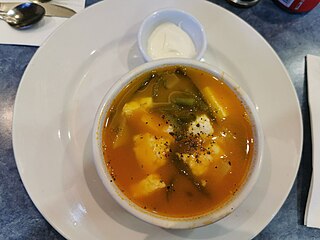
Caldo de queso is a traditional queso (cheese) soup made in places in Hermosillo, Sonora.
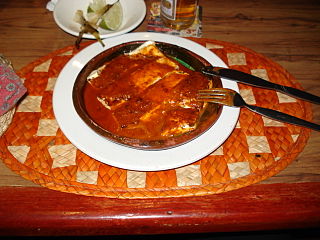
Queso en salsa or queso con chile is a typical dish in Mexican cuisine. It consists in cow's milk cheese submerged in a mild spicy salsa. There may be variations in the type of cheese used to make this dish, but the cheeses often selected are ranchero, Cotija, panela and Oaxaca. The salsa is made with red or green tomatoes, that are roasted with onion, garlic and chillies until golden, all blended and boiled in water, and may be seasoned with coriander leaves. The cheese is added after the boiling is off. For a sauce with red tomatoes, the preferred chiles are chipotle, pasilla or guajillo.

Fried cheese is a dish of cheese that is fried in oil. Fried cheese can be dipped in a batter before frying, and can be pan-fried or deep fried. It can be served as an appetizer or a snack. Fried cheese is a common food in Brazil and the Dominican Republic, and is typically served as a breakfast dish in Costa Rica, Cyprus, Greece, Lebanon, Syria and Turkey. Fried cheese is served as a tapas dish in Spain; fried cheese balls are delicias de queso 'cheese delights'. Fried cheese is also found in Italian cuisine. Fried cheese is typically served hot, right after being cooked. It may be accompanied with a dipping sauce or coated with a dressing.

Queso ice cream, also called keso ice cream or cheese ice cream, is a Filipino ice cream flavor prepared using cheddar cheese. It is one of the most common ice cream flavors of the traditional sorbetes ice cream, and is commonly served on with scoops of ube, vanilla, and chocolate ice cream in one cone.

Argentine cheese is by far the most produced dairy product in the country, making Argentina the second largest cheese producer in Latin America and among the top 10 cheese-producing countries in the world. In addition, Argentina is the Latin American country that consumes the most cheese, with 12 kilos per capita per year. Production is mainly centered in the provinces of Córdoba, Santa Fe and Buenos Aires, in the Pampas region of the central and east-central parts of the country.
