| Razer Blade Stealth 2019 in Microsoft Store Sydney | |
| Developer | Razer Inc. |
|---|---|
| Product family | Razer Blade |
| Type | Laptop (UltraBook) |
| Release date | 2016 January 6th (Razer Blade Stealth 2016) 2017 January (Razer Blade Stealth Early 2017) 2017 December (Razer Blade Stealth Late 2017) 2019 January (Razer Blade Stealth 2019)Contents
|
| Operating system | Windows 10 home/ Windows 10 pro |
| Website | https://www.razer.com/gaming-laptops/razer-blade-stealth |
The Razer Blade Stealth Series is a laptop lineup from Razer Inc. It was first launched 6 January 2016 during the Consumer Electronics Show alongside the Razer Core, the external graphics box. The product won the CES 2016 Best Laptop Award for its unique design choice of detaching the powerful GPU from the main device and connecting the two via Thunderbolt 3, thus allowing users to choose either power or portability. The current lineup consists of 5 versions of this laptop - 2016, early 2017, late 2017, 2019, and 2020 models - and 3 versions of the Razer Core - Razer Core V1, Razer Core V2, and Razer Core X. [1]
Razer started with developing gaming mouse, then 2012, they started their first step toward gaming laptop with Razer blade (2012), which contains game oriented graphics, macro programmable keyboards and touchscreen touchpad. [2] Razer refreshed the product in 2014 with a similar design to ordinary laptops. In 2016, the company launched Razer blade stealth. The device was no longer following a trend of installing gaming graphic cards, but instead, attach a mobile Intel U processor and amplify the graphics performance by the external graphic box. [3]
Launched in CES 2016, got a design award. Launched with a price of US$999, for a QHD model. [4]
Razer blade stealth's power plug supports Thunderbolt 3 supports with 4 lanes of PCI Express. [5] It is like a USB, but with much quicker respond speed. Therefore, it is capable of receiving 10gpbs of speed with external hardware that is connected with the laptop such as external graphics card box. The concept of external graphics was started from dell Alienware series. However, it required specific hardware called Alienware graphics amplifying box, [6] which doesn't use Thunderbolt 3. Hence, many tech reviews and CES teams are suggesting that this is not versatile compared to Razer's solution.
Razer blade stealth supports full Chroma lightning with Razer Synapse software. [7] Chroma lighting is a unique show light features on mouse and keyboard of all the Razer products. The keyboard in Razer blade also features identical experience with other Razer Chroma devices. The device comes with pre-installed Razer Synapse software and the software supports key clicks, Macro creating and other features that are supported within other Razer Keyboards.
| CPU | Graphics | RAM | Screen | Storage | Connectivity | Camera | Weight | Size | |
| UHD version | 2.7 GHz intel Core i7-6500U | Intel HD graphics 620 | 16GB RAM (LDDR3-1866MHZ) soldered on to the memory board | 3840X2160 UHD+ 4K | 256 or 512GB PCIe M.2 | Killer Wireless 802.11ac, Bluetooth 4.1 SSDPorts: 2 x USB 3.0, 1 x USB 3.1 Type-C (Thunderbolt 3), 1 x HDMI 2.0, headset jack | 2MP built-in webcam | 2.84 pounds | 12.6 x 8.1 x 0.52 inches (W x D x H) |
| QHD version | 2.7 GHz intel Core i7-6500U | Intel HD graphics 620 | 8GB RAM (LDDR3-1866MHZ) soldered on to the memory board | 12.5 inch QHD+ (2560 X1440) | 128GB SSD or 256 GB SSD PCle M.2 | Killer Wireless 802.11ac, Bluetooth 4.1 SSDPorts: 2 x USB 3.0, 1 x USB 3.1 Type-C (Thunderbolt 3), 1 x HDMI 2.0, headset jack | 2MP built in webcam | 2.84 lb (1.29 kg) | 12.6 x 8.1 x 0.52 inches (W x D x H) |
Razer blade got a Best of CES 2016 winner title. According to the article, it is due to their work with Razer Chroma lighting, Thunderbolt 3 support and unique design compare to other competitors like dell Dell XPS 13 and LG Gram. [8]
PC mag editor's choice for 2016. PC mag editor Matthew Buzzi gave 4.5 out of 5 ratings for Razer Blade Stealth. "Sleek design" with "premium material", "high-resolution touch display was the advantages" and "shallow key travel" was the only disadvantage. [9]
Early 2017 variants were launched during CES and late 2017 was launched online only. [10]
Updated with Intel 7th gen CPU. Another Variant with core i5 to reduce the price. Core i5 version retails at around US$900 and still have the same specification with another model, except the CPU processor. [11] Also, the touchpad was improved by supporting windows precision driver setting as a default. Therefore, it supports windows touchpad gestures.
Refreshed with 13-inch screen from 12.5, by reducing the side bezel. Late 2017 comes with two colors, which is gunmetal color and black with green Razer logo.
Late 2017 comes with same form factors with Early 2017 and CPU upgrade from 7th gen Intel i7 CPU to 8th get Intel i7 CPU. [12]
| CPU | Graphics | RAM | Screen | Storage | Connectivity | Camera | Weight | Size | |
| UHD version | 2.7 GHz intel Core i7-7500U | Intel HD graphics 620 | 16GB RAM (LDDR3-1866MHZ) soldered on to the memory board | 3840X2160 UHD+ 4K | 256 or 512GB PCIe M.2 | Killer Wireless 802.11ac, Bluetooth 4.1 SSDPorts: 2 x USB 3.0, 1 x USB 3.1 Type-C (Thunderbolt 3), 1 x HDMI 2.0, headset jack | 2MP built-in webcam | 2.84 pounds 1.28 kg | 12.6 x 8.1 x 0.52 inches (W x D x H) |
| QHD version | 2.7 GHz intel Core i7—7500U | Intel HD graphics 620 | 8GB RAM (LDDR3-1866MHZ) soldered on to the memory board | 12.5 inch QHD+ (2560 X1440) | 128GB SSD, 256 GB SSD | Killer Wireless 802.11ac, Bluetooth 4.1 SSDPorts: 2 x USB 3.0, 1 x USB 3.1 Type-C (Thunderbolt 3), 1 x HDMI 2.0, headset jack | 2MP built in webcam | 2.84 pounds 1.28 kg | 12.6 x 8.1 x 0.52 inches (W x D x H) |
| core i5 version [14] | 2.7 GHz intel Core i5—7200U | Intel HD graphics 620 | 8GB RAM (LDDR3-1866MHZ) soldered on to the memory board | 12.5 inch QHD+ (2560 X1440) | 128GB SSD, 256 GB SSD | Killer Wireless 802.11ac, Bluetooth 4.1 SSDPorts: 2 x USB 3.0, 1 x USB 3.1 Type-C (Thunderbolt 3), 1 x HDMI 2.0, headset jack | 2MP built in webcam | 2.84 pounds 1.28 kg | 12.6 x 8.1 x 0.52 inches (W x D x H) |
| CPU | Graphics | RAM | Screen | Storage | Connectivity | Chroma Keyboard | Weight | Size | |
| Late 2017 (Black) | 2.7 GHz intel Core i7-8550U | Intel HD graphics 620 | 16GB RAM (LDDR3-1866MHZ) soldered on to the memory board | 3200×1800 QHD+ IGZO 13.3 inch | 256 GB SSD, 512 GB SSD, 1 TB SSD | Killer Wireless 802.11ac, Bluetooth 4.1 SSDPorts: 2 x USB 3.0, 1 x USB 3.1 Type-C (Thunderbolt 3), 1 x HDMI 2.0, headset jack | Yes. Individually backlit (RGB) keys with green lit RAZER logo on lid. | 2.84 pounds 1.28 kg | 12.6 x 8.1 x 0.52 inches (W x D x H) |
| Late 2017 (Gun metal) | 2.7 GHz intel Core i7-8550U | Intel HD graphics 620 | 16GB RAM (LDDR3-1866MHZ) soldered on to the memory board | 3200×1800 QHD+ IGZO 13.3 inch | 256 GB SSD, 512 GB SSD, 1 TB SSD | Killer Wireless 802.11ac, Bluetooth 4.1 SSDPorts: 2 x USB 3.0, 1 x USB 3.1 Type-C (Thunderbolt 3), 1 x HDMI 2.0, headset jack | No. Individually backlit (white) keys with etched RAZER logo on lid. | 2.84 pounds 1.28 kg | 12.6 x 8.1 x 0.52 inches (W x D x H) |
The 2019 model of Razer Blade Stealth was announced on CES 2019, which was held on 8 January 2019.
Razer refreshed the design of Razer Blade stealth toward more unique design then before. Also, the design language now fits with their Razer Blade 15 lineup. There is no longer a glowing green LED Razer logo behind the laptop led and does not support Razer Chroma, but instead single light zone keyboard. The display bezel was shrunk down to have a 14 inch screen on a 13 inch form factor. The touchpad was updated from plastic finish to glass finish.
Blade Stealth's camera now supports IR bio-metrics. Hence, it will support windows hello functionality.
One of the variant is using MX150 graphics card, which can perform about 30% better than the 8th gen Intel's internal graphics. Thus, 2019 model can play light game and show better video editing performance without the external Razer Core.
| CPU | Graphics | RAM | Screen | Storage | Connectivity | Chroma Keyboard | Weight | Size | |
| 2019 Base Model Black | 2.7 GHz intel Core i7-8550U | Intel HD graphics 620 | 8GB RAM (LDDR3-1866MHZ) soldered on to the memory board | 1920 X 1080 FHD 13.3 inch | 256 GB SSD | Killer Wireless 802.11ac, Bluetooth 4.1 SSDPorts: 2 x USB 3.0, 1 x USB 3.1 Type-C (Thunderbolt 3), 1 x HDMI 2.0, headset jack | Single zone RGB | 2.82 lbs 1.27 kg | 12.6 x 8.1 x 0.52 inches (W x D x H) |
| 2019 Graphics Model Black / Quartz Pink | NVIDIA Geforce MX150 | 16GB RAM (LDDR3-1866MHZ) soldered on to the memory board | 2.89 lbs 1.31 kg | ||||||
| 2019 Graphics Model 4K Black | 3840 X 2160 4K 13.3 inch | 512 GB SSD | 3.04 lbs 1.38 kg | ||||||
| Late 2019 Graphics Model Black | Quad-Core 10th Gen Intel Core i7-1065G7 Processor | NVIDIA GeForce GTX 1650 (Max-Q) | 16GB RAM (LPDDR4 3733 MHz) dual-channel onboard memory (Fixed) | 1920 X 1080 FHD 13.3 inch | 512 GB SSD | Wi-Fi 6 - Intel Wireless-AX 201 (IEEE 802.11a/b/g/n/ac), Bluetooth 5.0 connectivity | 3.13 lbs 1.42 kg | 11.99 x 8.27 x 0.60 inches (W x D x H) |
Razer Core is Thunderbolt 3 powered External graphics card container. This box can be directly connected to the computer and supports lacking graphics power of the laptop. Razer Blade Stealth does not have a dedicated GPU (Intel U series). However, the device can be connected to Razer Core to play the game.
The core is a GPU mounter. Therefore, it does not come with the graphics card itself. The variation of GPU that can be mounted to the core is as following.
Razer core V1 was introduced in CES 2016 and launched month after the event. It was retailed at $499 USD. Device can store full length double wide PCle desktop graphics card, including AMD and Nvidia graphic cards.
Razer core contains 4 USB 3.0 ports, Gigabit Ethernet port and thunderbolt connection to connect with laptop.
| Connections | Max GPU Size | Size | Weight | Razer Chroma | Power Delivery | |
|---|---|---|---|---|---|---|
| Razer Core V1 | Thunderbolt 3 External Graphics PCle Connection 4 USB 3.0 | 310mm (Depth) X 152 mm (Height) X 44mm (Width) | 353 mm Length/ 105 mm width/ 220 mm Height | 4.94 kg | Yes (Bottom of the box) | 500 Watts |
Razer core V2 introduced with Late 2017 version of Razer Blade Stealth. The V2 fixed one of the major issue of the V1, which is USB 3.0 does not work well when they use GPU intensive program. It is because V1 was using one PCle line for both of the connection (USB and thunderbolt). From the V2, they are using separate Pcle line for the two connections. Thus, it performs much more reliably.
Furthermore, now the box can handle bigger size GPU by enlarging the size of the enclosure to improve the future upgradability.
| Connections | Max GPU Size | Size | Weight | Razer Chroma | Power Delivery | |
|---|---|---|---|---|---|---|
| Razer Core V2 | Thunderbolt 3 External Graphics Two PCle Connection 4 USB 3.0 | 11.81 x 1.69 x 5.71 inch | 353 mm Length/ 105 mm width/ 220 mm Height | 4.94 kg | Yes (Bottom of the box) | 500 Watts |
Razer Core X was launched to the market at the end of 2018. Retailed at price of $299 USD. The specification of product is unchanged from the Core V2. However, Razer Chroma Lightning is gone to reduce the price, as well as the 4 USB 3.0 ports and Gigabit Ethernet.
| Connections | Max GPU Size | Size | Weight | Razer Chroma | Power Delivery | |
|---|---|---|---|---|---|---|
| Razer Core X | Thunderbolt 3 External Graphics Two PCle Connection | 11.81 x 1.69 x 5.71 inch | 353 mm Length/ 105 mm Width/ 220 mm Height | 4.94 kg | No | 650 Watts |
Razer Core X Chroma was launched to the market on April 16, 2019. Retailed at price of $399 USD. Comes with 4x USB 3.1 and a Gigabit Ethernet port.
| Connections | Max GPU Size | Size | Weight | Razer Chroma | Power Delivery | |
|---|---|---|---|---|---|---|
| Razer Core X Chroma | Thunderbolt 3 External Graphics Two PCIe Connection 4 USB 3.1 Gigabit Ethernet | 12.99 x 2.24 x 6.29 inch | 374 mm Length/ 168 mm Width/ 230 mm Height | 6.91 kg | Yes | 700 Watts |
A graphics processing unit (GPU) is a specialized electronic circuit designed to rapidly manipulate and alter memory to accelerate the creation of images in a frame buffer intended for output to a display device. GPUs are used in embedded systems, mobile phones, personal computers, workstations, and game consoles.
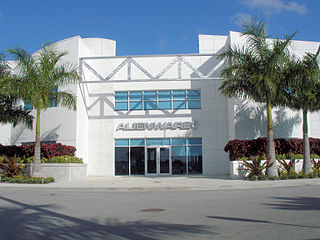
Alienware is an American computer hardware subsidiary of Dell. Their product range is dedicated to gaming computers which can be identified by their alien-themed designs. Alienware was founded in 1996 by Nelson Gonzalez and Alex Aguila. The development of the company is also associated with Frank Azor, Arthur Lewis, Joe Balerdi, and Michael S. Dell. The company's corporate headquarters is located in The Hammocks, Miami, Florida.
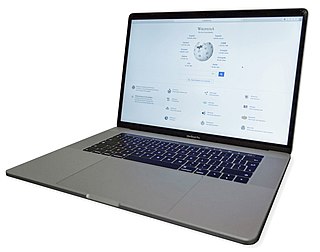
The MacBook Pro is a line of Macintosh portable computers introduced in January 2006 by Apple Inc. It is the higher-end model of the MacBook family, sitting above the consumer-focused MacBook Air, and is sold with 13- and 16-inch screens. 17-inch and 15-inch version were sold from April 2006 to June 2012 and January 2006 to January 2020, respectively.

The AMD Accelerated Processing Unit (APU), formerly known as Fusion, is the marketing term for a series of 64-bit microprocessors from Advanced Micro Devices (AMD), designed to act as a central processing unit (CPU) and graphics processing unit (GPU) on a single die. APUs are general purpose processors that feature integrated graphics processors (IGPs).
The MacBook Air is a line of laptop computers developed and manufactured by Apple Inc. It consists of a full-size keyboard, a machined aluminum case, and, in the more modern versions, a thin light structure. The Air was originally positioned above the previous MacBook line as a premium ultraportable. Since then, the original MacBook's discontinuation in 2011, and lowered prices on subsequent iterations, have made the Air Apple's entry-level laptop. In the current product line, the MacBook Air is situated below the performance range MacBook Pro.
The Inspiron 1525 is a laptop designed and distributed by Dell as part of their Inspiron range. There is also an AMD variant known as the Inspiron 1526. The laptop is the successor to the Inspiron 1520, and was released in January, 2008. This computer was available to purchase on the Dell website, where it could be customized to the user's specification.
Thunderbolt is the brand name of a hardware interface developed by Intel that allows the connection of external peripherals to a computer. Thunderbolt 1 and 2 use the same connector as Mini DisplayPort (MDP), whereas Thunderbolt 3 and 4 reuse the USB-C connector from USB. It was initially developed and marketed under the name Light Peak, and first sold as part of an end-user product on 24 February 2011.
Intel Core are streamlined midrange consumer, workstation and enthusiast computers central processing units (CPU) marketed by Intel Corporation. These processors displaced the existing mid- to high-end Pentium processors at the time of their introduction, moving the Pentium to the entry level. Identical or more capable versions of Core processors are also sold as Xeon processors for the server and workstation markets.
Intel Graphics Technology (GT) is the collective name for a series of integrated graphics processors (IGPs) produced by Intel that are manufactured on the same package or die as the central processing unit (CPU). It was first introduced in 2010 as Intel HD Graphics.
Skylake is the codename used by Intel for a processor microarchitecture that was launched in August 2015 succeeding the Broadwell microarchitecture. Skylake is a microarchitecture redesign using the same 14 nm manufacturing process technology as its predecessor, serving as a "tock" in Intel's "tick–tock" manufacturing and design model. According to Intel, the redesign brings greater CPU and GPU performance and reduced power consumption. Skylake CPUs share their microarchitecture with Kaby Lake, Coffee Lake, Cannon Lake, Whiskey Lake, and Comet Lake CPUs.
The ThinkPad X series is a line of laptop computers and convertible tablets produced by Lenovo. It was initially produced by IBM until 2005.
The ThinkPad W-series laptops from Lenovo are described by the manufacturer as being "mobile workstations", and suit that description by being physically on the larger side of the laptop spectrum, with screens ranging from 15" to 17" in size. Most W-series laptops offer high-end quad-core Intel processors with an integrated GPU as well as an Nvidia Quadro discrete GPU, utilizing Nvidia Optimus to switch between the two GPUs as required. Notable exceptions are the W500, which has ATI FireGL integrated workstation-class graphics, and the W550s, which is an Ultrabook-specification laptop with only a dual-core processor. The W-series laptops offer ISV certifications from various vendors such as Adobe Systems and Autodesk for CAD and 3D modeling software.
Broadwell is the fifth generation of the Intel Core Processor. It's Intel's codename for the 14 nanometer die shrink of its Haswell microarchitecture. It is a "tick" in Intel's tick–tock principle as the next step in semiconductor fabrication. Like some of the previous tick-tock iterations, Broadwell did not completely replace the full range of CPUs from the previous microarchitecture (Haswell), as there were no low-end desktop CPUs based on Broadwell.
The HP Envy is a line of consumer-oriented high-end laptops, desktop computers and printers manufactured and sold by HP Inc. They started as a high-end version of the HP Pavilion line.
The ThinkPad Yoga is a 2-in-1 convertible business-oriented tablet from Lenovo unveiled in September at the 2013 IFA in Berlin, Germany. It was released in the United States in November 2013.
Ice Lake is Intel's codename for the 10th generation Intel Core mobile and 3rd generation Xeon Scalable server processors based on the new Sunny Cove microarchitecture. Ice Lake represents an Architecture step in Intel's Process-Architecture-Optimization model. Produced on the second generation of Intel's 10 nm process, 10 nm+, Ice Lake is Intel's second microarchitecture to be manufactured on the 10 nm process, following the limited launch of Cannon Lake in 2018. However, Intel altered their naming scheme in 2020 for the 10 nm process. In this new naming scheme, Ice Lake's manufacturing process is called simply 10 nm, without any appended pluses.
Tiger Lake is Intel's codename for the 11th generation Intel Core mobile processors based on the new Willow Cove Core microarchitecture, manufactured using Intel's third-generation 10 nm process node known as 10SF. Tiger Lake replaces the Ice Lake family of mobile processors, representing an Optimization step in Intel's process–architecture–optimization model.
The ThinkPad P series line of laptops is produced by Lenovo and was introduced by the company as a successor to the previous ThinkPad W series. With 15" and 17" screens, the ThinkPad P series saw the reintroduction of physically large laptops into the ThinkPad line. Marketed largely as portable workstations., many P series laptops can be configured with high-end quad-core, hexa-core or octo-core Intel processors as well as ECC memory and a discrete Nvidia Quadro GPU. The P series offers ISV certifications from software vendors such as Adobe and Autodesk for various CAD software. The P52 and P72 models are the last current Lenovo laptops with a dedicated magnesium structural frame.
Rocket Lake is Intel's codename for its 11th generation Core microprocessors. Released on March 30, 2021, it is based on the new Cypress Cove microarchitecture, a variant of Sunny Cove backported to Intel's 14 nm process node. Rocket Lake cores contain significantly more transistors than current Skylake-derived Comet Lake cores.
The Apple M1 is an ARM-based system on a chip (SoC) designed by Apple Inc. as a central processing unit (CPU) and graphics processing unit (GPU) for its Macintosh computers and iPad Pro tablets. It was inspired by their Apple A14 Bionic chip. It also marks the first major change to the instruction set used by Macintosh computers since Apple transitioned Macs from PowerPC to Intel in 2006. Apple claims that it has the world's fastest CPU core "in low power silicon" and the world's best CPU performance per watt.