English usually refers to:
An enemy or foe is an individual or group that is seen as forcefully adverse or threatening.
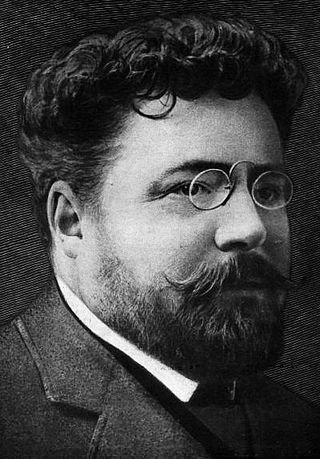
Gaston Louis Alfred Leroux was a French journalist and author of detective fiction.
A miniseries or mini-series is a television series that tells a story in a predetermined, limited number of episodes. Many miniseries can also be referred to, and shown, as a television film. "Limited series" is a more recent US term which is sometimes used interchangeably. As of 2021, the popularity of miniseries format has increased in both streaming services and broadcast television.
The Stranger or Stranger may refer to:
Deep or The Deep may refer to:
The Crusades were a series of religious wars sanctioned by the Latin Church in the medieval period. Crusading movement is about the ideology and institutions associated with crusading.

Ibn-e-Safi was the pen name of Asrar Ahmad, a fiction writer, novelist and poet of Urdu from Pakistan. The word Ibn-e-Safi is a Persian expression which literally means Son of Safi, where the word Safi means chaste or righteous. He first wrote from the British India of the 1940s, and later Pakistan after the independence of British India in 1947.
A son is a male offspring in relation to a parent.
Strangers are people who are unknown to another person or group.

Qurratulain Hyder was an Indian Urdu novelist and short story writer, an academic, and a journalist. One of the most outstanding and influential literary names in Urdu literature, she is best known for her magnum opus, Aag Ka Darya, a novel first published in Urdu in 1959, from Lahore, Pakistan, that stretches from the fourth century BC to post partition of India.

Mannu Bhandari Yadav was an Indian author, screenplay writer, teacher, and playwright. Primarily known for her two Hindi novels, Aap Ka Bunty and Mahabhoj (Feast), Bhandari also wrote over 150 short stories, several other novels, screenplays for television and film, and adaptations for theater. She was a pioneer of the Nayi Kahani movement in Hindi literature, which focused on the aspirations of the emerging Indian middle class, and her own work is notable for its depiction of the inner lives of middle class working and educated women. Her work tackles themes of family, relationships, gender equality, and caste discrimination in India.
Aag Ka Dariya is a 1953 Indian Hindi-language black-and-white film directed by Roop K. Shorey and starring Karan Dewan, Prithviraj Kapoor, Meena Shorey, Shammi, Uma Dutt, Johnny Walker, Manju and Cecil. Playback singer for this movie was Talat Mahmood. Produced by Shorey Films, it had music by music composer Vinod.
Bata, Bata... Pa'no Ka Ginawa? is a novel written in Filipino by the female writer, Lualhati Bautista, released in 1988. Lea's Story centers around the life of Lea, a women's rights activist who struggles to raise her children as a single mother while working a demanding job at a women's crisis center. A film adaptation directed by Chito S. Roño was released in 1998.
Women are adult female humans.
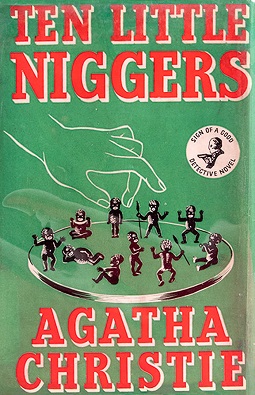
And Then There Were None is a mystery novel by the English writer Agatha Christie, who described it as the most difficult of her books to write. It was first published in the United Kingdom by the Collins Crime Club on 6 November 1939, as Ten Little Niggers, after an 1869 minstrel song which serves as a major plot element. The US edition was released in January 1940 with the title And Then There Were None, taken from the last five words of the song. Successive American reprints and adaptations use that title, though American Pocket Books paperbacks used the title Ten Little Indians between 1964 and 1986. UK editions continued to use the original title until 1985.
This page is based on this
Wikipedia article Text is available under the
CC BY-SA 4.0 license; additional terms may apply.
Images, videos and audio are available under their respective licenses.
