Related Research Articles

An intelligence quotient (IQ) is a total score derived from a set of standardised tests or subtests designed to assess human intelligence. The abbreviation "IQ" was coined by the psychologist William Stern for the German term Intelligenzquotient, his term for a scoring method for intelligence tests at University of Breslau he advocated in a 1912 book.
Psychology is the study of mind and behavior. Its subject matter includes the behavior of humans and nonhumans, both conscious and unconscious phenomena, and mental processes such as thoughts, feelings, and motives. Psychology is an academic discipline of immense scope, crossing the boundaries between the natural and social sciences. Biological psychologists seek an understanding of the emergent properties of brains, linking the discipline to neuroscience. As social scientists, psychologists aim to understand the behavior of individuals and groups.
Personality psychology is a branch of psychology that examines personality and its variation among individuals. It aims to show how people are individually different due to psychological forces. Its areas of focus include:
Discussions of race and intelligence – specifically regarding claims of differences in intelligence along racial lines – have appeared in both popular science and academic research since the modern concept of race was first introduced. With the inception of IQ testing in the early 20th century, differences in average test performance between racial groups were observed, though these differences have fluctuated and in many cases steadily decreased over time. Complicating the issue, modern science has concluded that race is a socially constructed phenomenon rather than a biological reality, and there exist various conflicting definitions of intelligence. In particular, the validity of IQ testing as a metric for human intelligence is disputed. Today, the scientific consensus is that genetics does not explain differences in IQ test performance between groups, and that observed differences are environmental in origin.
Nature versus nurture is a long-standing debate in biology and society about the relative influence on human beings of their genetic inheritance (nature) and the environmental conditions of their development (nurture). The alliterative expression "nature and nurture" in English has been in use since at least the Elizabethan period and goes back to medieval French. The complementary combination of the two concepts is an ancient concept. Nature is what people think of as pre-wiring and is influenced by genetic inheritance and other biological factors. Nurture is generally taken as the influence of external factors after conception e.g. the product of exposure, experience and learning on an individual.
Twin studies are studies conducted on identical or fraternal twins. They aim to reveal the importance of environmental and genetic influences for traits, phenotypes, and disorders. Twin research is considered a key tool in behavioral genetics and in related fields, from biology to psychology. Twin studies are part of the broader methodology used in behavior genetics, which uses all data that are genetically informative – siblings studies, adoption studies, pedigree, etc. These studies have been used to track traits ranging from personal behavior to the presentation of severe mental illnesses such as schizophrenia.
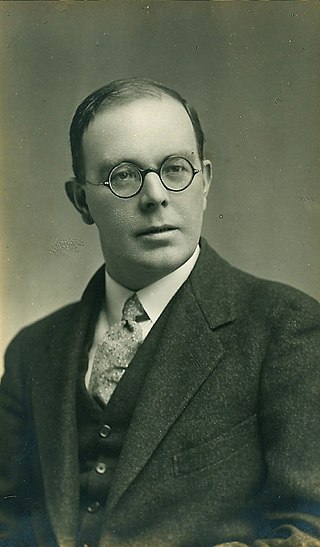
Sir Cyril Lodowic Burt, FBA was an English educational psychologist and geneticist who also made contributions to statistics. He is known for his studies on the heritability of IQ.

Robert J. Sternberg is an American psychologist and psychometrician. He is a Professor of Human Development at Cornell University.
Philip Ewart Vernon was a British-born Canadian psychologist and author. He studied intellectual ability with a focus on race and intelligence.
Thomas J. Bouchard Jr. is an American psychologist known for his behavioral genetics studies of twins raised apart. He is professor emeritus of psychology and director of the Minnesota Center for Twin and Adoption Research at the University of Minnesota. Bouchard received his PhD from the University of California, Berkeley, in 1966.

John Clinton Loehlin was an American behaviorial geneticist, computer scientist, and psychologist. Loehlin served as president of the Behavior Genetics Association and of the Society of Multivariate Experimental Psychology. He was an ISIR lifetime achievement awardee.
The Minnesota Center for Twin and Family Research is a series of behavioral genetic longitudinal studies of families with twin or adoptive offspring conducted by researchers at the University of Minnesota. It seeks to identify and characterize the genetic and environmental influences on the development of psychological traits.
Research on the heritability of IQ inquires into the degree of variation in IQ within a population that is due to genetic variation between individuals in that population. There has been significant controversy in the academic community about the heritability of IQ since research on the issue began in the late nineteenth century. Intelligence in the normal range is a polygenic trait, meaning that it is influenced by more than one gene, and in the case of intelligence at least 500 genes. Further, explaining the similarity in IQ of closely related persons requires careful study because environmental factors may be correlated with genetic factors.

Robert Joseph Plomin is an American/British psychologist and geneticist best known for his work in twin studies and behavior genetics. A Review of General Psychology survey, published in 2002, ranked Plomin as the 71st most cited psychologist of the 20th century. He is the author of several books on genetics and psychology.

Andreas Demetriou is a Greek Cypriot developmental psychologist and former Minister of Education and Culture of Cyprus. He is a founding fellow and president of The Cyprus Academy of Sciences, Letters and Arts.
Psychology encompasses a vast domain, and includes many different approaches to the study of mental processes and behavior. Below are the major areas of inquiry that taken together constitute psychology. A comprehensive list of the sub-fields and areas within psychology can be found at the list of psychology topics and list of psychology disciplines.
The history of the race and intelligence controversy concerns the historical development of a debate about possible explanations of group differences encountered in the study of race and intelligence. Since the beginning of IQ testing around the time of World War I, there have been observed differences between the average scores of different population groups, and there have been debates over whether this is mainly due to environmental and cultural factors, or mainly due to some as yet undiscovered genetic factor, or whether such a dichotomy between environmental and genetic factors is the appropriate framing of the debate. Today, the scientific consensus is that genetics does not explain differences in IQ test performance between racial groups.
The following outline is provided as an overview of and topical guide to human intelligence:

Helen Lois Koch was an American developmental psychologist and a faculty member at the University of Texas at Austin and the University of Chicago. Koch developed nursery school teacher training programs during World War II and she researched the differences between sets of fraternal twins, identical twins and non-twin siblings.
Barbara Stoddard Burks was an American psychologist known for her research on the nature-nurture debate as it pertained to intelligence and other human traits. She has been credited with "...pioneer[ing] the statistical techniques which continue to ground the trenchant nature/nurture debates about intelligence in American psychology."
References
- ↑ Loehlin, John C.; Nichols, Robert C. (2012-02-08). Heredity, Environment, and Personality: A Study of 850 Sets of Twins. University of Texas Press. ISBN 9780292741317.
- ↑ John, Oliver P.; Robins, Richard W.; Pervin, Lawrence A. (2008-08-05). Handbook of Personality, Third Edition: Theory and Research. Guilford Press. p. 276. ISBN 9781606237380.
- ↑ Sternberg, Robert J.; Robert J. Sternberg (1982-12-30). Handbook of Human Intelligence. CUP Archive. p. 827. ISBN 9780521296878.
- ↑ "U.S., World War II Draft Cards Young Men, 1940-1947". Ancestry. Retrieved 9 December 2022.
- 1 2 Nichols, Robert C. (1979). Heredity and Environment: Major Findings from Twin Studies of Ability, Personality and Interests. IAAEE.
- ↑ "Present/Past Officers". Houston Psychological Association. Archived from the original on 2017-03-20. Retrieved 2019-07-09.
- ↑ "Personal glimpses". Educational Psychologist. 6 (1): 2. November 1968. doi:10.1080/00461526809528969. ISSN 0046-1520.
- ↑ "From the (new) editor". Educational Psychologist. 7 (1): 2. November 1969. doi:10.1080/00461526909528996. ISSN 0046-1520.
| International | |
|---|---|
| National | |
| Other | |
