Related Research Articles

The urinary system, also known as the urinary tract or renal system, consists of the kidneys, ureters, bladder, and the urethra. The purpose of the urinary system is to eliminate waste from the body, regulate blood volume and blood pressure, control levels of electrolytes and metabolites, and regulate blood pH. The urinary tract is the body's drainage system for the eventual removal of urine. The kidneys have an extensive blood supply via the renal arteries which leave the kidneys via the renal vein. Each kidney consists of functional units called nephrons. Following filtration of blood and further processing, wastes exit the kidney via the ureters, tubes made of smooth muscle fibres that propel urine towards the urinary bladder, where it is stored and subsequently expelled from the body by urination (voiding). The female and male urinary system are very similar, differing only in the length of the urethra.

Precision agriculture (PA) is a farming management strategy based on observing, measuring and responding to temporal and spatial variability to improve agricultural production sustainability. It is used in both crop and livestock production. Precision agriculture often employs technologies to automate agricultural operations, improving their diagnosis, decision-making or performing. First conceptual work on PA and practical applications go back in the late 1980s. The goal of precision agriculture research is to define a decision support system (DSS) for whole farm management with the goal of optimizing returns on inputs while preserving resources.

Bladder cancer is any of several types of cancer arising from the tissues of the urinary bladder. Symptoms include blood in the urine, pain with urination, and low back pain. It is caused when epithelial cells that line the bladder become malignant.

The lamina propria is a thin layer of connective tissue that forms part of the moist linings known as mucous membranes or mucosae, which line various tubes in the body, such as the respiratory tract, the gastrointestinal tract, and the urogenital tract.
Experimental economics is the application of experimental methods to study economic questions. Data collected in experiments are used to estimate effect size, test the validity of economic theories, and illuminate market mechanisms. Economic experiments usually use cash to motivate subjects, in order to mimic real-world incentives. Experiments are used to help understand how and why markets and other exchange systems function as they do. Experimental economics have also expanded to understand institutions and the law.
In psychology and behavioral economics, the endowment effect is the finding that people are more likely to retain an object they own than acquire that same object when they do not own it. The endowment theory can be defined as "an application of prospect theory positing that loss aversion associated with ownership explains observed exchange asymmetries."

The quality-adjusted life year (QALY) is a generic measure of disease burden, including both the quality and the quantity of life lived. It is used in economic evaluation to assess the value of medical interventions. One QALY equates to one year in perfect health. QALY scores range from 1 to 0 (dead). QALYs can be used to inform health insurance coverage determinations, treatment decisions, to evaluate programs, and to set priorities for future programs.

Oxybutynin, sold as under the brand names Ditropan among others, is a medication used to treat overactive bladder. It works similar to tolterodine, Darifenacin, and Solifenacin. While used for bed wetting in children, evidence to support this use is poor. It is taken by mouth or applied to the skin.
Pharmacoeconomics refers to the scientific discipline that compares the value of one pharmaceutical drug or drug therapy to another. It is a sub-discipline of health economics. A pharmacoeconomic study evaluates the cost and effects of a pharmaceutical product. Pharmacoeconomic studies serve to guide optimal healthcare resource allocation, in a standardized and scientifically grounded manner.
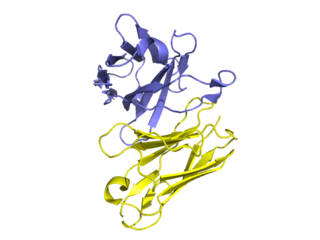
Golimumab is a human monoclonal antibody which is used as an immunosuppressive medication and sold under the brand name Simponi. Golimumab targets tumor necrosis factor alpha (TNF-alpha), a pro-inflammatory molecule and hence is a TNF inhibitor. Profound reduction in C-reactive protein (CRP) levels, interleukin (IL)-6, intercellaular adhesion molecules (ICAM)-1, matrix metalloproteinase (MMP)-3, and vascular endothelial growth factor (VEGF) demonstrates golimumab as an effective modulator of inflammatory markers and bone metabolism.

Fibroblast growth factor receptor 3 is a protein that in humans is encoded by the FGFR3 gene. FGFR3 has also been designated as CD333. The gene, which is located on chromosome 4, location q16.3, is expressed in tissues such as the cartilage, brain, intestine, and kidneys.
Pharmacy in China involves the activities engaged in the preparation, standardization and dispensing of drugs, and its scope includes the cultivation of plants that are used as drugs, the synthesis of chemical compounds of medicinal value, and the analysis of medicinal agents. Pharmacists in China are responsible for the preparation of the dosage forms of drugs, such as tablets, capsules, and sterile solutions for injection. They compound physicians', dentists', and veterinarians' prescriptions for drugs. Pharmacological activities are also closely related to pharmacy in China.
Sarilumab, sold under the brand name Kevzara, is a human monoclonal antibody medication against the interleukin-6 receptor. Regeneron Pharmaceuticals and Sanofi developed the drug for the treatment of rheumatoid arthritis (RA), for which it received US FDA approval on 22 May 2017 and European Medicines Agency approval on 23 June 2017.
EQ-5D is a standardised measure of health-related quality of life developed by the EuroQol Group to provide a simple, generic questionnaire for use in clinical and economic appraisal and population health surveys. EQ-5D assesses health status in terms of five dimensions of health and is considered a ‘generic’ questionnaire because these dimensions are not specific to any one patient group or health condition. EQ-5D can also be referred to as a patient-reported outcome (PRO) measure, because patients can complete the questionnaire themselves to provide information about their current health status and how this changes over time. ‘EQ-5D’ is not an abbreviation and is the correct term to use when referring to the instrument in general.

Li Jiayang is a Chinese agronomist and geneticist. He is Vice Minister of Agriculture in China and President of the Chinese Academy of Agricultural Sciences (CAAS). He is also Professor and Principal investigator at the Institute of Genetics and Development at the Chinese Academy of Sciences (CAS).
Peter L. Bossaerts is a Belgian-American economist. He is considered one of the pioneers and leading researchers in neuroeconomics and experimental finance.

Louis Preston Garrison Jr. is an American health economist who has made significant contributions to pharmacoeconomics, pharmacogenomics and personalized medicine, regulatory benefit-risk analysis, insurance, pricing, reimbursement and risk-sharing agreements. He also made numerous contributions on the economic evaluation of pharmaceuticals, diagnostics, devices, surgical procedures, and vaccines, particularly as related to organ transplantation, influenza, measles, obesity, and cancer. Garrison has published over a hundred manuscripts in peer-reviewed journals and contributed to several book chapters.
Digital agriculture, sometimes known as smart farming or e-agriculture, is tools that digitally collect, store, analyze, and share electronic data and/or information in agriculture. The Food and Agriculture Organization of the United Nations has described the digitalization process of agriculture as the digital agricultural revolution. Other definitions, such as those from the United Nations Project Breakthrough, Cornell University, and Purdue University, also emphasize the role of digital technology in the optimization of food systems.

Georg Jander is an American plant biologist at the Boyce Thompson Institute in Ithaca, New York. He has an adjunct appointment in the Plant Biology Section of the School of Integrative Plant Sciences at Cornell University. Jander is known for his molecular research identifying genes for biochemical compounds of ecological and agricultural importance, particularly those plant traits involved in resistance to insect pests.

Vesicouterine fistula refers to an abnormal communication between the bladder and uterus. The first case of vesicouterine fistula was reported in 1908. It was however first described in 1957 by Abdel Fattah Youssef, an obstetrician and gynaecologist in Kasr el-Aini hospital, Cairo, Egypt. It is characterized by a vesicouterine fistula above the level of the internal os, absence of menstrual bleeding, cyclical presence of blood in urine and absence of urinary incontinence with a patent cervical canal following a lower segment caesarean section. Six of such cases had been reported by other clinicians before the term Menouria was coined by Youssef.
References
- 1 2 Brewer, Paul J.; Huang, Maria; Nelson, Brad; Plott, Charles R. (2002-12-01). "On the Behavioral Foundations of the Law of Supply and Demand: Human Convergence and Robot Randomness". Experimental Economics. 5 (3): 179–208. doi:10.1023/A:1020871917917. ISSN 1386-4157. S2CID 13066888.
- ↑ Yeung, Christina; Dinh, Tuan; Lee, Joseph (2014-07-24). "The Health Economics of Bladder Cancer: An Updated Review of the Published Literature". PharmacoEconomics. 32 (11): 1093–1104. doi:10.1007/s40273-014-0194-2. ISSN 1170-7690. PMID 25056838. S2CID 207492150.
- ↑ Teljeur, C; O'Neill, M; Moran, PS; Harrington, P; Flattery, M; Murphy, L; Ryan, M (2014). "Economic evaluation of robot-assisted hysterectomy: A cost-minimisation analysis". BJOG: An International Journal of Obstetrics & Gynaecology. 121 (12): 1546–53. doi: 10.1111/1471-0528.12836 . PMID 24810140. S2CID 5358924.
- ↑ "Robots in Retail - Examples of Real Industry Applications -". TechEmergence. 2017-07-06. Retrieved 2018-11-26.