Related Research Articles

Assam is a state in northeastern India, south of the eastern Himalayas along the Brahmaputra and Barak River valleys. Assam covers an area of 78,438 km2 (30,285 sq mi). The state is bordered by Bhutan and Arunachal Pradesh to the north; Nagaland and Manipur to the east; Meghalaya, Tripura, Mizoram and Bangladesh to the south; and West Bengal to the west via the Siliguri Corridor, a 22-kilometre-wide (14 mi) strip of land that connects the state to the rest of India. Assamese and Boro are the official languages of Assam, while Bengali is an official language in the three districts of Barak Valley.

Bihu is a set of three important cultural festivals unique to the Indian state of Assam – 'Rongali' or 'Bohag Bihu' observed in April, 'Kongali' or 'Kati Bihu' observed in October or November, and 'Bhogali' or 'Magh Bihu' observed in January. The festivals present an admixture of Tibeto-Burman, Austroasiatic and Indo-Aryan traditions entwined so intricately that it is impossible to separate them—festivals which are uniquely Assamese to which all communities of Assam had contributed elements. The Rongali Bihu is the most important of the three, celebrating spring festival. The Bhogali Bihu or the Magh Bihu is a harvest festival, with community feasts. The Kongali Bihu or the Kati Bihu is the sombre, thrifty one reflecting a season of short supplies and is an animistic festival.

The Bihu dance is an indigenous folk dance from the Indian state of Assam related to the Bihu festival and an important part of Assamese culture. Performed in a group, the Bihu dancers are usually young men and women, and the dancing style is characterized by brisk steps, and rapid hand movements. The traditional costume of dancers is colorful and centered round the red color theme, signifying joy and vigour. It is a festival of joy and happiness.

Guwahati is the biggest city of the Indian state of Assam and also the largest metropolis in northeastern India. Dispur, the capital of Assam, is in the circuit city region located within Guwahati and is the seat of the Government of Assam. A major riverine port city along with hills, and one of the fastest growing cities in India, Guwahati is situated on the south bank of the Brahmaputra. The city is known as the "gateway to North East India".
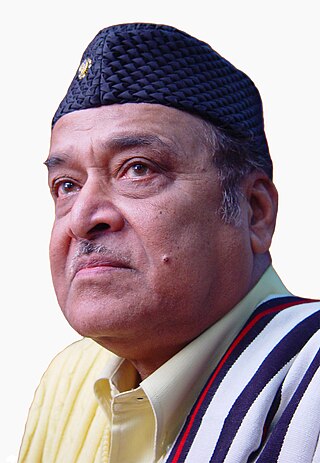
Bhupen Hazarika was an Indian playback singer, lyricist, musician, poet, actor, artist, editor, filmmaker, professor and politician from Assam, widely known as Sudha Kontho. His songs were written and sung mainly in the Assamese language by himself, are marked by humanity and universal brotherhood and have been translated and sung in many languages, most notably in Bengali and Hindi.
The Tea-garden community is a term for a multiethnic, multicultural group of tea garden workers and their descendants in Assam. They are officially referred to as Tea-tribes by the government of Assam and notified as Other Backward Classes (OBC). They are the descendants of peoples from multiple tribal and caste groups brought by the British colonial planters as indentured labourers from the regions of present-day Jharkhand, Odisha, Chhattisgarh, West Bengal and Andhra Pradesh into colonial Assam during the 1860-90s in multiple phases to work in tea gardens. They are found mainly in those districts of Upper Assam and Northern Brahmaputra belt where there is a high concentration of tea gardens, like Kokrajhar, Udalguri, Sonitpur, Biswanath,Nagaon, Golaghat, Jorhat, Sivasagar, Charaideo, Dibrugarh, Tinsukia, and Lakhimpur. There is a sizeable population of the community in the Barak Valley region of Assam as well in the districts of Cachar, Karimganj and Hailakandi. The total population is estimated to be around 7 million, of which an estimated 4.5 million reside in residential quarters built inside 799 tea estates spread across tea-growing regions of Assam. Another 2.5 million reside in the nearby villages spread across those tea-growing regions. They speak multiple languages, including Sora, Odia, Assam Sadri, Sambalpuri, Kurmali, Santali, Kurukh, Kharia, Kui, Chhattisgarhi, Gondi and Mundari. Assam Sadri, distinguished from the Sadri language, serves as lingua franca among the community.

The culture of Assam is traditionally a hybrid one, developed due to cultural assimilation of different ethno-cultural groups under various political-economic systems in different periods of its history.

The Rang Ghar, is a two-storeyed building which once served as the royal sports-pavilion where Ahom kings and nobles were spectators at games like buffalo fights and other sports at Rupahi Pathar - particularly during the Rongali Bihu festival in the Ahom capital of Rangpur.

Bohag Bihu or Rongali Bihu also called Xaat Bihu is a traditional ethnic festival celebrated in the Northeastern Indian state of Assam and other parts of Northeastern India by the indigenous ethnic groups of Assam, and marks the beginning of the Assamese New Year. The festival is of mostly aboriginal origin comprising Tibeto-Burman and Tai elements. It usually falls in the 2nd week of April, historically signifying the time of harvest. Every year it falls on the 14th day of April. The holiday unites the different native communities of Assam regardless of their backgrounds and promotes the celebration of ethnic diversity.
Dudhnoi is a taluk in Goalpara district, Assam, India.

Assam separatist movements refers to a series of multiple insurgent and separatist movements that are or have been operating the in Northeast Indian state of Assam. The conflict started in the 1970s following tension between the native indigenous Assamese people and the Indian government over alleged neglect, political, social, cultural, economic issues and increased levels of illegal immigration from Bangladesh. The conflict has resulted in the deaths of 12,000 United Liberation Front of Assam (ULFA) militants and 18,000 others.
Folk dances of Assam include the Bihu and the Bagurumba, the Bhortal, the Ojapali dance. Assam is home to many groups: Muslim, Indo-Aryan, Rabha, Bodo, Dimasa, Karbi, Mising, Sonowal Kacharis, Mishmi and Tiwa (Lalung) etc. These cultures come together to create an Assamese culture. Residents of the state of Assam are known as "Axomiya" (Assamese). Most tribes have their own language, although Assamese is the primary language of the state.
Chandmari is one of the oldest localities of Guwahati, Assam, India. Situated towards the eastern side of the city. It is home to All India Radio, Guwahati centre and a couple of academic institutions such as Holy Childs Convent, Bhaskar Bidyapith Higher Secondary School, Near Guwahati Commerce College Gauhati Commerce College, Assam Engineering Institute to name a few. Many high schools and degree colleges are set up in this area adding to its educational atmosphere. This part of city is also known for its recreational facilities. Bohag Bihu is regularly organized since 1961 at the A.E.I. playground which is also known as Chandmari Bihutoli by Pub Guwahati Bihu Sanmilan. Durga Puja is also regularly celebrated at Chandmari by the Chandmari Sarbajanin Durga Puja Committee. The neighboring residential areas around Chandmari are Milonpur, Nizarapar, Bamunimaidam, Kannachal, Pub-Sarania, Bhaskar Nagar etc. The area has one of the oldest movie theatres 'Anuradha' showing national and international movies.
All Tai Ahom Students Union (ATASU) or Chom Hom Lik Hen Tai Ahom Tang Mung in Ahom language is a students' union in Assam, India.
Sobha Brahma was an Indian painter and sculptor. He lived and worked in Guwahati. He graduated from the Kalabhavana Visva-Bharati University Shantiniketan West-Bengal. Brahma developed a unique individual style that mixed traditional folk and modern Indian art.
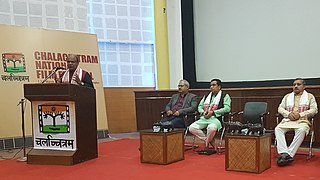
Chalachitram National Film Festival (CNFF) is a festival conducted in Guwahati, Assam. The festival director is Utpal Datta, a National Film Award winning film critic and film maker.

Hinduism in the state of Assam, in Northeast India is the home to some of the most complex and poorly understood traditions in Hinduism. People follow traditions belonging to Shaivism, Saktism, Tantricism and an indigenous form of Vaishnavism called Ekasarana dharma; and taken together the practitioners constitute around 61% of the state population as per the 2011 Census. Hindus form a majority in 17 out of the 29 districts of Assam. By region, there is a significant diversity among the ethnic groups that profess the Hindu faith, traditions and customs. As per as 2011 Census, In Brahmaputra valley of Assam, Hindus constitute 62% of the population, most being ethnic Assamese. In the autonomous Bodoland region of Assam, Hindus constitute 71.3% of the region's population, most being of the Bodo tribe. In the Barak valley region of southern Assam, Hindus constitute 50% of the region's population, most being ethnic Sylhetis, a subgroup of Bengalis. The Hill Tribes of Assam, particularly the Karbi people of Karbi Anglong and Dimasa people of Dima Hasao are mainly Hindus.
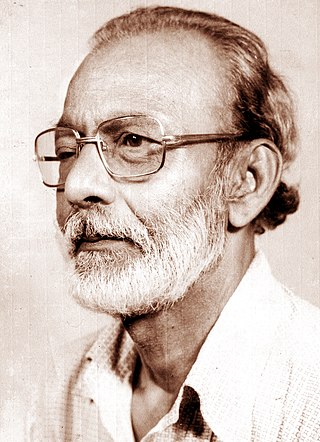
Asu Dev(আশু দেব) born as Ashutosh Deb. Asu Dev was born in Dhubri, Assam India. Asu Dev was a pioneer artist of Assam. He was a painter, sculptor and an Art Educator. During his lifetime he had worked as a Textile Designer in several Cotton Mills in Jessore and Khulna in Bangladesh, Ahmedabad, Surat, Kolkata, at the Janata College Titabor Assam and Assam Textile Institute Guwahati, Assam and at Weavers Training Centre in Dimapur Nagaland in the later part of his life. His distinguished style of painting, were he had experimented using fine and minute dots often like modern pixels, which was often addressed by art critics as pointillism. Asu Dev was a self taught artist who created his artworks from minute observation of the Nature and the working class, and his innate exposure to Srimanta Sankardeva the 15th–16th century Assamese saint-scholar, poet, playwright, artist and social-religious reformer. The miniature paintings from the Chitra Bhagawata and the traditional folk arts and culture of the region, becoming the prime subjects of his paintings. During his career spanning about fifty years of Artistic career dating to the 1930s, he had created around 180 Art works, mostly paintings, oil on canvas, water colour tempara, textile designs and motifs, illustrations, sketches, drawings and a few sculptures. In 1952, Asu Dev was among the first artists to hold, one man show in Assam.

Monita Borgohain, IAS, is the Secretary to the Govt. of Assam, Director of the Dr. Bhupen Hazarika Regional Government Film and Television Institute, Secretary of the Jyoti Chitraban Film Studio, Festival Director of the Guwahati International Film Festival, and Producer of the feature film Xobdo Nixobdo Kolahol. Occasionally, she writes for journals, such as the Film Critics Circle of India Journal of Indian Cinema and the FIPRESCI-India journal.
References
- ↑ "Why Rongali festival stands out as a platform for peace and diversity". The Financial Express. 2019-04-14. Retrieved 2019-09-21.
- ↑ 李夏. "Rongali Bihu festival celebrated in Guwahati, India". www.xinhuanet.com. Archived from the original on September 21, 2019. Retrieved 2019-09-21.
- ↑ "The Assam Tribune Online". www.assamtribune.com. Retrieved 2019-09-21.
- ↑ Gani, Abdul (February 6, 2017). "Festival showcases tribal culture, food". The Times of India. Retrieved 2019-09-21.
- ↑ "'Rongali' in Assam brings forth the true ethnicity of the northeast region". www.aninews.in. Retrieved 2019-09-21.
- ↑ "Rongali set to rock Guwahati". www.telegraphindia.com. Retrieved 2019-09-21.
- ↑ "Festival Review: Rongali Festival, Guwahati, Assam -". My Site. 2017-02-20. Retrieved 2019-09-21.