Related Research Articles

Dame Harriette Chick DBE was a British microbiologist, protein scientist and nutritionist. She is best remembered for demonstrating the roles of sunlight and cod liver oil in preventing rickets.

Lina Solomonovna Stern or Shtern was a Soviet biochemist, physiologist and humanist whose medical discoveries saved thousands of lives at the fronts of World War II. She is best known for her pioneering work on the blood–brain barrier, which she described as hemato-encephalic barrier in 1921.

Rodolfo Llinás Riascos is a Colombian and American neuroscientist. He is currently the Thomas and Suzanne Murphy Professor of Neuroscience and Chairman Emeritus of the Department of Physiology & Neuroscience at the NYU School of Medicine. Llinás has published over 800 scientific articles.

Perilymph is an extracellular fluid located within the inner ear. It is found within the scala tympani and scala vestibuli of the cochlea. The ionic composition of perilymph is comparable to that of plasma and cerebrospinal fluid. The major cation in perilymph is sodium, with the values of sodium and potassium concentration in the perilymph being 138 mM and 6.9 mM, respectively. It is also named Cotunnius' liquid and liquor cotunnii for Domenico Cotugno.

Denis Noble is a British physiologist and biologist who held the Burdon Sanderson Chair of Cardiovascular Physiology at the University of Oxford from 1984 to 2004 and was appointed Professor Emeritus and co-Director of Computational Physiology. He is one of the pioneers of systems biology and developed the first viable mathematical model of the working heart in 1960. Noble established The Third Way of Evolution (TWE) project with James A. Shapiro which predicts that the entire framework of the modern synthesis will be replaced.
The muscle-type nicotinic receptor is a type of nicotinic acetylcholine receptor consisting of the subunit combination (α1)2β1δε (adult receptor) or (α1)2β1δγ (fetal receptor). These receptors are found in neuromuscular junctions, where activation leads to an excitatory postsynaptic potential (EPSP), mainly by increased Na+ and K+ permeability.

Susan C. Wray is professor of cellular and molecular physiology at the University of Liverpool. She also serves as the President of the International Union of Physiological Sciences (IUPS) and is president of the Federation of European Physiological Societies (FEPS). She was the founding editor-in-chief of Physiological Reports. and is the first editor-in-chief of Current Research in Physiology. She serves as director of the centre of better births in Liverpool Women's Hospital which was opened in 2013 with funding of £2.5 million with the objective of basic scientists working together with clinicians on problems during pregnancy. Along with Zarko Alfirevic, she leads the Harris wellbeing preterm birth centre. Wray is the director of the University of Liverpool Athena SWAN and team leader for the institute of translational medicine. Her primary research interests are in smooth muscle physiology, reproductive medicine and cell signalling.
Intermuscular Coherence is a measure to quantify correlations between the activity of two muscles, which is often assessed using electromyography. The correlations in muscle activity are quantified in frequency domain, and therefore referred to as intermuscular coherence.

Peter Somogyi is the former Director of the Medical Research Council Anatomical Neuropharmacology Unit at the University Department of Pharmacology, University of Oxford, England.

Joan Mott (1921–1994) was an English physiologist and zoologist who worked for most of her career at the University of Oxford's Nuffield Institute for Medical Research. Following wartime work on anti-fouling of ships her main research interest was in the circulatory system, especially the fetal renin–angiotensin system.

The classification of peripheral nerves in the peripheral nervous system (PNS) groups the nerves into two main groups, the somatic and the autonomic nervous systems. Together, these two systems provide information regarding the location and status of the limbs, organs, and the remainder of the body to the central nervous system (CNS) via nerves and ganglia present outside of the spinal cord and brain. The somatic nervous system directs all voluntary movements of the skeletal muscles, and can be sub-divided into afferent and efferent neuronal flow. The autonomic nervous system is divided primarily into the sympathetic and parasympathetic nervous systems with a third system, the enteric nervous system, receiving less recognition.
Dorothy Norris née Harrop (?-?) was an English biochemist who worked on yeast fermentation, protein chemistry, and was a pioneer in the study of carcinogens. She moved to India where she worked at the Indian Institute of Science before becoming the founding director of the Indian Lac Research Institute at Ranchi.
Samuel Gelfan was an American professor of neurophysiology. He was a Guggenheim Fellow for the academic year 1932–1933.
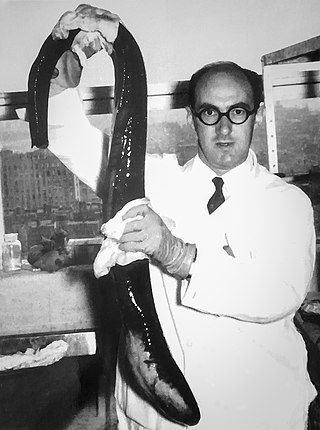
Ronald Whittam was an English research scientist in the field of cell physiology. He conducted important studies on the mechanism of active transport of ions across animal membranes and its relation to cellular metabolism. Whittam was the inaugural Chair in Physiology at the University of Leicester, where he was subsequently an Emeritus Professor.
Stephanie Schorge is a Professor of Neuroscience in the Department of Neuroscience, Physiology and Pharmacology at University College London. She is known for her research into mutations that cause neurological diseases.
Dario DiFrancesco is a Professor Emeritus (Physiology) at the University of Milano. In 1979, he and collaborators discovered the so-called "funny" current in cardiac pacemaker cells, a new mechanism involved in the generation of cardiac spontaneous activity and autonomic regulation of heart rate. That initiated a new field of research in the heart and brain, where hyperpolarization-activated, cyclic nucleotide-gated (HCN) channels, the molecular components of "funny" channels cloned in the late 90's, are today known to play fundamental roles in health and disease. Clinically relevant exploitation of the properties of "funny" channels has developed a channel blocker with specific heart rate-slowing action, ivabradine, marketed for the therapy of coronary artery disease, heart failure and the symptomatic treatment of chronic stable angina.
Henry M. Colecraft is an American Biophysicist, the John C. Dalton Professor and Associate Vice Chair of the Department of Physiology and Cellular Biophysics at Columbia University Irving Medical Center.

Mary Christine Rosenheim was an English physiologist. She is particularly known for her work with Otto Rosenheim on the crystalline material protagon.

Edith Gertrude Willcock (1879–1953) was an English nuclear physicist and biochemist. After publishing on radium, she contributed to research into the role of amino acids in diet.
Sarah C. M. Sowton was a British physiologist. She had a varied scientific career beginning in the 1890s in which she investigated the impact of various factors on bodily function, from chemical stimulation to work and the menstrual cycle, culminating in a post as researcher to Britain's Industrial Fatigue Research Board in the 1920s. She was a pioneer of women's involvement in the Physiological Society.
References
- ↑ "No title" (PDF). The Gazette. p. 3773. Retrieved October 17, 2024.
- ↑ Tansey, Tilli (2015-01-15). "Women and the early Journal of Physiology". The Journal of Physiology. 593 (2): 347–350. doi:10.1113/jphysiol.2014.288258. ISSN 0022-3751. PMC 4303378 . PMID 25630254.
- ↑ Webb, Ida M. (2002-11-01). The Challenge of Change in Physical Education. Routledge. ISBN 978-1-135-69987-1.
- ↑ "Women in physiology". The Physiological Society. Retrieved 2024-10-17.
- ↑ Skelton, Ruth (1921-11-18). "On the relation of pulse pressure to the output of the heart". The Journal of Physiology. 55 (5–6): 319–321. doi:10.1113/jphysiol.1921.sp001975. ISSN 0022-3751. PMC 1405344 . PMID 16993516.
- ↑ Jr, Gerald F. Combs (2012-04-20). The Vitamins. Academic Press. p. 18. ISBN 978-0-12-381981-9.