
Ground transport in the Democratic Republic of the Congo (DRC) has always been difficult. The terrain and climate of the Congo Basin present serious barriers to road and rail construction, and the distances are enormous across this vast country. Furthermore, chronic economic mismanagement and internal conflict has led to serious under-investment over many years.

The Student Nonviolent Coordinating Committee, and later, the Student National Coordinating Committee was the principal channel of student commitment in the United States to the civil rights movement during the 1960s. Emerging in 1960 from the student-led sit-ins at segregated lunch counters in Greensboro, North Carolina, and Nashville, Tennessee, the Committee sought to coordinate and assist direct-action challenges to the civic segregation and political exclusion of African Americans. From 1962, with the support of the Voter Education Project, SNCC committed to the registration and mobilization of black voters in the Deep South. Affiliates such as the Mississippi Freedom Democratic Party and the Lowndes County Freedom Organization in Alabama also worked to increase the pressure on federal and state government to enforce constitutional protections.
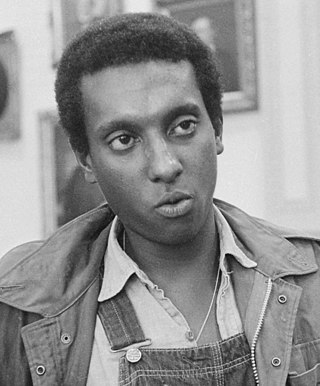
Kwame Ture was an American activist who played a major role in the civil rights movement in the United States and the global pan-African movement. Born in Trinidad in the Caribbean, he grew up in the United States from the age of 11 and became an activist while attending the Bronx High School of Science. He was a key leader in the development of the Black Power movement, first while leading the Student Nonviolent Coordinating Committee (SNCC), then as the "Honorary Prime Minister" of the Black Panther Party, and last as a leader of the All-African People's Revolutionary Party (A-APRP).

Ella Josephine Baker was an African-American civil rights and human rights activist. She was a largely behind-the-scenes organizer whose career spanned more than five decades. In New York City and the South, she worked alongside some of the most noted civil rights leaders of the 20th century, including W. E. B. Du Bois, Thurgood Marshall, A. Philip Randolph, and Martin Luther King Jr. She also mentored many emerging activists, such as Diane Nash, Stokely Carmichael, and Bob Moses, as leaders in the Student Nonviolent Coordinating Committee (SNCC).
Honky is a racial slur used to refer to white people, predominantly heard in the United States. The first recorded use of "honky" in this context may date back to 1946.
James Forman was a prominent African-American leader in the civil rights movement. He was active in the Student Nonviolent Coordinating Committee (SNCC), the Black Panther Party, and the League of Revolutionary Black Workers. As the executive secretary of SNCC from 1961 to 1966, Forman played a significant role in the Freedom Rides, the Albany movement, the Birmingham campaign, and the Selma to Montgomery marches.
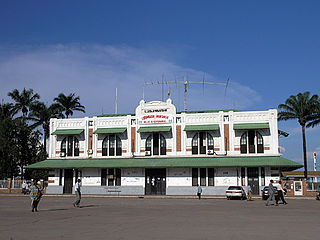
The Société Nationale des chemins de fer du Congo is the national railway company for the inland railways of the Democratic Republic of the Congo.
Rail transport is provided in the Democratic Republic of the Congo by the Société Nationale des Chemins de Fer du Congo (SNCC), the Société commerciale des transports et des ports (SCTP) (previously Office National des Transports until 2011), and the Office des Chemins de fer des Ueles (CFU).
The Albany Movement was a desegregation and voters' rights coalition formed in Albany, Georgia, in November 1961. This movement was founded by local black leaders and ministers, as well as members of the Student Nonviolent Coordinating Committee (SNCC) and the National Association for the Advancement of Colored People (NAACP). The groups were assisted by Martin Luther King Jr. and the Southern Christian Leadership Conference (SCLC). It was meant to draw attention to the brutally enforced racial segregation practices in Southwest Georgia. However, many leaders in SNCC were fundamentally opposed to King and the SCLC's involvement. They felt that a more democratic approach aimed at long-term solutions was preferable for the area other than King's tendency towards short-term, authoritatively-run organizing.

Ruby Doris Smith-Robinson worked with the Student Nonviolent Coordinating Committee (SNCC) from its earliest days in 1960 until her death in October 1967. She served the organization as an activist in the field and as an administrator in the Atlanta central office. She eventually succeeded James Forman as SNCC's executive secretary and was the only woman ever to serve in this capacity. She was well respected by her SNCC colleagues and others within the movement for her work ethic and dedication to those around her. SNCC Freedom Singer Matthew Jones recalled, "You could feel her power in SNCC on a daily basis". Jack Minnis, director of SNCC's opposition research unit, insisted that people could not fool her. Over the course of her life, she served 100 days in prison for the movement.
Jack Minnis (1926-2005) was an American activist, and the founder and director of opposition research for the Student Nonviolent Coordinating Committee in the Civil Rights Movement era. Minnis researched federal expenditures and state and local subversion of racial equality. Minnis was white, but remained affiliated with SNCC even after it adopted a "blacks only" personnel policy, its only white employee for a long time. He helped to train such workers as Stokely Carmichael, Marion Barry, and John Lewis.

The Freedom Singers originated as a quartet formed in 1962 at Albany State College in Albany, Georgia. After folk singer Pete Seeger witnessed the power of their congregational-style of singing, which fused black Baptist a cappella church singing with popular music at the time, as well as protest songs and chants. Churches were considered to be safe spaces, acting as a shelter from the racism of the outside world. As a result, churches paved the way for the creation of the freedom song. After witnessing the influence of freedom songs, Seeger suggested The Freedom Singers as a touring group to the SNCC executive secretary James Forman as a way to fuel future campaigns. Intrinsically connected, their performances drew aid and support to the Student Nonviolent Coordinating Committee (SNCC) during the emerging civil rights movement. As a result, communal song became essential to empowering and educating audiences about civil rights issues and a powerful social weapon of influence in the fight against Jim Crow segregation. Their most notable song “We Shall Not Be Moved” translated from the original Freedom Singers to the second generation of Freedom Singers, and finally to the Freedom Voices, made up of field secretaries from SNCC. "We Shall Not Be Moved" is considered by many to be the "face" of the Civil Rights movement. Rutha Mae Harris, a former freedom singer, speculated that without the music force of broad communal singing, the civil rights movement may not have resonated beyond the struggles of the Jim Crow South. Since the Freedom Singers were so successful, a second group was created called the Freedom Voices.
Fay D. Bellamy Powell was an African-American civil rights activist.

Charles E. "Charlie" Cobb Jr. is a journalist, professor, and former activist with the Student Nonviolent Coordinating Committee (SNCC). Along with several veterans of SNCC, Cobb established and operated the African-American bookstore Drum and Spear in Washington, D.C., from 1968 to 1974. Currently he is a senior analyst at allAfrica.com and a visiting professor at Brown University.

Samuel Leamon Younge Jr. was a civil rights and voting rights activist who was murdered for trying to desegregate a "whites only" restroom. Younge was an enlisted service member in the United States Navy, where he served for two years before being medically discharged. Younge was an active member of the Student Nonviolent Coordinating Committee (SNCC) and a leader of the Tuskegee Institute Advancement League.

Clifford A. "Sonny" Vaughs was an American civil rights activist, filmmaker, and motorcycle builder. Vaughs designed the two chopper motorcycles used for the 1969 film Easy Rider, while an associate producer on the film. He also produced and directed the documentary What Will the Harvest Be? (1965) and Not So Easy (1972).
Sizarail was a railway company formed by foreign investors that briefly operated the railway network in Zaire between 1996 and 1997. It took over from the state-owned operator in an attempt to revive the railway, which had virtually ceased to operate despite being a critical source of revenue from mineral exports. Operations quickly improved, and the company earned a small profit in the first year. However, advancing rebel forces closed it down and re-nationalized the railway.
The following lists events that happened during 1997 in Zaire.
The following lists events that happened during 1974 in Zaire.
Antoine Gabriel Kyungu wa Kumwanza was a Congolese politician.

