A chain letter is a message that attempts to convince the recipient to make a number of copies and pass them on to a certain number of recipients. The "chain" is an exponentially growing pyramid that cannot be sustained indefinitely.

A Ponzi scheme is a form of fraud that lures investors and pays profits to earlier investors with funds from more recent investors. Named after Italian businessman Charles Ponzi, this type of scheme misleads investors by either falsely suggesting that profits are derived from legitimate business activities, or by exaggerating the extent and profitability of the legitimate business activities, leveraging new investments to fabricate or supplement these profits. A Ponzi scheme can maintain the illusion of a sustainable business as long as investors continue to contribute new funds, and as long as most of the investors do not demand full repayment or lose faith in the non-existent assets they are purported to own.

A pyramid scheme is a business model which, rather than earning money by sale of legitimate products to an end consumer, mainly earns money by recruiting new members with the promise of payments. As the number of members multiplies, recruiting quickly becomes increasingly difficult until it is impossible, and therefore most of the newer recruits do not make a profit. As such, pyramid schemes are unsustainable. The unsustainable nature of pyramid schemes has led to most countries outlawing them as a form of fraud.

The General Certificate of Secondary Education (GCSE) is an academic qualification in a range of subjects taken in England, Wales and Northern Ireland, having been introduced in September 1986 and its first exams taken in 1988. State schools in Scotland use the Scottish Qualifications Certificate instead. However, private schools in Scotland often choose to follow the English GCSE system.

A student loan is a type of loan designed to help students pay for post-secondary education and the associated fees, such as tuition, books and supplies, and living expenses. It may differ from other types of loans in the fact that the interest rate may be substantially lower and the repayment schedule may be deferred while the student is still in school. It also differs in many countries in the strict laws regulating renegotiating and bankruptcy. This article highlights the differences of the student loan system in several major countries.
Tuition fees were first introduced across the entire United Kingdom in September 1998 under the Labour government of Tony Blair to help fund tuition for undergraduate and postgraduate certificate students at universities; students were required to pay up to £1,000 a year for tuition. However, only those who reach a certain salary threshold (£21,000) pay this fee through general taxation. In practice, higher education (HE) remains free at the point of entry in England for a high minority of students.

The Mid Day Meal Scheme is a school meal programme in India designed to better the nutritional status of school-age children nationwide. The scheme has been renamed as PM-POSHAN Scheme. The programme supplies free lunches on working days for children in government primary and upper primary schools, government aided Anganwadis, Madarsa and Maqtabs. Serving 120 million children in over 1.27 million schools and Education Guarantee Scheme centres, the Midday Meal Scheme is the largest of its kind in the world.
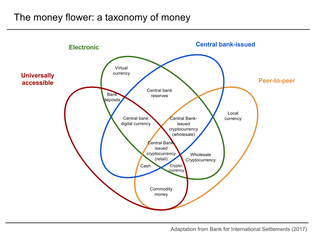
Digital currency is any currency, money, or money-like asset that is primarily managed, stored or exchanged on digital computer systems, especially over the internet. Types of digital currencies include cryptocurrency, virtual currency and central bank digital currency. Digital currency may be recorded on a distributed database on the internet, a centralized electronic computer database owned by a company or bank, within digital files or even on a stored-value card.
Deposit insurance or deposit protection is a measure implemented in many countries to protect bank depositors, in full or in part, from losses caused by a bank's inability to pay its debts when due. Deposit insurance systems are one component of a financial system safety net that promotes financial stability.
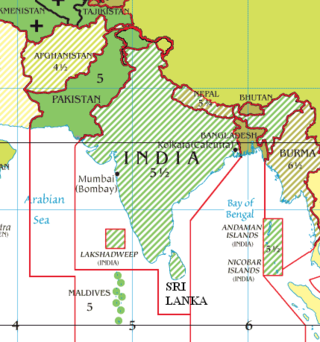
Bangladesh Standard Time serves as the official time zone for Bangladesh. It operates six hours ahead of Coordinated Universal Time and is observed uniformly across the country as a national standard. In 2009, Bangladesh briefly observed daylight saving time (DST) as a measure to address an ongoing electricity crisis. However, this decision was reversed by the government in 2010.

The Third Labour Government of New Zealand was the government of New Zealand from 1972 to 1975. During its time in office, it carried out a wide range of reforms in areas such as overseas trade, farming, public works, energy generation, local government, health, the arts, sport and recreation, regional development, environmental protection, education, housing, and social welfare. Māori also benefited from revisions to the laws relating to land, together with a significant increase in a Māori and Island Affairs building programme. In addition, the government encouraged biculturalism and a sense of New Zealand identity. However, the government damaged relations between Pākehā and Pasifika New Zealanders by instituting the Dawn Raids on alleged overstayers from the Pacific Islands; the raids have been described as "the most blatantly racist attack on Pacific peoples by the New Zealand government in New Zealand’s history". The government lasted for one term before being defeated a year after the death of its popular leader, Norman Kirk.
Multi-level marketing (MLM), also called network marketing or pyramid selling, is a controversial and sometimes illegal marketing strategy for the sale of products or services in which the revenue of the MLM company is derived from a non-salaried workforce selling the company's products or services, while the earnings of the participants are derived from a pyramid-shaped or binary compensation commission system.
Student loans and grants in the United Kingdom are primarily provided by the government through the Student Loans Company (SLC), an executive non-departmental public body. The SLC is responsible for Student Finance England and Student Finance Wales, and is a delivery partner of Student Finance NI and the Student Awards Agency for Scotland. Most undergraduate university students resident in the United Kingdom are eligible for student loans, and some students on teacher training courses may also apply for loans. Student loans also became available from the 2016/17 academic year to postgraduate students who study a taught Masters, research or Doctoral course.

The Fifth Labour Government of New Zealand was the government of New Zealand from 10 December 1999 to 19 November 2008. Labour Party leader Helen Clark negotiated a coalition with Jim Anderton, leader of the Alliance Party. While undertaking a number of substantial reforms, it was not particularly radical compared to previous Labour governments.
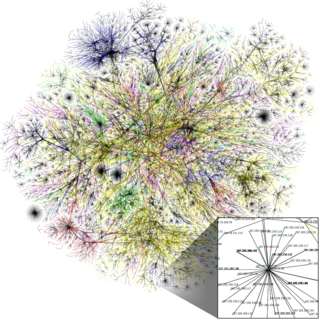
Make Money Fast is a title of an electronically forwarded chain letter created in 1988 which became so infamous that the term is often used to describe all sorts of chain letters forwarded over the Internet, by e-mail spam, or in Usenet newsgroups. In anti-spammer slang, the name is often abbreviated "MMF".

First Student UK was the brand used by FirstGroup for student transport in the United Kingdom. The brand was originally used by First Student in the United States for school transport there, and was expanded to the United Kingdom in 2000. First Student UK was one of the first companies to introduce school buses in Britain, usually painted school bus yellow to distinguish them from conventional buses.

Aadhaar (Hindi: आधार, lit. 'base, foundation') is a twelve-digit unique identity number that can be obtained voluntarily by all residents of India, based on their biometrics and demographic data. The data is collected by the Unique Identification Authority of India (UIDAI), a statutory authority established in January 2016 by the Government of India, under the jurisdiction of the Ministry of Electronics and Information Technology, following the provisions of the Aadhaar (Targeted Delivery of Financial and other Subsidies, benefits and services) Act, 2016.
Direct School Admission (DSA) is a scheme in Singapore introduced in 2004 that allows students to be recognised for their strengths in specific talent areas, such as sports, performing arts, or leadership, alongside their academic performance. The scheme enabled students to secure early admission to schools of their choice. For students entering secondary school in 2005, the scheme was categorised as DSA-Secondary (DSA-Sec), primarily for those applying to the Integrated Programme (IP). In 2005, the Ministry of Education (MOE) extended the scheme to include students seeking direct admissions into junior college, categorising it as DSA-Junior College (DSA-JC).
Income declaration scheme, 2016 was an amnesty scheme introduced by Narendra Modi led Government of India as a part of the 2016 Union budget to unearth black money and bring it back into the system. Lasting from 1 June to 30 September, the scheme provided an opportunity to income tax and wealth tax defaulters to avoid litigation and become compliant by declaring their assets, paying the tax on them and a penalty of 45% thereafter.

Morris Albert Copeland was an American economist who criticized 20th-century macroeconomic theory, and who contributed to the development of modern flow of funds theory.
