Mercury is a functional logic programming language made for real-world uses. The first version was developed at the University of Melbourne, Computer Science department, by Fergus Henderson, Thomas Conway, and Zoltan Somogyi, under Somogyi's supervision, and released on April 8, 1995.
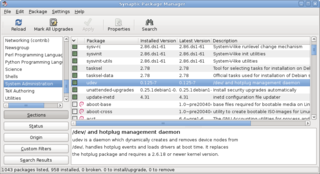
A package manager or package-management system is a collection of software tools that automates the process of installing, upgrading, configuring, and removing computer programs for a computer in a consistent manner.
The culture of Egypt has thousands of years of recorded history. Ancient Egypt was among the earliest civilizations in the world. For millennia, Egypt developed strikingly unique, complex and stable cultures that influenced other cultures of Europe, Africa and the Middle East.

The Bibliotheca Alexandrina (BA) is a major library and cultural center on the shore of the Mediterranean Sea in Alexandria, Egypt. It is a commemoration of the Library of Alexandria, once one of the largest libraries worldwide, which was lost in antiquity. The idea of reviving the old library dates back to 1974 when a committee set up by Alexandria University selected a plot of land for its new library. Construction work began in 1995, and after some US$220 millions had been spent, the complex was officially inaugurated on 16 October 2002. In 2009, the library received a donation of 500,000 books from the Bibliothèque nationale de France (BnF). The gift makes the Bibliotheca Alexandrina the sixth-largest Francophone library in the world.
In computer programming, a software framework is an abstraction in which software, providing generic functionality, can be selectively changed by additional user-written code, thus providing application-specific software. It provides a standard way to build and deploy applications and is a universal, reusable software environment that provides particular functionality as part of a larger software platform to facilitate the development of software applications, products and solutions.
A database abstraction layer is an application programming interface which unifies the communication between a computer application and databases such as SQL Server, IBM Db2, MySQL, PostgreSQL, Oracle or SQLite. Traditionally, all database vendors provide their own interface that is tailored to their products. It is up to the application programmer to implement code for the database interfaces that will be supported by the application. Database abstraction layers reduce the amount of work by providing a consistent API to the developer and hide the database specifics behind this interface as much as possible. There exist many abstraction layers with different interfaces in numerous programming languages. If an application has such a layer built in, it is called database-agnostic.
Document classification or document categorization is a problem in library science, information science and computer science. The task is to assign a document to one or more classes or categories. This may be done "manually" or algorithmically. The intellectual classification of documents has mostly been the province of library science, while the algorithmic classification of documents is mainly in information science and computer science. The problems are overlapping, however, and there is therefore interdisciplinary research on document classification.

Racket is a general-purpose, multi-paradigm programming language and a multi-platform distribution that includes the Racket language, compiler, large standard library, IDE, development tools, and a set of additional languages including Typed Racket, Swindle, FrTime, Lazy Racket, R5RS & R6RS Scheme, Scribble, Datalog, Racklog, Algol 60 and several teaching languages.
The Digital Assets Repository is a system developed at the Bibliotheca Alexandrina (BA) by the International School of Information Science (ISIS) to create and maintain digital library collections and preserve them to future generations.
A universal library is a library with universal collections. This may be expressed in terms of it containing all existing information, useful information, all books, all works or even all possible works. This ideal, although unrealizable, has influenced and continues to influence librarians and others and be a goal which is aspired to. Universal libraries are often assumed to have a complete set of useful features.

Ismail Serageldin, Founding Director of the Bibliotheca Alexandrina (BA), the new Library of Alexandria, inaugurated in 2002, is currently, Emeritus Librarian, and member of the Board of Trustees of the Library of Alexandria. He serves as Chair or Member of a number of advisory committees for academic, research, scientific and international institutions and civil society efforts, and serves on the Advisory Committee of the World Social Science Report for 2013 and 2016, as well as the UNESCO-supported World Water Scenarios (2013) and the executive council of the Encyclopedia of Life (2010) and Chairs the Executive Council of the World Digital Library (2010). He also co-chaired the African Union's high level panel for Biotechnology (2006) and again for Science, Technology and Innovation (STI) in 2012–2013, and was a member of the ICANN Panel for the review of the internet future (2013).
The Encyclopedia of Life (EOL) is a free, online encyclopedia intended to document all of the 1.9 million living species known to science. It is compiled from existing trusted databases curated by experts and with the assistance of non-experts throughout the world. It aims to build one "infinitely expandable" page for each species, including video, sound, images, graphics, as well as text. In addition, the Encyclopedia incorporates content from the Biodiversity Heritage Library, which digitizes millions of pages of printed literature from the world's major natural history libraries. The project was initially backed by a US$50 million funding commitment, led by the MacArthur Foundation and the Sloan Foundation, who provided US$20 million and US$5 million, respectively. The additional US$25 million came from five cornerstone institutions—the Field Museum, Harvard University, the Marine Biological Laboratory, the Missouri Botanical Garden, and the Smithsonian Institution. The project was initially led by Jim Edwards and the development team by David Patterson. Today, participating institutions and individual donors continue to support EOL through financial contributions.

SharePoint is a web-based collaborative platform that integrates natively with Microsoft 365. Launched in 2001, SharePoint is primarily sold as a document management and storage system. However the product is highly configurable, and its usage varies substantially among organizations, from sharing information through intranets to internal apps implementing business processes through workflows.

The Planetarium Science Centre is a department in the Bibliotheca Alexandrina in Alexandria, Egypt. It promotes science centres as an educational tool.
Natural-language programming (NLP) is an ontology-assisted way of programming in terms of natural-language sentences, e.g. English. A structured document with Content, sections and subsections for explanations of sentences forms a NLP document, which is actually a computer program. Natural language programming is not to be mixed up with natural language interfacing or voice control where a program is first written and then communicated with through natural language using an interface added on. In NLP the functionality of a program is organised only for the definition of the meaning of sentences. For instance, NLP can be used to represent all the knowledge of an autonomous robot. Having done so, its tasks can be scripted by its users so that the robot can execute them autonomously while keeping to prescribed rules of behaviour as determined by the robot's user. Such robots are called transparent robots as their reasoning is transparent to users and this develops trust in robots. Natural language use and natural-language user interfaces include Inform 7, a natural programming language for making interactive fiction, Shakespeare, an esoteric natural programming language in the style of the plays of William Shakespeare, and Wolfram Alpha, a computational knowledge engine, using natural-language input. Some methods for program synthesis are based on natural-language programming.
Glogster is a cloud-based (SaaS) platform for creating presentations and interactive learning. A platform that allows users, mostly students and educators to combine text, images, video, and audio to create an interactive, Web-based poster called glogs on a virtual canvas. Glogster facilitates the conveyance of social information in many different fields such as art, music, photography. Users also have access to a library of engaging educational content posters created by other students and educators worldwide. Glogster enables interactive, collaborative education and digital literacy.
An open repository or open-access repository is a digital platform that holds research output and provides free, immediate and permanent access to research results for anyone to use, download and distribute. To facilitate open access such repositories must be interoperable according to the Open Archives Initiative Protocol for Metadata Harvesting (OAI-PMH). Search engines harvest the content of open access repositories, constructing a database of worldwide, free of charge available research.

SYCL is a higher-level programming model to improve programming productivity on various hardware accelerators. It is a single-source embedded domain-specific language (eDSL) based on pure C++17. It is a standard developed by Khronos Group, announced in March 2014.
ROCm is an Advanced Micro Devices (AMD) software stack for graphics processing unit (GPU) programming. ROCm spans several domains: general-purpose computing on graphics processing units (GPGPU), high performance computing (HPC), heterogeneous computing. It offers several programming models: HIP, OpenMP/Message Passing Interface (MPI), OpenCL.
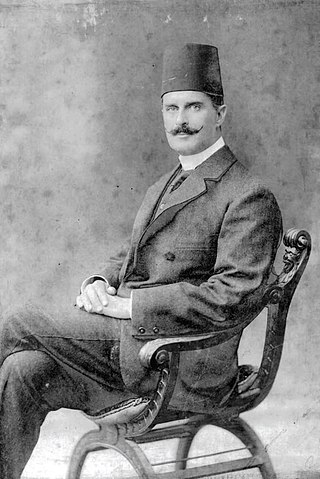
Prince Mohamed Omar Toussoun (1872–1944) was an Egyptian prince of the Muhammad Ali dynasty. He is one of the most admired princes of the Muhammad Ali family. He was famous for his excellence in many fields, his charitable works, his discoveries and his writings in Geography, History and Archaeology. He published many books and maps in Arabic and French, and he was the first to suggest sending a delegation from Egypt to the Versailles conference to demand its independence, a task later accomplished by Saad Zaghloul.
