Related Research Articles

Frederick County is located in the Commonwealth of Virginia. As of the 2020 census, the population was 91,419. Its county seat is Winchester. The county was formed in 1743 by the splitting of Orange County. It is Virginia's northernmost county. Frederick County is included in the Winchester, VA-WV Metropolitan Statistical Area, which is also included in the Washington-Baltimore-Northern Virginia, DC-MD-VA-WV-PA Combined Statistical Area.

Winchester is the northwesternmost independent city in the Commonwealth of Virginia, United States. It is the county seat of Frederick County, although the two are separate jurisdictions. As of the 2020 census, the city's population was 28,120. It is the principal city of the Winchester metropolitan area with a population of just over 145,000 extending into West Virginia, which is a part of the Washington–Baltimore combined statistical area. Winchester is home to Shenandoah University and the Museum of the Shenandoah Valley.

Shenandoah County is a county located in the Commonwealth of Virginia. As of the 2020 United States Census, the population was 44,186. Its county seat is Woodstock. It is part of the Shenandoah Valley region of Virginia.

Stephens City is an incorporated town in the southern part of Frederick County, Virginia, United States, with a population of 2,016 at the time of the 2020 census, and an estimated population of 2,096 in 2022. Founded by Peter Stephens in the 1730s, the colonial town was chartered and named for Lewis Stephens in October 1758. It was originally settled by German Protestants from Heidelberg.

Front Royal is the only incorporated town in Warren County, Virginia, United States. The population was estimated at 15,400 as of 2023. It is the county seat of Warren County.

Harry Flood Byrd Sr. was an American newspaper publisher, politician, and leader of the Democratic Party in Virginia for four decades as head of a political faction that became known as the Byrd Organization. Byrd served as Virginia's governor from 1926 until 1930, then represented the state as a U.S. senator from 1933 until 1965. He came to lead the conservative coalition in the Senate, and opposed President Franklin D. Roosevelt, largely blocking most liberal legislation after 1937. His son Harry Jr. succeeded him as U.S. senator, but ran as an Independent following the decline of the Byrd Organization.
The Shenandoah Apple Blossom Festival is a 14-day festival held annually in spring in Winchester, Virginia. First held in 1924, it is one of the oldest civic celebrations in the Commonwealth of Virginia.

Shenandoah University is a private university in Winchester, Virginia. It has an enrollment of approximately 4,000 students across more than 200 areas of study in six schools and colleges. Shenandoah University is one of five United Methodist Church-affiliated institutions of higher education in the Commonwealth of Virginia.
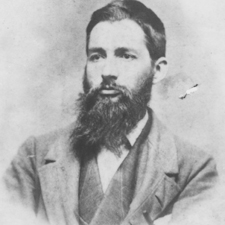
Jedediah Hotchkiss, known most frequently as Jed, was a teacher and the most famous cartographer and topographer of the American Civil War. His detailed and accurate maps of the Shenandoah Valley are credited by many as a principal factor in Confederate General Stonewall Jackson's victories in the Valley Campaign of 1862.
Rock Enon Springs is an unincorporated community in Frederick County, Virginia. United States. Rock Enon Springs is located 18 miles west of Winchester on Rock Enon Springs Road off Back Creek Road south of Gore. The community was known for its Rock Enon Springs Resort, which was sold in 1945 and is now owned by the Boy Scouts as Camp Rock Enon. Rock Enon Springs had a station along the Winchester and Western Railroad until the 1930s, when the railroad was shortened to Gore.
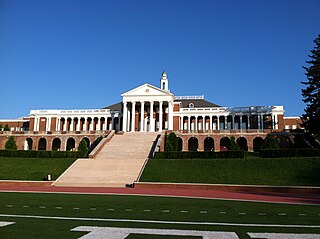
John Handley High School is an endowed public high school located in the city of Winchester, Virginia. It is a part of Winchester Public Schools.
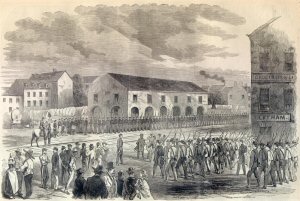
The city of Winchester, Virginia, and the surrounding area, were the site of numerous battles during the American Civil War, as contending armies strove to control the lower Shenandoah Valley. Winchester changed hands more often than any other Confederate city.

Shenandoah Valley Academy (SVA) is a private, co-educational, boarding, high school in New Market, Virginia, United States. It has both boarding and day school programs serving approximately 250 students in grades 9 through 12. The campus is located in Virginia's Shenandoah Valley, approximately 90 minutes west of Washington, DC. It is accredited by the Southern Association of Colleges and Schools (SACS) and the Accrediting Association of Seventh-day Adventist Schools. It is a member of the Virginia Council for Private Education. The school was founded in 1908, with its first students enrolling that fall and graduated its first senior class in the spring of 1911.
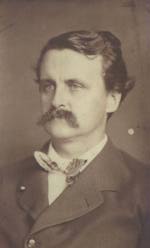
Charles Landon Carter Minor was the first president of the Virginia Agricultural and Mechanical College, Virginia's new land-grant institution. Minor, a native of Hanover County, Virginia, held a master's degree from the University of Virginia and had served as combat and staff officer in the Confederate Army. During the Civil War, Minor served under General Stonewall Jackson and saw action at Manassas and in battles around Richmond.
Frederick County Public Schools is the operating public school system within Frederick County, Virginia. It is governed by the seven-member Frederick County School Board. The district operates 24 school sites, including 12 elementary schools, 4 middle schools, 3 high schools, and a career and technical education center. Dr. George C. Hummer serves as the superintendent. Administrative offices are located in Winchester.
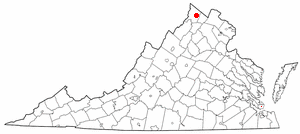
This is a list of the National Register of Historic Places listings in Winchester, Virginia.
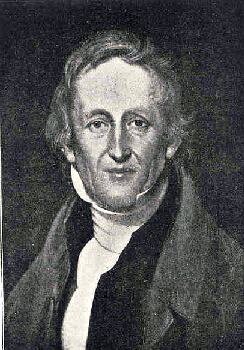
Winchester Law School was a privately run institution for legal education in Winchester, Virginia. Operated by Chancellor Henry St. George Tucker Sr., it operated from 1824 to 1831. Tucker closed it after being elected to the state Court of Appeals, because he had to move to Richmond, the capital.

Camp Rock Enon or CRE is a Boy Scouts of America resident summer camp for both younger and older youth with high adventure opportunities. The mineral springs of the area afforded the development of a resort in 1856. 89 years later in 1944 the resort and most of the land began the conversion to youth development resources. The summer camp includes familiar outdoor programs like aquatics, camping, cooking, fishing, handicraft, and shooting sports, yet also includes less common programs like canyoneering, rappelling, rock climbing, scuba, space exploration, volleyball, white water rafting, and wilderness survival. The property includes 14 campsites that accommodate from 16 to 56 campers in tents or Adirondack shelters as well as a dining hall that can serve 450 at a time. The camp is 1.6 miles (2.6 km) from the border of Virginia and West Virginia, 35 miles (56 km) from the Maryland border, and also 35 miles (56 km) from the Pennsylvania border. Units from Maryland, Pennsylvania, Virginia, and West Virginia most often frequent the property.
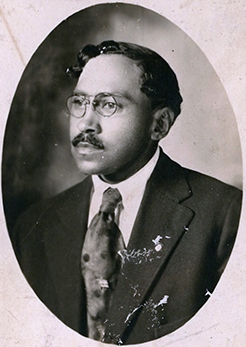
Charles Franklin Moss (1878-1961) was an African American photographer and painter born in Winchester, Virginia. Moss' mother was born into slavery and his father was a mason. He showed interest in art early in his life and attended Cooper Union and the Pennsylvania Academy of the Fine Arts. He was the first African American member of the Professional Photographers of America and reportedly designed the Flag of Pennsylvania. Moss spent most of his life in Pennsylvania and his works were later featured in exhibitions. He operated photography studios in Carlisle and Harrisburg, and a painting studio in Pittsburgh. He and his second wife, Sarah Virginia Townson, raised a family of twelve children.

Edward Caledon Bruce was an American artist, author, and publisher. Born in Winchester, Virginia, to educated and wealthy parents, he became deaf in his teens due to complications from scarlet fever. It was around this same time Bruce began showing an interest in art. Several years later, he studied under Thomas Sully in Philadelphia. Bruce kept a diary in which he wrote "thank God I have my sight yet - all Nature can speak to me through that sense." He married Eliza T. Hubard with whom he had two daughters.
References
- ↑ Bulletin. U.S. Department of Health, Education, and Welfare, Office of Education. 1935. p. 68.
- ↑ Hellmann, Paul T. (2006-02-14). Historical Gazetteer of the United States. Routledge. pp. 1168–1170. ISBN 978-1-135-94859-7.
- 1 2 Quarles, Garland R. The Schools of Winchester, Virginia. Winchester, Virginia: Farmers and Merchants National Bank, 1964.
- 1 2 "The Shenandoah Valley Academy Collection, Shenandoah Valley Academy Records | Handley Regional Library System". www.handleyregional.org. June 2022. Retrieved 2024-11-14.
 | This article about a school in Virginia is a stub. You can help Wikipedia by expanding it. |