Wanderers Football Club was an English association football club. It was founded as "Forest Football Club" in 1859 in Leytonstone. In 1864, it changed its name to "Wanderers", a reference to it never having a home stadium, instead playing at various locations in London and the surrounding area. Comprising mainly former pupils of the leading English public schools, Wanderers was one of the dominant teams in the early years of organised football and won the inaugural Football Association Challenge Cup in 1872. The club won the competition five times in total, including three in succession from 1876–78, a feat which has been repeated only once.

Charles William Alcock was an English sportsman, administrator, author and editor. He was a major instigator in the development of both international football and cricket, as well as being the creator of the FA Cup.
Wednesbury Strollers F.C. was an English football club based in Wednesbury, Staffordshire which was active in the 1870s and 1880s.
Saxons F.C. was an English association football club from Brixton. Its colours were a dark blue jersey with a red band on each arm, white knickerbockers, and dark blue stockings. The club was a small one, with a membership of 25 in 1876.
Gresham F.C. was an association football club who played at Victoria Park in South Hackney in London, originally using the Penshurst Arms public house for the club facilities.
Minerva F.C. was an English association football club, originally playing out of Loughborough Junction in Lambeth, London.

Hawks F.C. was an English association football club from Anerley in London.
Grey Friars F.C. was an English association football club based in London.
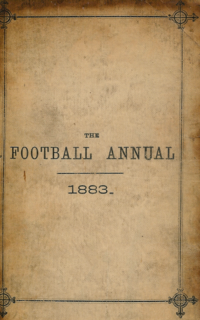
The Football Annual was a reference work published annually from 1868 to 1908. It reported on the various codes of football played in England, and also provided some coverage of the other home nations, supplemented on occasion by reports from around the world. While association and rugby football provided its main focus, it also included some material on public school football, Sheffield football, and, on occasion, even Australian and American football. A typical issue would include laws of the various codes, a summary of the preceding season, a listing of football clubs in England, and essays about aspects of the game.
Trojans was an English association club based in Leyton.
Dreadnought was an English association football club based in London.
Mosquitoes was an English association football club who played on Clapham Common, London. The club was founded in 1872 under the name Albert and changed its name to Mosquitoes before the 1875-76 season.
Acton was an English association football club, founded in 1873 under the name St Stephens (Westminster). In 1879 the club changed its name to Acton F.C. and moved to a ground near the Mill Hill Tavern, Gunnersbury Lane, Acton.
Kildare Football Club was an English association football club from London.
Unity was an English association football club from Blackheath, founded in 1875. The club was the works side of the William Tarn & Co department store in Elephant & Castle, and the club's three secretaries all give the store's address as the club's correspondence address.
Clarence, sometimes referred to as The Clarence, was an English association football club from Battersea, founded in 1876 by Henry Morton-Carr, an Old Carthusian who later founded the Belgrave Harriers Athletic Club. The club took its name from a hotel in Winstanley Road, near to Battersea Park.
West End was an English association football club from London, with a claimed foundation date of 1868. It was the works side of the Marshall & Snelgrove department store. The club's first recorded match was in October 1873.
Reading Abbey was an English association football club based in Reading. The club was founded in 1875 under the name Reading St Lawrence and changed its name in 1880.
St Peter's Institute was an association football club, founded in 1877, who originally played at Battersea Park, before moving to the Spencer Arms in Putney by 1883. The club was based at the St Peter's Institute Gymnasium, with links to the local church, in Buckingham Palace Road, and the club's emblem, worn on its caps in 1885, was a pair of crossed keys.
Rangers F.C. was an association football club who originally played on public grounds in London, and in 1884 moved to the cricket ground in Balham.