
Hazard analysis and critical control points, or HACCP, is a systematic preventive approach to food safety from biological, chemical, and physical hazards in production processes that can cause the finished product to be unsafe and designs measures to reduce these risks to a safe level. In this manner, HACCP attempts to avoid hazards rather than attempting to inspect finished products for the effects of those hazards. The HACCP system can be used at all stages of a food chain, from food production and preparation processes including packaging, distribution, etc. The Food and Drug Administration (FDA) and the United States Department of Agriculture (USDA) require mandatory HACCP programs for juice and meat as an effective approach to food safety and protecting public health. Meat HACCP systems are regulated by the USDA, while seafood and juice are regulated by the FDA. All other food companies in the United States that are required to register with the FDA under the Public Health Security and Bioterrorism Preparedness and Response Act of 2002, as well as firms outside the US that export food to the US, are transitioning to mandatory hazard analysis and risk-based preventive controls (HARPC) plans.

Automotive safety is the study and practice of automotive design, construction, equipment and regulation to minimize the occurrence and consequences of traffic collisions involving motor vehicles. Road traffic safety more broadly includes roadway design.

Organic certification is a certification process for producers of organic food and other organic agricultural products. In general, any business directly involved in food production can be certified, including seed suppliers, farmers, food processors, retailers and restaurants. A lesser known counterpart is certification for organic textiles that includes certification of textile products made from organically grown fibres.

The Animal and Plant Health Inspection Service (APHIS) is an agency of the United States Department of Agriculture (USDA) based in Riverdale, Maryland responsible for protecting animal health, animal welfare, and plant health. APHIS is the lead agency for collaboration with other agencies to protect U.S. agriculture from invasive pests and diseases. APHIS's PPQ is the National Plant Protection Organization for the U.S., and the agency's head of veterinary services/veterinary Deputy Administrator is the Chief Veterinary Officer of the United States.

Diving activities are the things people do while diving underwater. People may dive for various reasons, both personal and professional. While a newly qualified recreational diver may dive purely for the experience of diving, most divers have some additional reason for being underwater. Recreational diving is purely for enjoyment and has several specialisations and technical disciplines to provide more scope for varied activities for which specialist training can be offered, such as cave diving, wreck diving, ice diving and deep diving. Several underwater sports are available for exercise and competition.
Current good manufacturing practices (cGMP) are those conforming to the guidelines recommended by relevant agencies. Those agencies control the authorization and licensing of the manufacture and sale of food and beverages, cosmetics, pharmaceutical products, dietary supplements, and medical devices. These guidelines provide minimum requirements that a manufacturer must meet to assure that their products are consistently high in quality, from batch to batch, for their intended use.
In the United Kingdom, only an authorised or licensed insolvency practitioner (IP) may be appointed in relation to formal insolvency procedures.

The Grain Inspection, Packers and Stockyards Administration (GIPSA) was an agency of the United States Department of Agriculture that facilitates the marketing of livestock, poultry, meat, cereals, oilseeds, and related agricultural products, and promotes fair and competitive trading practices for the overall benefit of consumers and American agriculture. GIPSA was formed in 1994 through the joining of the Federal Grain Inspection Service and the Packers and Stockyards Administration.

The Ministry of Transportation (MTO) is the provincial ministry of the Government of Ontario that is responsible for transport infrastructure and related law in Ontario, Canada. The ministry traces its roots back over a century to the 1890s, when the province began training Provincial Road Building Instructors. In 1916, the Department of Public Highways of Ontario (DPHO) was formed and tasked with establishing a network of provincial highways. The first was designated in 1918, and by the summer of 1925, sixteen highways were numbered. In the mid-1920s, a new Department of Northern Development (DND) was created to manage infrastructure improvements in northern Ontario; it merged with the Department of Highways of Ontario (DHO) on April 1, 1937. In 1971, the Department of Highways took on responsibility for Communications and in 1972 was reorganized as the Ministry of Transportation and Communications (MTC), which then became the Ministry of Transportation in 1987.
A United States defense standard, often called a military standard, "MIL-STD", "MIL-SPEC", or (informally) "MilSpecs", is used to help achieve standardization objectives by the U.S. Department of Defense.
The Customs-Trade Partnership Against Terrorism (C-TPAT) is a voluntary supply-chain security program led by U.S. Customs and Border Protection (CBP) focused on improving the security of private companies' supply chains with respect to terrorism. The program was launched in November 2001 with seven initial participants, all large U.S. companies. As of December 1, 2014, the program had 10,854 members. The 4,315 importers in the program account for approximately 54% of the value of all merchandise imported into the U.S.

A home inspection is a limited, non-invasive examination of the condition of a home, often in connection with the sale of that home. Home inspections are usually conducted by a home inspector who has the training and certifications to perform such inspections. The inspector prepares and delivers to the client a written report of findings. In general, home inspectors recommend that potential purchasers join them during their onsite visits to provide context for the comments in their written reports. The client then uses the knowledge gained to make informed decisions about their pending real estate purchase. The home inspector describes the condition of the home at the time of inspection but does not guarantee future condition, efficiency, or life expectancy of systems or components.

Food safety is used as a scientific method/discipline describing handling, preparation, and storage of food in ways that prevent foodborne illness. The occurrence of two or more cases of a similar illness resulting from the ingestion of a common food is known as a food-borne disease outbreak. This includes a number of routines that should be followed to avoid potential health hazards. In this way, food safety often overlaps with food defense to prevent harm to consumers. The tracks within this line of thought are safety between industry and the market and then between the market and the consumer. In considering industry-to-market practices, food safety considerations include the origins of food including the practices relating to food labeling, food hygiene, food additives and pesticide residues, as well as policies on biotechnology and food and guidelines for the management of governmental import and export inspection and certification systems for foods. In considering market-to-consumer practices, the usual thought is that food ought to be safe in the market and the concern is safe delivery and preparation of the food for the consumer. Food safety, nutrition and food security are closely related. Unhealthy food creates a cycle of disease and malnutrition that affects infants and adults as well.
Side Impact Protection System (SIPS) is a passive safety system in an automobile to protect against injury in a side collision, developed by Volvo Cars.
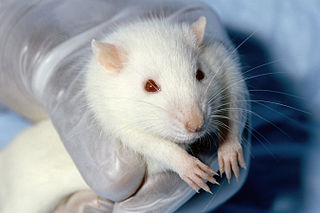
Animal testing regulations are guidelines that permit and control the use of non-human animals for scientific experimentation. They vary greatly around the world, but most governments aim to control the number of times individual animals may be used; the overall numbers used; and the degree of pain that may be inflicted without anesthetic.

The Criminal Court is a Thai court of justice of first instance responsible for the application of criminal law in Bangkok. The court is located on Ratchadaphisek Road and is colloquially called "Ratchada Criminal Court" (ศาลอาญารัชดาฯ).
British Columbia Commercial Vehicle Safety & Enforcement is a provincial law enforcement agency that is responsible for the compliance and enforcement of the commercial transport sector, protection of the environment and transportation infrastructure of British Columbia, increasing road safety and protecting the motoring public.

Northern Westchester Hospital (NWH) is a not-for-profit, 245-bed, all-private-room facility in Mount Kisco, New York. Founded in 1916, it serves residents of Northern Westchester, Putnam County and southern Dutchess County, as well as parts of Fairfield County, Connecticut. It is owned by Northwell Health.
The Commercial Vehicle Safety Alliance (CVSA) is a non-profit association of local, state, provincial, territorial and federal commercial motor vehicle safety officials and industry representatives. CVSA focuses on improving driver and vehicle safety by providing guidance to organizations that enforce commercial motor vehicle inspections and certify inspectors, and reports over 4,000 members in the United States, Canada and Mexico.
