
Sahibzada Iskandar Ali Mirza was a Pakistani politician, statesman and military general who served as the Dominion of Pakistan's fourth governor-general of Pakistan from 1955 to 1956, and then as the Islamic Republic of Pakistan's first president from 1956 to 1958.

Liaquat Ali Khan was a Pakistani lawyer, politician and statesman who served as the first prime minister of Pakistan from 1947 until his assassination in 1951. He was as pivotal to the consolidation of Pakistan as the Quaid-i-Azam, Muhammad Ali Jinnah, was central to the creation of Pakistan. He was one of the leading figures of the Pakistan Movement and is revered as Quaid-e-Millat and later on as "Shaheed e Millat".
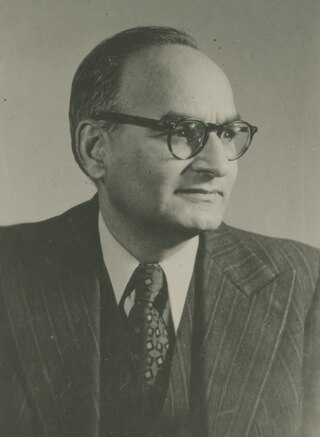
Chaudhry Muhammad Ali was a Pakistani politician and statesman who served as the fourth prime minister of Pakistan from 1955 until his resignation in 1956. His government transitioned Pakistan from a British Dominion to an Islamic Republic.

Huseyn Shaheed Suhrawardy was a Pakistani Bengali barrister and politician. In Bangladesh, Suhrawardy is remembered as a pioneer of Bengali civil rights movements, later turned into Bangladesh independence movement, and the mentor of Bangladesh's founding leader Sheikh Mujibur Rahman. He is also remembered for his performance as the Minister for Civil Supply during the Bengal famine of 1943. In India, he is seen as a controversial figure; directly responsible for the 1946 Calcutta Killings,for which he is often referred as the "Butcher of Bengal" in West Bengal.

Begum Ra'ana Liaqat Ali Khan was the First Lady of Pakistan from 1947 to 1951 as the wife of Liaquat Ali Khan who served as the 1st Prime Minister of Pakistan. She was also the first female governor in Pakistan, serving Sindh. She was one of the leading woman figures in the Pakistan Movement, and a career economist, and prominent stateswoman from the start of the cold war till the fall and the end of the Cold War.
Major General Akbar Khan, DSO (1912–1993) was a decorated officer of the British Indian Army and later Pakistan Army. He commanded the Kashmiri rebels and Pashtun irregulars in the First Kashmir War under the pseudonym 'General Tariq'. In 1951, he was convicted of an attempted coup that came to be known as the Rawalpindi Conspiracy, and served a five-year prison sentence. Later he served as the Chief of National Security under prime minister Zulfikar Ali Bhutto. Under his guidance, the Army quelled the Baloch Insurgency during the early mid-1970s.
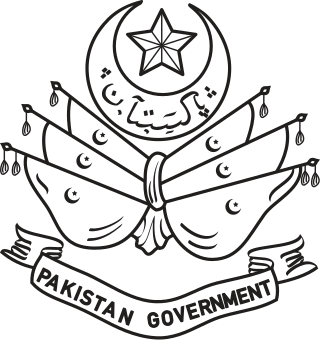
The Constituent Assembly of Pakistan was established in August 1947 to frame a constitution for Pakistan. It also served as its first interim parliament. It was dissolved by the Governor-General of Pakistan in 1958.
The Rawalpindi conspiracy was an attempted coup to overthrow Liaquat Ali Khan, the first prime minister of Pakistan, in March 1951. It was the first of many subsequent coup attempts against governments in the history of Pakistan. The coup was notably planned by military general Akbar Khan, poet Faiz Ahmad Faiz and writer Sajjad Zaheer along with 12 others.
Bengalis in Pakistan are ethnic Bengali people who had lived in either West Pakistan or East Pakistan prior to 1971 or live in present-day Pakistan. Most Pakistani Bengalis, are bilingual speaking both Urdu and Bengali and are mainly settled in Karachi. Bengalis that arrived in Pakistan before 1971 have now assimilated with the Urdu-speaking people in Karachi.

Pakistan–Philippines relations refers to bilateral relations between Pakistan and the Philippines.

Sardar Amir Azam was a Pakistani politician and entrepreneur. Azam was a cabinet minister during the 1950s and was the pioneer of low cost housing in Pakistan. He initially emerged in 1951 as an MCA in the very first Pakistani government headed by Liaquat Ali Khan, and later re-emerged as the Minister of State and the Central Minister, several times in the succeeding Pakistani governments. He held multiple portfolios simultaneously. He is buried at Garhi Afghanan,near Taxila, his ancestral graveyard.
Events from the year 1963 in Pakistan.

The state visit of Liaquat Ali Khan to the United States, from 3 to 5 May 1950, was the official visit of Pakistan's first Prime Minister, Liaquat Ali Khan, to Washington, D.C.. He was accompanied by the First Lady of Pakistan, Ra'ana Liaquat Ali Khan.

The Bengal Provincial Muslim League (BPML) was the branch of the All India Muslim League in the British Indian province of Bengal. It was established in Dhaka on 2 March 1912. Its official language was Bengali. The party played an important role in the Bengal Legislative Council and in the Bengal Legislative Assembly, where two of the Prime Ministers of Bengal were from the party. It was vital to the creation of the Dominion of Pakistan, particularly after its election victory in 1946.
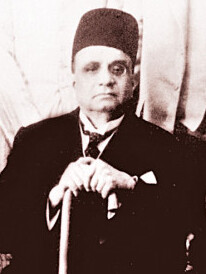
Sir Zahid Suhrawardy, also known as Zahidur Rahman, was an Indian Bengali jurist who served a judge in the Calcutta High Court between 1921 and 1931. He was the father of Huseyn Shaheed Suhrawardy, a former Prime Minister of Pakistan, and linguist Hasan Shaheed Suhrawardy.


