
Look up steamer in Wiktionary, the free dictionary.
Steamer may refer to:
Steamer may refer to:

Enterprise may refer to:
The eagle is a large bird of prey.

A steamship, often referred to as a steamer, is a type of steam-powered vessel, typically ocean-faring and seaworthy, that is propelled by one or more steam engines that typically move (turn) propellers or paddlewheels. The first steamships came into practical usage during the early 1800s; however, there were exceptions that came before. Steamships usually use the prefix designations of "PS" for paddle steamer or "SS" for screw steamer. As paddle steamers became less common, "SS" is assumed by many to stand for "steamship". Ships powered by internal combustion engines use a prefix such as "MV" for motor vessel, so it is not correct to use "SS" for most modern vessels.

A steamboat is a boat that is propelled primarily by steam power, typically driving propellers or paddlewheels. Steamboats sometimes use the prefix designation SS, S.S. or S/S or PS ; however, these designations are most often used for steamships.
Challenger, Challengers, or The Challengers may refer to:

A paddle steamer is a steamship or steamboat powered by a steam engine that drives paddle wheels to propel the craft through the water. In antiquity, paddle wheelers followed the development of poles, oars and sails, where the first uses were wheelers driven by animals or humans.

Steam frigates and the smaller steam corvettes, steam sloops, steam gunboats and steam schooners, were steam-powered warships that were not meant to stand in the line of battle. There were some exceptions like for example the French Napoléon class steam ship of the line was meant to stand in the line of battle, making it the world's first steam battleship. The first such ships were paddle steamers. Later on the invention of screw propulsion enabled construction of steam-powered versions of the traditional ships of the line, frigates, corvettes, sloops and gunboats.
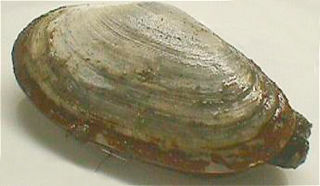
Soft-shell clams or sand gaper, scientific name Mya arenaria, popularly called "steamers", "softshells", "piss clams", "Ipswich clams", or "Essex clams", are a species of edible saltwater clam, a marine bivalve mollusk in the family Myidae.
Princess is a title of royalty or nobility. It may also refer to:

A & J Inglis, Ltd, was a shipbuilding firm founded by Anthony Inglis and his brother John, engineers and shipbuilders in Glasgow, Scotland in 1862. The firm built over 500 ships in a period of just over 100 years. Their Pointhouse Shipyard was at the confluence of the rivers Clyde and Kelvin. They constructed a wide range of ships, including Clyde steamers, paddle steamers and small ocean liners. In wartime, they built small warships, and in the period after World War II, they built a number of whalers.
Onward or onwards may refer to:

A steam yacht is a class of luxury or commercial yacht with primary or secondary steam propulsion in addition to the sails usually carried by yachts.

Willamette Chief was a sternwheel steamboat built in 1874 for the Willamette River Navigation Company.
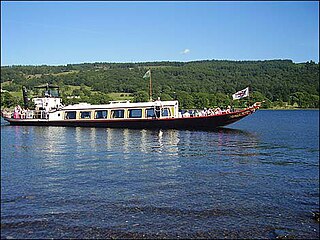
The steam yacht Gondola is a rebuilt Victorian, screw-propelled, steam-powered passenger vessel on Coniston Water, England. Originally launched in 1859, she was built for the steamer service carrying passengers from the Furness Railway and from the Coniston Railway. She was in commercial service until 1936 when she was retired, being converted to a houseboat in 1946. In 1979, by now derelict, she was given a new hull, engine, boiler and most of the superstructure. She is back in service as a passenger boat, still powered by steam and now operated by the National Trust.

Steamed clams is a seafood dish consisting of clams cooked by steaming.

A screw steamer or screw steamship is an old term for a steamship or steamboat powered by a steam engine, using one or more propellers to propel it through the water. Such a ship was also known as an "iron screw steam ship".
Amazon most often refers to:
Lake steamers of North America include large, steam-powered non-government vessels with displacement hulls on American freshwater lakes excluding the Great Lakes. They may have served as passenger boats, freighters, mail-boats, log-boom vessels or a combination thereof. The construction of such vessels posed unique problems on water bodies located away from established dry-docks and marine railways, or connecting canals to such facilities.
Smokey Joe, Smokey Joe's or Smoky Joe's may refer to:

Steam-powered vessels include steamboats and steamships. Smaller steamboats were developed first. They were replaced by larger steamships which were often ocean-going. Steamships required a change in propulsion technology from sail to paddlewheel to screw to steam turbines. The latter innovation changed the design of vessels to one that could move faster through the water. Engine propulsion changed to steam turbine in the early 20th century. In the latter part of the 20th century, these, in turn, were replaced by gas turbines.