Related Research Articles

John Lewis Gaddis is an American military historian, political scientist, and writer. He is the Robert A. Lovett Professor of Military and Naval History at Yale University. He is best known for his work on the Cold War and grand strategy, and he has been hailed as the "Dean of Cold War Historians" by The New York Times. Gaddis is also the official biographer of the prominent 20th-century American diplomat and historian George F. Kennan. George F. Kennan: An American Life (2011), his biography of Kennan, won the 2012 Pulitzer Prize for Biography or Autobiography.

The Johnson Doctrine, enunciated by U.S. President Lyndon B. Johnson after the United States' intervention in the Dominican Republic in 1965, declared that domestic revolution in the Western Hemisphere would no longer be a local matter when the object is the establishment of a "Communist dictatorship". During Johnson's presidency, the United States again began interfering in the internal affairs of sovereign nations, particularly Latin America. The Johnson Doctrine is the formal declaration of the intention of the United States to intervene in such affairs. It is an extension of the Eisenhower and Kennedy Doctrines.

Thomas Clifton Mann was an American diplomat who specialized in Latin American affairs. He entered the U.S. Department of State in 1942 and quickly rose through the ranks to become an influential establishment figure. He worked to influence the internal affairs of numerous Latin American nations, typically focusing on economic and political influence rather than direct military intervention. After Lyndon B. Johnson became president in 1963, Mann received a double appointment and was recognized as the U.S. authority on Latin America. In March 1964, Mann outlined a policy of supporting regime change and promoting the economic interests of U.S. businesses. This policy, which moved away from the political centrism of Kennedy's Alliance for Progress, has been called the Mann Doctrine. Mann left the State Department in 1966 and became a spokesperson for the Automobile Manufacturer's Association.
The Society for Historians of American Foreign Relations (SHAFR) was founded in order to "promote excellence in research and teaching of American foreign relations history and to facilitate professional collaboration among scholars and students in this field around the world." It hosts an annual conference, and publishes the quarterly Diplomatic History. It also publishes a triennial newsletter, Passport. SHAFR has increasingly fostered connections with international historians and organizations.
Robert A. Dallek is an American historian specializing in the presidents of the United States, including Franklin D. Roosevelt, John F. Kennedy, Lyndon B. Johnson, and Richard Nixon.
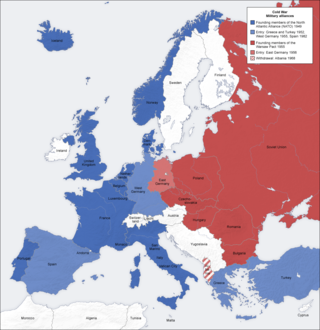
This is an English language bibliography of scholarly books and articles on the Cold War. Because of the extent of the Cold War, the conflict is well documented.

Odd Arne Westad FBA is a Norwegian historian specializing in the Cold War and contemporary East Asian history. He is the Elihu Professor of History and Global Affairs at Yale University, where he teaches in the Yale History Department and in the Jackson School of Global Affairs. Previously, Westad held the S.T. Lee Chair of US-Asia Relations at Harvard University, teaching in the John F. Kennedy School of Government. He has also taught at the London School of Economics, where he served as director of LSE IDEAS. In the spring semester 2019 Westad was Boeing Company Chair in International Relations at Schwarzman College, Tsinghua University.

Robert Buzzanco is a scholar of 20th century U.S. history and diplomatic history. He is also an author focusing on the Vietnam War and aligns with the "orthodox" historiographical school. Buzzanco received his Ph.D. from The Ohio State University and currently teaches at the University of Houston. Buzzanco has lectured at national conferences on the Second Gulf War, globalization and the influence of the industrial military complex. Among his many other professional activities, he has served as the Chair of the Stuart L. Bernath Lecture Prize Committee for Society of Historians of American Foreign Relations. Buzzanco has also contributed to national newspapers and magazines such as the Baltimore Sun, Houston Chronicle and Newsday magazine. He has been interviewed or cited by various international media such as the BBC, NPR, the Financial Times, Al-Jazeerra and the Islamic News Network.

Richard Cunningham Patterson Jr. (1886–1966) was an American government official and diplomat. Patterson was born in Omaha, Nebraska, the son of Richard Cunningham Patterson, an attorney, and Martha Belle Neiswanger. After working as a laborer in the gold mines of South Dakota and a year at the University of Nebraska, he received an engineer of mines degree at Columbia University’s School of Mines in 1912.
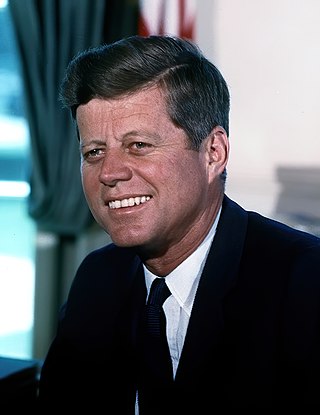
John F. Kennedy's tenure as the 35th president of the United States began with his inauguration on January 20, 1961, and ended with his assassination on November 22, 1963. Kennedy, a Democrat from Massachusetts, took office following his narrow victory over Republican incumbent vice president Richard Nixon in the 1960 presidential election. He was succeeded by Vice President Lyndon B. Johnson.

John Bartlow Martin was an American diplomat, author of 15 books, ambassador, and speechwriter and confidant to many Democratic politicians including Adlai Stevenson, John F. Kennedy, Robert F. Kennedy, Lyndon B. Johnson, and Hubert Humphrey.

Melvyn Paul Leffler is an American historian and educator, currently Edward Stettinius Professor of History at the University of Virginia. He is the winner of numerous awards, including the Bancroft Prize for his book A Preponderance of Power: National Security, the Truman Administration and the Cold War, and the American Historical Association’s George Louis Beer Prize for his book For the Soul of Mankind: The United States, the Soviet Union, and the Cold War.

David Alan Rosenberg is a military historian, and was Admiral Harry W. Hill Chair of Maritime Strategy at the National War College from 1996 to 2003 and held the Class of 1957 Distinguished Chair of Naval Heritage at the United States Naval Academy in 2015–2016.
The United States foreign policy during the presidency of John F. Kennedy from 1961 to 1963 included diplomatic and military initiatives in Western Europe, Southeast Asia, and Latin America, all conducted amid considerable Cold War tensions with the Soviet Union and its satellite states in Eastern Europe. Kennedy deployed a new generation of foreign policy experts, dubbed "the best and the brightest". In his inaugural address Kennedy encapsulated his Cold War stance: "Let us never negotiate out of fear. But let us never fear to negotiate".
Jussi M. Hanhimäki is a Finnish historian, specializing in the history of the Cold War, American foreign policy, transatlantic relations, international organizations and refugees.

Fredrik Logevall is a Swedish-American historian and educator at Harvard University, where he is the Laurence D. Belfer Professor of International Affairs at the John F. Kennedy School of Government and professor of history in the Harvard Faculty of Arts and Sciences. He is a specialist in U.S. politics and foreign policy. Logevall was previously the Stephen and Madeline Anbinder Professor of History at Cornell University, where he also served as vice provost and as director of the Mario Einaudi Center for International Studies. He won the 2013 Pulitzer Prize for History for his book Embers of War: The Fall of an Empire and the Making of America’s Vietnam. His most recent book, JFK: Coming of Age in the American Century, 1917-1956 (2020), won the Elizabeth Longford Prize for Historical Biography and was a New York Times Notable Book of the Year.

Elizabeth Cobbs is an American historian, commentator and author of nine books including three novels, a history textbook and five non-fiction works. She retired from Melbern G. Glasscock Chair in American History at Texas A&M University (2015-2023), following upon a four-decade career in California where she began working for the Center for Women's Studies and Services as a teenager. She writes on the subjects of feminism and human rights, and the history of U.S. foreign relations. She is known for advancing the controversial theory that the United States is not an empire, challenging a common scholarly assumption. She asserts instead that the federal government has played the role of “umpire” at home and abroad since 1776.
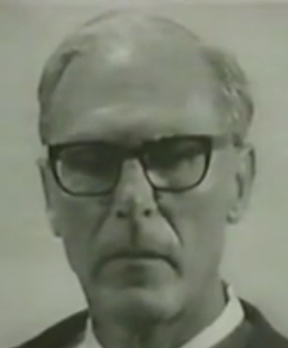
Peter Stanislaus D'Aguiar was a Guyanese-Portuguese businessman, conservative politician, and minister of finance from 1964 to 1967.
This bibliography of John F. Kennedy is a list of published works about John F. Kennedy, the 35th president of the United States.
This bibliography of Dwight D. Eisenhower is a list of published works about Dwight D. Eisenhower, the 34th president of the United States.
References
- Dr. Stephen Rabe Awarded Bicentennial Chair In American Studies at the University of Helsinki. . University of Texas at Dallas, 2005.
- STEPHEN G. RABE. University of Texas at Dallas. .
| International | |
|---|---|
| National | |
| Other | |
