
The Sumarokov family is an old Russian noble family dating back to the 15th century, originted in either Sweden or Lithuania. [1] Members of the family held the title of Count in the Russian Empire. [2]
The Sumarokov family is an old Russian noble family dating back to the 15th century, originted in either Sweden or Lithuania. [1] Members of the family held the title of Count in the Russian Empire. [2]


Knyaz Felix Felixovich Yusupov, Count Sumarokov-Elston was a Russian aristocrat from the House of Yusupov who is best known for participating in the assassination of Grigori Rasputin and for marrying Princess Irina Alexandrovna, a niece of Emperor Nicholas II.

Alexander Petrovich Sumarokov was a Russian poet and playwright who single-handedly created classical theatre in Russia, thus assisting Mikhail Lomonosov to inaugurate the reign of classicism in Russian literature.

The House of Bezborodko was a Russian princely family, descended from Cossack Hetmanate senior ranks.

The House of Yusupov was a Russian princely family descended from the monarchs of the Nogai Horde, renowned for their immense wealth, philanthropy and art collections in the 18th and 19th centuries. Most notably, Prince Felix Yusupov was famous for his involvement in the murder of Grigori Rasputin.
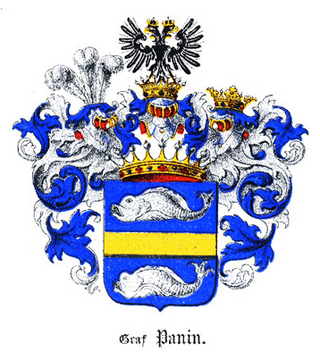
The Panin family was an old and prominent Russian noble family, known since the beginning of the 16th century. Members of the family held the title of Count in the Russian Empire, granted to them on 22 September 1767 by Catherine the Great. Panin, or Panina is also a Russian surname.
Yusupov or Yusupova is a Chechen, Tatar and Uzbek surname, which is common in the countries of the former Soviet Union. It may refer to:

The Muravyov family is an old Russian noble family, known since the 12th century. They share their ancestry with the Pushkin family, descending from two brothers, living in Novgorod in the 15th century. Members of the family held the title of Count in the Russian Empire, awarded to them on 26 August 1852 by Nicholas I of Russia and on 17 April 1865 by Alexander II of Russia for Count Nikolay Muravyov-Amursky.
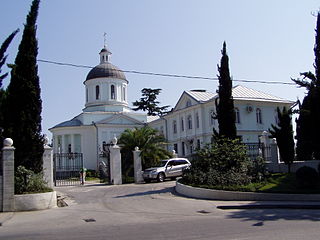
The Cathedral of St. Michael the Archangel is the oldest Orthodox church in Sochi and the entire Black Sea Oblast of the former Russian Empire. Its construction was decreed by Grand Duke Michael Nikolaevich of Russia with a view to commemorating the victorious conclusion of the prolonged Caucasian War in 1864.

Count Felix Nikolayevich Sumarokov-Elston was the Ataman of the Kuban Cossacks and the Governor of Kuban Oblast (region) in the late 1860s.
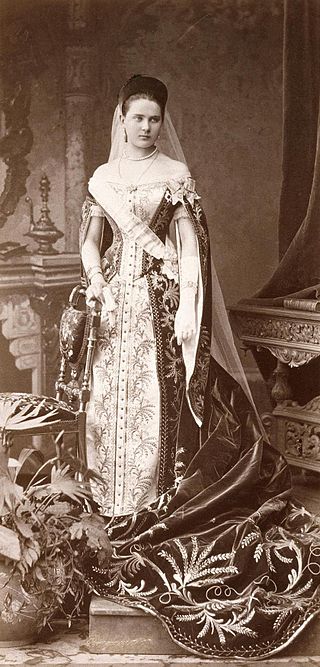
Princess Zinaida Nikolayevna Yusupova was a Russian noblewoman, the only heiress of Russia's largest private fortune of her time. Famed for her beauty and the lavishness of her hospitality, she was a leading figure in pre-Revolutionary Russian society. In 1882, she married Count Felix Felixovich Sumarokov-Elston, who served briefly as General Governor of Moscow Military District (1914–1915). Zinaida is best known as the mother of Prince Felix Yusupov, the murderer of Rasputin. She escaped revolutionary Russia and spent her remaining years living in exile.
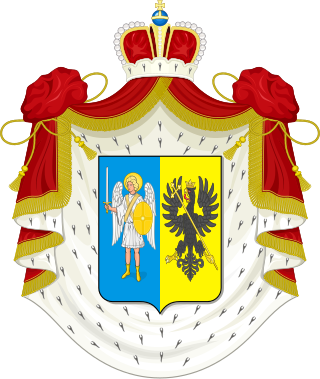
The House of Volkonsky, also spelled Volkonski or Wolkonsky and later times Wlodkowski is an ancient Russian princely family, part of the Russian nobility.

Ivan Perfilievich Yelagin was a Russian Imperial historian, an amateur poet and translator who acted as unofficial secretary to Catherine the Great in the early years of her reign.
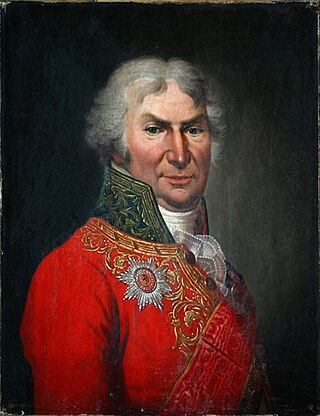
Count Dmitry Ivanovich Khvostov, was a Russian poet, representing the late period of classicism in Russian literature. Count Khvostov, as he was widely known, was an exceedingly prolific author of poems, fables, epigrams, etc., invariably archaic and pompous, making him an easy target for humourists and fellow poets who ridiculed him relentlessly. In modern times much has been done to separate the comical myth from Khvostov's real legacy and give credit to an extraordinary poetry enthusiast, but the stereotype prevails and the name of Count Khvostov remains synonymous in Russia with wanton graphomania and self-important pomposity.
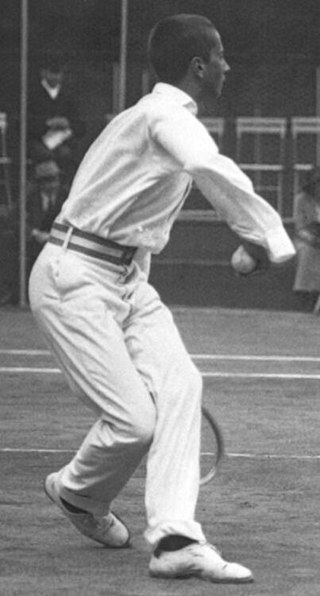
Count Mikhail Nikolayevich Sumarokov-Elston was a Russian tennis player. He competed in two events at the 1912 Summer Olympics. Apart from his supremacy in the Russian national championships he was a Maltese champion and various French Riviera titleholder.

Vasily Ivanovich Maykov — was a Russian poet, fabulist, playwright and translator, an exponent of the mock-heroic poetry genre in Russia.
Events from the year 1717 in Russia
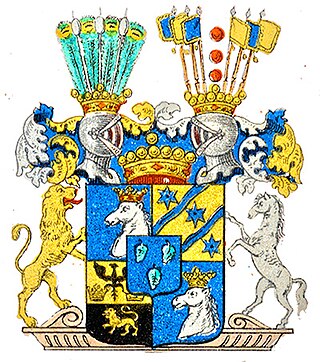
The Koskullfamily, also written as Koschkull, is a wealthy aristocratic family of Livonian and German origin, famous for their extensive lands and manors. The family is descended from the first King of Livonia and officially established in Livonia as Koskele in 1302. The family spread to Estonia, Courland and Poland in the 15th century, Sweden and Finland in the 17th century, and Prussia and Russia in the 18th century. Several branches of the family still exist today. The Koskulls are believed to be related to the von der Pahlen family.
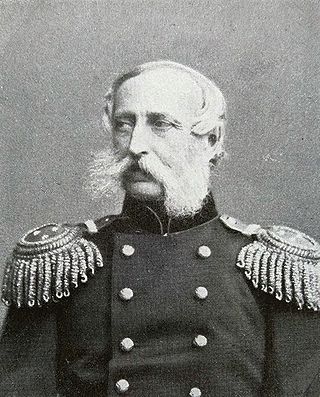
Prince Alexey Vasilyevich Obolensky was an Artillery General, head of the Moscow Governorate in 1861–1866. Representative of the princely family Obolensky.
This is a list of notable events from the year 1777 in Russia.

Count Felix Felixovich Sumarokov-Elston, later known as Prince Yusupov after his marriage, was a Russian statesman, nobleman and general. From 1915, he was Governor-General of Moscow, a post previously held by Grand Duke Sergei Alexandrovich Romanov.