The Program
The Suyusama Program began in the wake of the prolonged war in Colombia and in an effort to mitigate its effects on the poorest members of society. Coordinated by the Jesuit leadership, it began as a joint venture of various Jesuit works: the Center for Research and Popular Education (CINEP), Instituto Mayor Campesino (IMCA), the Peace Program, and the Jesuit Refugee Service, in collaboration with Javeriana University. [3]

Instituto Mayor Campesino (IMCA) was founded by the Jesuits in Buga, Colombia, in 1962 to be of service to rural villagers. It has undertaken a wide variety of works over time for the integral development of workers and peasants.

The Jesuit Refugee Service (JRS) is an international Catholic organization that aids refugees, forcibly displaced peoples, and asylum seekers. JRS operates at national and regional levels. Founded in November 1980 as a work of the Society of Jesus, JRS was officially registered on 19 March 2000 in Vatican City as a foundation. The impetus to found JRS came from the then father general of the Jesuits, Pedro Arrupe, who was inspired to action by the plight of Vietnamese boat people. JRS's international headquarters are located in Rome at the Society's General Curia. The International Director is Rev. Tom Smolich, SJ.
Suyusama has become an autonomous program for the promotion of participatory processes for local and regional sustainability. It promotes "Life Plans," bringing together the various political and civic actors [4] to "dream" their future in 20 or 30 years and to plan for how to achieve it. [5] Suyusama offers training and promotes dialogue among all those involved. In 2016 the program was active in 37 of the 64 municipalities in Nariño, where each of three subregions has its own coordinator, qualified professionals, and trainers. [3]
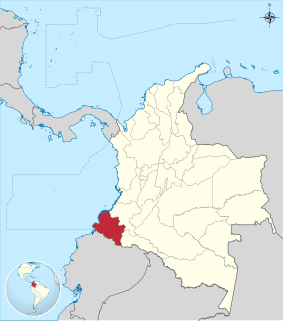
Nariño is a department of Colombia named after independence leader Antonio Nariño. Its capital is Pasto. It is in the west of the country, bordering Ecuador and the Pacific Ocean.
Suyusama action plans address the political, economic, social, cultural, and environmental conditions specific to each subregion. Needs are assessed such as food security and water, [6] education, and cultural heritage. [7] Along with Javeriana University which has made available 30 of its staff, assistance is also given by the University of Nariño, Mariana, and San Martín. [3] Collaborative opportunities are offered to undergraduate [8] and post-graduate students. [9] Suyusama also networks with others in regional initiatives. [10] [11]
The University of Nariño, also called Udenar, is a public, coeducational, research university based primarily in the city of Pasto, Nariño, Colombia. It is the largest higher education institution by student population in the department with 9,867 students. Its origins can be traced to 1712, but it was officially established by governor Julian Buchelli through decree 049 of November 7, 1904.
Suyusama works with political candidates for mayor or governor and with state officials in training and in help with participatory management and regional sustainability. Departmental and municipal plans are developed and diplomats who support the plans are endorsed by Pontificia Universidad Javeriana, various governments, and strategic allies. The UNDP is also involved, focusing "on guarantee and moderation of the process of dialogue in the community and the debates open to the public, and rebroadcast by the local media." [12]
The process has allowed the participative construction of Life Plans in 23 localities of the city of Pasto and in 16 municipalities and 18 community councils in Nariño and Cauca departments. Additionally, ethno-development plans were devised for 36 community councils in the Telembi and Sanquianga areas. [13]
Assessment 2016
Improvements were noted in the following areas: income-generating areas of coffee, cocoa, and rural tourism; well-being of the rural communities through further food security, community financing, and marketing of products through alternative channels; community governance of water and biodiversity; [14] strengthening of diverse aspects of community organizations and their functionality; national and international assistance has been forthcoming to the regions. [15]
Suyusama starts from the accumulated successful micro-regional experiences, asking about strategic requirements that would allow the expansion of these local achievements towards regional dimensions, in partnership with the communities and institutions present in the territory. [16]
This page is based on this
Wikipedia article Text is available under the
CC BY-SA 4.0 license; additional terms may apply.
Images, videos and audio are available under their respective licenses.


