Related Research Articles
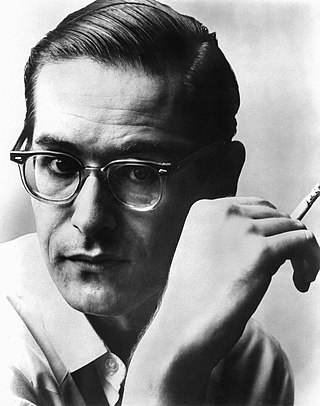
William John Evans was an American jazz pianist and composer who worked primarily as the leader of his trio. His use of impressionist harmony, block chords, innovative chord voicings, and trademark rhythmically independent "singing" melodic lines continue to influence jazz pianists today.

A shakuhachi is a Japanese longitudinal, end-blown flute that is made of bamboo. The bamboo end-blown flute now known as the shakuhachi was developed in Japan in the 16th century and is called the fuke shakuhachi (普化尺八). A bamboo flute known as the kodai shakuhachi or gagaku shakuhachi (雅楽尺八) was derived from the Chinese xiao in the Nara period and died out in the 10th century. After a long blank period, the hitoyogiri shakuhachi (一節切尺八) appeared in the 15th century, and then in the 16th century, the fuke shakuhachi was developed in Japan. The fuke shakuhachi flourished in the 18th century during the Edo period, and eventually the hitoyogiri shakuhachi also died out. The fuke shakuhachi developed in Japan is longer and thicker than the kodai shakuhachi and has one finger hole less. It is longer and thicker than hitoyogiri shakuhachi and is superior in volume, range, scale and tone quality. Today, since the shakuhachi generally refers only to fuke shakuhachi, the theory that the shakuhachi is an instrument unique to Japan is widely accepted.

John Renbourn was an English guitarist and songwriter. He was best known for his collaboration with guitarist Bert Jansch as well as his work with the folk group Pentangle, although he maintained a solo career before, during and after that band's existence (1967–1973). Several albums were credited to the John Renbourn Group. He worked later in a duo with Stefan Grossman.
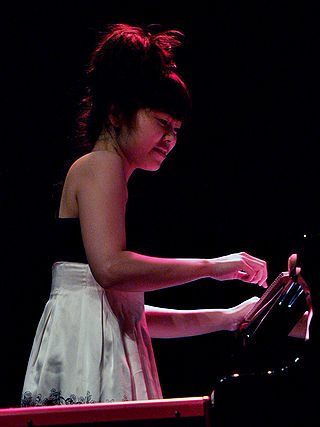
Japanese jazz, also called Japazz, is jazz played by Japanese musicians or jazz connected to Japan or Japanese culture. According to some estimates, Japan has the largest proportion of jazz fans in the world.

Bradford Alexander Mehldau is an American jazz pianist, composer, and arranger.
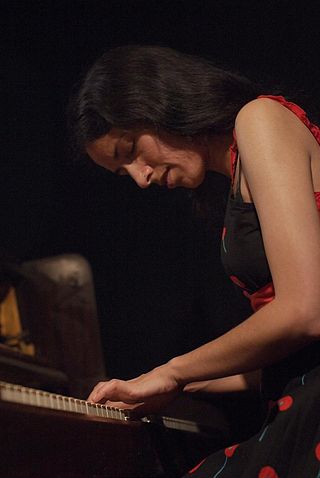
Zoe Rahman is an English jazz composer and pianist.
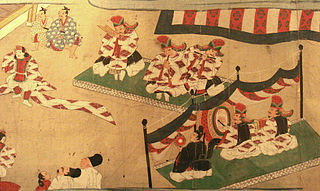
Traditional Japanese music is the folk or traditional music of Japan. Japan's Ministry of Education classifies hōgaku as a category separate from other traditional forms of music, such as gagaku or shōmyō, but most ethnomusicologists view hōgaku, in a broad sense, as the form from which the others were derived. Outside of ethnomusicology, however, hōgaku usually refers to Japanese music from around the 17th to the mid-19th century. Within this framework, there are three types of traditional music in Japan: theatrical, court music, and instrumental.

Elizabeth Shepherd is a Canadian pianst, singer, songwriter and producer.
Catriona Sturton is an Ottawa, Ontario–based singer, songwriter and multi-instrumentalist. She has had a prolific career, performing in bands such as Plumtree and collaborating with artists like Joel Plaskett, Al Tuck, the late Dutchy Mason, the Mighty Popo and members of Sloan and Blue Rodeo.
Riley Kelly Lee is an American-born Australian-based shakuhachi player and teacher. In 1980 he became the first non-Japanese person to attain the rank of Dai Shihan in the shakuhachi tradition. He is a recipient of two of the most revered lineages of shakuhachi playing, descending from the original Zen Buddhist "priests of nothingness" of the Edo period. His first teachers were Hoshida Ichizan II and Chikuho Sakai II. A later teacher was Katsuya Yokoyama.
Reiko Obata is a Japanese-American koto performer and composer, based in Southern California, United States.
James Nyoraku Schlefer, born 1956 in Brooklyn, New York, is a performer and teacher and composer of shakuhachi in New York City. He received the Dai-Shi-Han certificate in 2001, one of only a handful of non-Japanese to receive this high-level award. In 2008, he received his second Shi-Han certificate from Mujuan Dojo, in Kyoto. In Japan, Schlefer has worked with Reibo Aoki, Katsuya Yokoyama, Yoshio Kurahashi, Yoshinobu Taniguchi, and Kifu Mitsuhashi. His first teacher was Ronnie Nyogetsu Seldin. He holds a master's degree in Western flute and musicology from Queens College and currently teaches shakuhachi class at Columbia University and music history courses at the City University of New York. He has performed at Carnegie Hall, Lincoln Center, the Kennedy Center, Tanglewood, BAM, the Metropolitan Museum, at colleges and universities throughout the US and has toured in Japan, Indonesia, Brazil and counties in Europe. Schlefer has four solo recordings, Wind Heart(which travelled 120,000,000 miles aboard the Space Station MIR) Solstice Spirit (1998), Flare Up (2002), and In The Moment (2008). His music has been featured on NPR's All Things Considered. Schlefer's latest recording Spring Sounds, Spring Seas was released in June 2012 and features his original music for shakuhachi and orchestra.
Ayako Shirasaki was a Japanese-American jazz pianist, composer and teacher living in Brooklyn, New York.

Taeko Fukao, known professionally as Songbird TAeKO and formerly TAEKO, is a Japanese jazz singer from Shiga Prefecture, Japan. Fukao is based in Kyoto, but travels extensively throughout the US and Japan performing in jazz festivals and jazz club venues. In between national and local appearances she has recorded albums for Flat Nine Records.

Emi Meyer is a Japanese-born American jazz pianist and singer-songwriter who is based in Seattle and Tokyo and active in both the Japanese and American markets.
Rodrigo Rodríguez is a Spanish shakuhachi player.

Surprises is an album by jazz flautist Herbie Mann featuring singer Cissy Houston which was released on the Atlantic label in 1976.

Marzena Komsta is a Polish composer of contemporary music who resides in France.
Minoru Muraoka was a Japanese shakuhachi player. He became well-known for using the shakuhachi to play jazz music, which was influential on popularizing the instrument in contemporary Japanese music.

Gagaku & Beyond is an album by jazz flautist Herbie Mann featuring shakuhachi player Minoru Muraoka which was recorded in Japan in 1974 but only released on Atlantic Records' subsidiary label, Finnadar, in 1976.
References
- 1 2 3 "Taeko Kunishima – Biography". AllAboutJazz. Retrieved September 22, 2012.
- ↑ "Taeko Kunishima - Allmusic". Allmusic. Rovi Corporation. Retrieved 22 September 2012.
