 | This article needs to be updated.(April 2019) |
Technology for Peace (Tech4Peace) is a Cyprus-based peoples' initiative launched in 1995 to serve the needs of peace pioneers on the divided island.
| This article needs to be updated.(April 2019) |
Technology for Peace (Tech4Peace) is a Cyprus-based peoples' initiative launched in 1995 to serve the needs of peace pioneers on the divided island.
The peace portal [1] was born because it was deemed needed. What led to its birth was neither the availability of relevant technology nor the availability of funding, because both were not there. The ban of bi-communal meetings imposed by the Turkish Cypriot Authorities following the EU’s decision to postpone accession negotiations with Turkey (summit meeting in Luxembourg, December 1997) stopped face-to-face dialogues (during the time window 1994-1997) and threatened to nullify all peace building efforts on the island. The idea came out of several (# 9, 10 & 11) of the 15 peace promoting projects, which made it to the final Cyprus Peace Bazaar organized by the Cyprus Conflict Resolution Trainers Group in 1995.
The vision, which underpinned the project Technology For Peace (Tech4Peace) was to enhance in Cyprus one of the most basic human rights, the right of communication, by applying modern technology in the service of peace with emphasis on the usage of Internet and Internet-based applications. A promising and creative way to enhance inter-communal communication where there exist substantial hindrances to direct contact between peoples is through the use of the Internet. Cyberspace and Internet provide an efficient, fast, tractable, confidential, organized, time and space independent means of communication. As individuals and organizations throughout the world continue to demonstrate, the Internet can overcome the challenge posed by physical separation, whether due to geographic, political or other reasons, by effectively moving discourse into "cyberspace."
The Tech4Peace team organized a series of trainings in the usage of the net to communicate across the dividing line in the years 1996-1998. In 1998, with USAID funding given to Dr. Hrach Gregorian, cyber peace cafes on the northern and southern parts of Nicosia have been set up within CYBER KIDS centers, from where peacebuilders could communicate with their peers on the other side. Participants were also exposed to the ICONS project, [2] developed at the University of Maryland, using simulations and scenario-driven exercises to advance their understanding of complex problems and strengthen their ability to make decisions, navigate crises, think strategically, and negotiate collaboratively. In the next years, the project team developed theory of how technology in general can serve bridge the divides, [3] as well as how technology can support the ethical engagement of all stakeholders in a dialogue which concerns their own futures [4] .
The Tech4Peace project has been evaluated by Nathan Associates [5] for the United States Agency for International Development as a project that has contributed towards Peace and Reconciliation in Cyprus. It was one of few projects, which received support multiple times and were funded by the UNOPS, United Nations funding scheme during the very first funding cycle.
The Tech4Peace project was founded as one of the selected Cyprus Peace Bazaar Projects in 1997. The members of the founding team were Yiannis Laouris, Harry Anastasiou, Dervis Besimler and Bekir Azgin. They were all members of the Cyprus Conflict Resolution Trainers Group.
Laouris, Y. and Tziapouras, G. (2002). Technology used for peace in Cyprus. Peacebuilding 3(3), 4-8.
Laouris, Y. (2004). Information technology in the service of peace building. The case of Cyprus. World Futures, 60, 67–79.

Cyberspace is a concept describing a widespread interconnected digital technology. "The expression dates back from the first decade of the diffusion of the internet. It refers to the online world as a world 'apart', as distinct from everyday reality. In cyberspace people can hide behind fake identities, as in the famous The New Yorker cartoon." The term entered popular culture from science fiction and the arts but is now used by technology strategists, security professionals, government, military and industry leaders and entrepreneurs to describe the domain of the global technology environment, commonly defined as standing for the global network of interdependent information technology infrastructures, telecommunications networks and computer processing systems. Others consider cyberspace to be just a national environment in which communication over computer networks occurs. The word became popular in the 1990s when the use of the Internet, networking, and digital communication were all growing dramatically; the term cyberspace was able to represent the many new ideas and phenomena that were emerging.
Information Warfare (IW) manipulates information trusted by targets without their awareness, so that the targets will make decisions against their interest but in the interest of the one conducting information warfare. It is a concept involving the battlespace use and management of information and communication technology (ICT) in pursuit of a competitive advantage over an opponent. Information warfare is the manipulation of information trusted by a target without the target's awareness so that the target will make decisions against their interest but in the interest of the one conducting information warfare. As a result, it is not clear when information warfare begins, ends, and how strong or destructive it is. Information warfare may involve the collection of tactical information, assurance(s) that one's information is valid, spreading of propaganda or disinformation to demoralize or manipulate the enemy and the public, undermining the quality of the opposing force's information and denial of information-collection opportunities to opposing forces. Information warfare is closely linked to psychological warfare.
24 Hours in Cyberspace was "the largest one-day online event" up to that date, headed by photographer Rick Smolan with Jennifer Erwitt, Tom Melcher, Samir Arora and Clement Mok. The project brought together the world's top 1,000 photographers, editors, programmers, and interactive designers to create a digital time capsule of online life."

Cyberwarfare is the use of digital attacks to attack a nation, causing comparable harm to actual warfare and/or disrupting the vital computer systems. There is significant debate among experts regarding the definition of cyberwarfare, and even if such a thing exists. One view is that the term "cyberwarfare" is a misnomer, since no offensive cyber actions to date could be described as "war". An alternative view is that "cyberwarfare" is a suitable label for cyber attacks which cause physical damage to people and objects in the real world.
Cyber-ethnography, also known as virtual ethnography, digital ethnography and most commonly online ethnography, is an online research method that adapts ethnographic methods to the study of the communities and cultures created through computer-mediated social interaction. As modifications of the term ethnography, cyber-ethnography, online ethnography and virtual ethnography designate particular variations regarding the conduct of online fieldwork that adapts ethnographic methodology. There is no canonical approach to cyber-ethnography that prescribes how ethnography is adapted to the online setting. Instead individual researchers are left to specify their own adaptations. Netnography is another form of online ethnography or cyber-ethnography with more specific sets of guidelines and rules, and a common multidisciplinary base of literature and scholars. This article is not about a particular neologism, but the general application of ethnographic methods to online fieldwork as practiced by anthropologists, sociologists, and other scholars.
The Institute for Defense Analyses (IDA) is an American non-profit corporation that administers three federally funded research and development centers (FFRDCs) – the Systems and Analyses Center (SAC), the Science and Technology Policy Institute (STPI), and the Center for Communications and Computing (C&C) – to assist the United States government in addressing national security issues, particularly those requiring scientific and technical expertise. It is headquartered in Alexandria, Virginia.
MySecureCyberspace began in 2003 as an initiative by Carnegie Mellon CyLab and the Information Networking Institute to educate the public about computer security, network security and Internet safety. Inspired by the National Strategy to Secure Cyberspace, the initiative empowers users to secure their part of cyberspace.

Howard Anthony Schmidt was a partner with Tom Ridge in Ridge Schmidt Cyber LLC, a consultancy company in the field of cybersecurity. He was the Cyber-Security Coordinator of the Obama Administration, operating in the Executive Office of the President of the United States. He announced his retirement from that position on May 17, 2012, effective at the end of the month.

Cyberethics is the philosophic study of ethics pertaining to computers, encompassing user behavior and what computers are programmed to do, and how this affects individuals and society. For years, various governments have enacted regulations while organizations have defined policies about cyberethics.
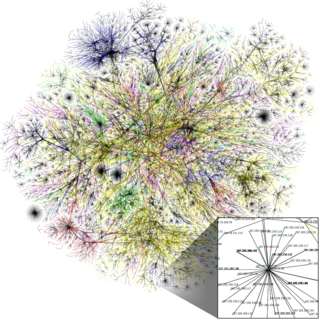
The sociology of the Internet involves the application of sociological theory and method to the Internet as a source of information and communication. Sociologists are concerned with the social implications of the technology; new social networks, virtual communities and ways of interaction that have arisen, as well as issues related to cyber crime.
Brian D. Loader is currently Co-Director of the Centre for Political Youth Culture and Communication (CPAC) at the University of York, UK. Brian joined the Department of Sociology at York in January 2006 to pursue his scholarly interests into digital media communication and democratic governance. His overarching interest is in new media communications technologies, and the social, political and economic factors shaping their development and diffusion, and their implications for social, economic, political and cultural change. He has published widely in these areas and is the founding Editor of the international journal Information, Communication and Society whose aim and scope is to critically explore these issues in depth.

Maria Renske “Marietje” Schaake is a Dutch politician who served as Member of the European Parliament (MEP) from the Netherlands between 2009 and 2019. She is a member of Democrats 66, part of the Alliance of Liberals and Democrats for Europe Party.
The Civil Society Dialogue Project in Cyprus follows the negative outcome of the referendum in Cyprus for the re-unification of the island, which took place on the 24th of April 2004. A number of Cypriot peace pioneers launched the Civil Society Dialogue Project aiming to provide opportunities for disengaged peace builders to assume new initiatives. They have used the Structured Dialogic Design process as described by one of the fathers of the science, Dr. Aleco Christakis in his book. The project engaged more than 300 Cypriots from both sides of the Green line in structured dialogues. The first dialogue explored the obstacles which peace builders faced in their work. The participants developed a shared understanding of factors contributing to the perceived widening of the gap between the two divided communities in Cyprus. They came up with 121 ideas, which were structured using the science of dialogic design to highlight the five most influential: Media as puppets of political parties; The personal and financial interests of politicians and ordinary people on both sides; Leaders on each side do not want to share power; Disempowerment of the NGOs in north Cyprus & weak NGOs in the south who are suppressed; Provocative statements made by the leaders on both sides.

The Command, Control and Interoperability Division is a bureau of the United States Department of Homeland Security's Science and Technology Directorate, run by Dr. David Boyd. This division is responsible for creating informative resources(including standards, frameworks, tools, and technologies) that strengthen communications interoperability, improve Internet security, and integrity and accelerate the development of automated capabilities to help identify potential threats to the U.S.
The Cyprus Neuroscience and Technology Institute (CNTI) is a non-profit, non-Governmental independent organization active in programs with future orientation in areas related to human brain-modern technology-social transformation and the repercussions of relevant research for humanity.
Harry Anastasiou is a British-born Cypriot-American social and political scientist who has engaged in peace-building initiatives in Cyprus, Greece, Turkey, the Middle East and the European Union.
The Cyprus Conflict Resolution Trainers Group was founded in 1994 by about 30 Cypriot peace pioneers. Because this group has introduced conflict resolution and structured dialogue concepts to a few thousand Cypriots, it is credited for the formation of an embryonic peace movement.

Future Worlds Center (FWC) is a non-profit, non-Governmental independent organization active in programs with future orientation in areas related to positive social change, social entrepreneurship and transformation.
Cyber-utopianism or web-utopianism or digital utopianism is a subcategory of technological utopianism and the belief that online communication helps bring about a more decentralized, democratic, and libertarian society. It is strongly related to cyber-populism. The existence of this belief has been documented since the beginning of the internet. The bursting of the dot-com bubble diminished the majority held Utopian views of cyberspace; however, modern day "cyber skeptics" continue to exist. They believe in the idea that internet censorship and cyber sovereignty allows repressive governments to adapt their tactics to respond to threats by using technology against dissenting movements. Douglas Rushkoff notes that, "ideas, information, and applications now launching on Web sites around the world capitalise on the transparency, usability, and accessibility that the internet was born to deliver". In 2011, Evgeny Morozov, in his 2011 book The Net Delusion: The Dark Side of Internet Freedom, critiqued the role of cyber-utopianism in global politics; stating that the belief is naïve and stubborn, enabling the opportunity for authoritarian control and monitoring. Morozov notes that "former hippies", in the 1990s, are responsible for causing this misplaced utopian belief: "Cyber-utopians ambitiously set out to build a new and improved United Nations, only to end up with a digital Cirque du Soleil".