Related Research Articles
A rerun or repeat is a rebroadcast of an episode of a radio or television program. The two types of reruns are those that occur during a hiatus and those that occur when a program is syndicated.

Jack Benny was an American entertainer who evolved from a modest success playing violin on the vaudeville circuit to one of the leading entertainers of the twentieth century with a highly popular comedic career in radio, television, and film. He was known for his comic timing and the ability to cause laughter with a long pause or a single expression, such as his signature exasperated summation "Well! "
The year 1962 involved some significant events in television. Below is a list of notable events of that year.
The year 1952 in television involved some significant events. Below is a list of television-related events during 1952.
Texaco Star Theater is an American comedy-variety show, broadcast on radio from 1938 to 1949 and telecast from 1948 to 1956. It was one of the first successful examples of American television broadcasting, remembered as the show that gave Milton Berle the nickname "Mr. Television".
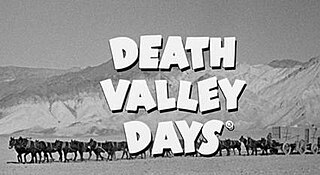
Death Valley Days is an American Western anthology series featuring true accounts of the American Old West, particularly the Death Valley country of southeastern California. Created in 1930 by Ruth Woodman, the program was broadcast on radio until 1945. From 1952 to 1970, it became a syndicated television series, with reruns continuing through August 1, 1975. The radio and television versions combined to make the show "one of the longest-running Western programs in broadcast history."

The Jack Benny Program, starring Jack Benny, is a radio and television comedy series. The show ran for over three decades, from 1932 to 1955 on radio, and from 1950 to 1965 on television. It won numerous awards, including the 1959 Emmy for Best Comedy Show, and is generally regarded as a high-water mark in 20th-century American comedy.

Beatrice Benaderet was an American actress and comedienne. Born in New York City and raised in San Francisco, she began performing in Bay Area theatre and radio before embarking on a Hollywood career that spanned over three decades. Benaderet first specialized in voice-over work in the golden age of radio, appearing on numerous programs while working with comedians of the era such as Jack Benny, Burns and Allen, and Lucille Ball. Her expertise in dialect and characterization led to her becoming Warner Bros.' leading voice of female characters in their animated cartoons of the early 1940s through the mid-1950s.
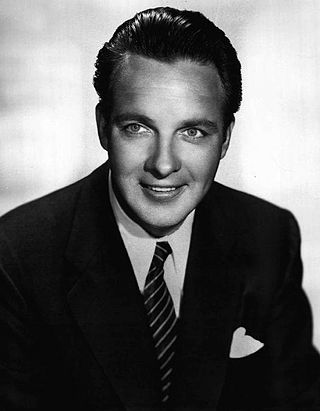
George Robert Crosby was an American jazz singer and bandleader, best known for his group the Bob-Cats, which formed around 1935. The Bob-Cats were a New Orleans Dixieland-style jazz octet. He was the younger brother of famed singer and actor Bing Crosby. On TV, Bob Crosby guest-starred in The Gisele MacKenzie Show. He was also a regular cast member of The Jack Benny Program, on both radio and television, taking over the role of bandleader after Phil Harris' departure. Crosby hosted his own afternoon TV variety show on CBS, The Bob Crosby Show (1953–1957). Crosby received two stars on the Hollywood Walk of Fame, for television and radio.

The Aldrich Family, a popular radio teenage situation comedy, was also presented in films, television and comic books. In the radio series' opening exchange, awkward teen Henry's mother called, "Hen-reeeeeeeeeeeee! Hen-ree Al-drich!", and he responded with a breaking adolescent voice, "Com-ing, Mother!"
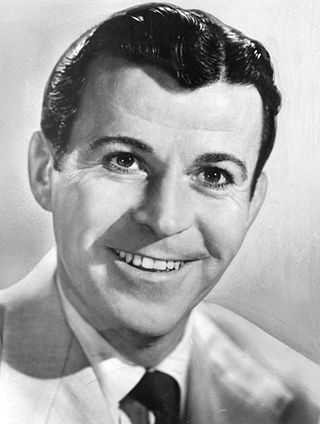
Dennis Day was an American actor, comedian and singer. He was of Irish descent.

Gerald Mohr was an American radio, film, and television character actor and frequent leading man, who appeared in more than 500 radio plays, 73 films, and over 100 television shows.
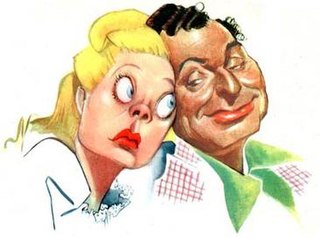
The Phil Harris-Alice Faye Show, was a comedy radio program which ran on NBC from 1948 to 1954 starring Alice Faye and Phil Harris. Harris had previously become known to radio audiences as the band-leader-turned-cast-member of the same name on The Jack Benny Program while Faye had been a frequent guest on programs such as Rudy Vallée's variety shows. After becoming the breakout stars of the music and comedy variety program The Fitch Bandwagon, the show was retooled into a full situation comedy, with Harris and Faye playing fictionalized versions of themselves as a working show business couple raising two daughters in a madcap home.

The Abbott and Costello Show is an American television sitcom starring the comedy team of Bud Abbott and Lou Costello. The program premiered in syndication in the fall of 1952 and ran two seasons to the spring of 1954. Each season ran 26 episodes.
The following is the 1950–51 network television schedule for the four major English language commercial broadcast networks in the United States. The schedule covers primetime hours from September 1950 through March 1951. The schedule is followed by a list per network of returning series, new series, and series cancelled after the 1949–50 season. This season became the first in which primetime was entirely covered by the networks. It was also the inaugural season of the Nielsen rating system. Late in the season, the coast-to-coast link was in service.
The following is the 1951–52 network television schedule for the four major English language commercial broadcast networks in the United States. The schedule covers primetime hours from September 1951 through March 1952. The schedule is followed by a list per network of returning series, new series, and series cancelled after the 1950–51 season. This was the first television season of national network interconnection by coaxial cable and microwave, meaning programming could be transmitted live coast-to-coast if needed.
The following is the 1952–53 network television schedule for the four major English language commercial broadcast networks in the United States. The schedule covers primetime hours from September 1952 through March 1953. The schedule is followed by a list per network of returning series, new series, and series cancelled after the 1951–52 season.

Ford Theatre, spelled Ford Theater for the original radio version and known, in full, as The Ford Television Theatre for the TV version, is a radio and television anthology series broadcast in the United States in the 1940s and 1950s. At various times the television series appeared on all three major television networks, while the radio version was broadcast on two separate networks and on two separate coasts. Ford Theatre was named for its sponsor, the Ford Motor Company, which had an earlier success with its concert music series, The Ford Sunday Evening Hour (1934–42).
The first season of The Jack Benny Program consisted of four episodes, during 1950 and 1951. This premiere television season of The Jack Benny Program overlapped with his radio program of the same name, which would continue until 1955, whereas this television program would last until 1965.
Four Star Revue is an American variety/comedy program that aired on NBC from October 4, 1950, to December 26, 1953.