
Fernando José Mendes Rosas is a Portuguese historian, professor and politician, being one of the founders of the Left Bloc.

Marcelo Nuno Duarte Rebelo de Sousa is a Portuguese politician and academic. He is the 20th and current president of Portugal, since 9 March 2016. He is a member of the Social Democratic Party, though he suspended his party membership for the duration of his presidency. Rebelo de Sousa has previously served as a government minister, parliamentarian in the Assembly of the Portuguese Republic, legal scholar, journalist, political analyst, law professor, and pundit.

Lídia Jorge is a prominent Portuguese novelist and author whose work is representative of a recent style of Portuguese writing, the so-called "Post Revolution Generation".

Dead Combo were a Portuguese band, consisting of Tó Trips and Pedro Gonçalves. Dead Combo played mostly instrumental music with a wide range of influences, such as Latin American music, Spaghetti Western film soundtracks, fado, African music, blues, rock, and others.

Maria Teresa de Mascarenhas Horta Barros is a Portuguese feminist poet, journalist and activist. She is one of the authors of the book Novas Cartas Portuguesas, together with Maria Isabel Barreno and Maria Velho da Costa. The authors, known as the "Three Marias," were arrested, jailed and prosecuted under Portuguese censorship laws in 1972, during the last years of the Estado Novo dictatorship. The book and their trial inspired protests in Portugal and attracted international attention from European and American women's liberation groups in the years leading up to the Carnation Revolution.

The Santa Apolónia Station is the oldest railway terminus in Portugal. It is situated in the civil parish of São Vicente, in the central part of the municipality of Lisbon, on the northern margin of the Tagus River in the historical district of Alfama.

Madalena Barbosa was the founder of the Movement for the Liberation of Women, in April 1974, created to "fight for the right to equality of opportunity without discrimination of gender".
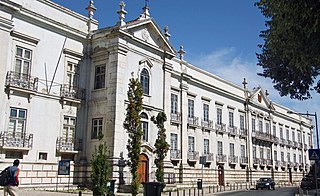
Penha de França is a freguesia and typical quarter of Lisbon, the capital city of Portugal. Located in the historic center of Lisbon, Penha de França is north of São Vicente, east of Arroios, south of Areeiro, and west of Beato. The population in 2021 was 28,475.
Doclisboa is a documentary film festival in Lisbon, Portugal which held its first edition in 2002.

Maria Isabel Barreno de Faria MartinsGOIH was a Portuguese writer, essayist, journalist and sculptor. She was one of the authors of the book Novas Cartas Portugesas, together with Maria Teresa Horta and Maria Velho da Costa. The authors, known as the "Three Marias," were arrested, jailed and prosecuted under Portuguese censorship laws in 1972, during the last years of the Estado Novo dictatorship. The book and their trial inspired protests in Portugal and attracted international attention from European and American women's liberation groups in the years leading up to the Carnation Revolution.
Raquel Freire is a Portuguese film director, screenwriter and novelist.

Virgínia Sofia Guerra Quaresma was the first woman to take up professional journalism in Portugal and was one of the first women graduates from the Faculty of Arts of the University of Lisbon. She was openly lesbian, in a time when society dictated that sexual orientation be hidden, and a feminist, who advocated for full equality between men and women. In her coverage of a sensational murder case in Brazil, she brought the issue of violence against women to the forefront. In the 1930s, she relocated permanently to Brazil, but traveled internationally with her work. A street was renamed in her honor in the Belém neighborhood of Lisbon, and in 2010, she was honored with a stamp bearing her likeness, along with other women.

José Tolentino Calaça de Mendonça is a Portuguese prelate of the Roman Catholic Church. A theologian and university professor, he is also regarded as one of the most original voices of modern Portuguese literature and a Catholic intellectual. His work includes poetry, essays and plays that he signs José Tolentino Mendonça.

Alicia Miyares Fernández is a Spanish philosopher, feminist, researcher, and women's rights activists. She has served as the spokesperson for several feminist organizations including anti-womb renting No Somos Vasijas and Recav. She has been involved with the efforts to keep abortion legal, writing the manifesto for the 2014 Tren de la Libertad. Miyares Fernández was active in advocating feminist causes ahead of the 2019 Spanish general elections.

André Claro Amaral Ventura is a Portuguese politician, university teacher, former sports pundit, and founder of the right-wing populist political party Chega.

Ana Margarida Taborda Duarte Martins de Carvalho is a Portuguese writer and journalist. She is the only Portuguese writer to be award with the Grande Prémio da Associação Portuguesa de Escritores (APE/DGLB) for each of her three successive works of literary fiction; they were for two novels and a short-story collection.

Presidential elections are scheduled to be held in Portugal in January 2026. The election will elect the successor to President Marcelo Rebelo de Sousa, who is barred from running for a third term.

Bárbara Tinoco is a Portuguese singer and songwriter. She became known for her participation in the reality singing competition The Voice Portugal in 2018. Two years later, she reached 2nd place at the Festival RTP da Canção. In 2021, she won the Golden Globe for Best Vocal. Since 2022, Tinoco has been a coach on The Voice Kids Portugal.
Mário Dionísio de Assis Monteiro was a Portuguese critic, writer, painter, and professor.

Claudino Jesus Borges Pereira, better known by his stage name Dino D'Santiago, is a Portuguese activist, composer, and musician of Cape Verdean descent. First appearing in Operação Triunfo, he has released several albums, both with groups such as Expensive Soul and his project Nu Soul Family, as well as solo projects. He has won various awards from organizations such as Cabo Verde Music Awards and the MTV Europe Music Awards. He has also been featured on magazines such as GQ and the Rolling Stone.

