
Veganism is the practice of abstaining from the use of animal products and the consumption of animal source foods, and an associated philosophy that rejects the commodity status of animals. A person who practices veganism is known as a vegan.

Vegetarianism is the practice of abstaining from the consumption of meat. It may also include abstaining from eating all by-products of animal slaughter. A person who practices vegetarianism is known as a vegetarian.

Carol J. Adams is an American writer, feminist, and animal rights advocate. She is the author of several books, including The Sexual Politics of Meat: A Feminist-Vegetarian Critical Theory (1990) and The Pornography of Meat (2004), focusing in particular on what she argues are the links between the oppression of women and that of non-human animals. She was inducted into the Animal Rights Hall of Fame in 2011.

A plant-based diet is a diet consisting mostly or entirely of plant-based foods. It encompasses a wide range of dietary patterns that contain low amounts of animal products and high amounts of fiber-rich plant products such as vegetables, fruits, whole grains, legumes, nuts, seeds, herbs, and spices. Plant-based diets may also be vegan or vegetarian but do not have to be, as they are defined in terms of high frequency of plants and low frequency of animal food consumption.
Christian vegetarianism is the practice of keeping to a vegetarian lifestyle for reasons connected to or derived from the Christian faith. The three primary reasons are spiritual, nutritional, and ethical. The ethical reasons may include a concern for God's creation, a concern for animal rights and welfare, or both. Likewise, Christian veganism is not using any animal products for reasons connected to or derived from the Christian faith. Pescatarianism was widespread in the early Church, among both the clergy and laity. Among the early Judeo-Christian Gnostics the Ebionites held that John the Baptist, James the Just and Jesus were vegetarians.

The practice of vegetarianism is strongly linked with a number of religious traditions worldwide. These include religions that originated in India, such as Hinduism, Jainism, Buddhism, and Sikhism. With close to 85% of India's billion-plus population practicing these religions, India remains the country with the highest number of vegetarians in the world.

Conversations regarding the ethics of eating meat are focused on whether or not it is moral to eat non-human animals. Ultimately, this is a debate that has been ongoing for millennia, and it remains one of the most prominent topics in food ethics. Individuals who promote meat consumption do so for a number of reasons, such as health, cultural traditions, religious beliefs, and scientific arguments that support the practice. Those who support meat consumption typically argue that making a meat-free diet mandatory would be wrong because it fails to consider the individual nutritional needs of humans at various stages of life, fails to account for biological differences between the sexes, ignores the reality of human evolution, ignores various cultural considerations, or because it would limit the adaptability of the human species.

Diet for a Small Planet is a 1971 book by Frances Moore Lappé. It was a bestseller in the West, and argues for the potential role of soy as a superior form of protein. It demonstrates the environmental impact of meat production and a contributor to global food scarcity. She argued for environmental vegetarianism—practising a vegetarian lifestyle out of concerns over animal-based industries and the production of animal-based products.
Vegetarian and vegan dietary practices vary among countries. Differences include food standards, laws, and general cultural attitudes toward vegetarian diets.

The earliest records of vegetarianism as a concept and practice amongst a significant number of people are from ancient India, especially among the Hindus and Jains. Later records indicate that small groups within the ancient Greek civilizations in southern Italy and Greece also adopted some dietary habits similar to vegetarianism. In both instances, the diet was closely connected with the idea of nonviolence toward animals, and was promoted by religious groups and philosophers.

Vesanto Melina is a Canadian Registered Dietitian and co-author of books that have become classics in the field of vegetarian, vegan, and raw foods nutrition, have sold almost a million copies in English and are in nine additional languages. She has presented talks and workshops on various aspects of vegetarian, vegan and raw foods and nutrition for dietitians, health professionals, and vegetarian associations in 17 American states and 9 Canadian provinces, and in 10 countries as well as Iceland and Costa Rica.

Eating Animals is the third book by the American novelist Jonathan Safran Foer, published in 2009. A New York Times best-seller, Eating Animals provides a dense discussion of what it means to eat animals in an industrialized world. It was written in close collaboration with Farm Forward, a US nonprofit organization promoting veganism and sustainable agriculture.

Lierre Keith is an American writer, radical feminist, food activist, and radical environmentalist.
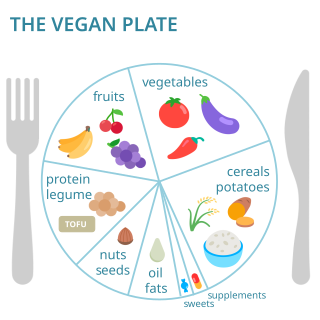
Vegan nutrition refers to the nutritional and human health aspects of vegan diets. A well-planned vegan diet is suitable to meet all recommendations for nutrients in every stage of human life. Vegan diets tend to be higher in dietary fiber, magnesium, folic acid, vitamin C, vitamin E, and phytochemicals; and lower in calories, saturated fat, iron, cholesterol, long-chain omega-3 fatty acids, vitamin D, calcium, zinc, and vitamin B12.
Vegetarian ecofeminism is an activist and academic movement which states that all types of oppression are linked and must be eradicated, with a focus on including the domination of humans over nonhuman animals. Through the feminist concept known as intersectionality, it is recognized that sexism, racism, classism, and other forms of inter human discrimination are all connected. Vegetarian ecofeminism aims to include the domination of not only the environment but also of nonhuman animals to the list. Vegetarian ecofeminism is part of the academic and philosophical field of ecofeminism, which states that the ways in which the privileged dominates the oppressed should include the way humans dominate nature. A major theme within ecofeminism is the belief that there is a strong connection between the domination of women and the domination of nature, and that both must be eradicated in order to end oppression.
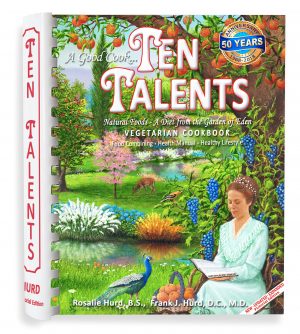
Ten Talents is a vegetarian and vegan cookbook originally published in 1968 by Rosalie Hurd and Frank J. Hurd. At the time, it was one of the few resources for vegetarian and vegan cooks. The cookbook promotes Christian vegetarianism and a Bible-based diet, in keeping with teachings of the Seventh-day Adventist Church. By 1991, the 750-recipe cookbook was entering its 44th printing and had sold more than 250,000 copies. An expanded edition with more than 1,000 recipes was issued in 2012.

The Farm Vegetarian Cookbook is a vegan cookbook by Louise Hagler, first published in 1975. It was influential in introducing Americans to tofu, included recipes for making and using tempeh and other soy foods, and became a staple in vegetarian kitchens.

An Essay on Abstinence from Animal Food, as a Moral Duty is a book on ethical vegetarianism and animal rights written by Joseph Ritson, first published in 1802.

