Related Research Articles
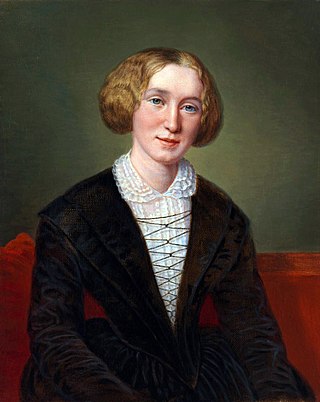
Mary Ann Evans, known by her pen name George Eliot, was an English novelist, poet, journalist, translator, and one of the leading writers of the Victorian era. She wrote seven novels: Adam Bede (1859), The Mill on the Floss (1860), Silas Marner (1861), Romola (1862–1863), Felix Holt, the Radical (1866), Middlemarch (1871–1872) and Daniel Deronda (1876). As with Charles Dickens and Thomas Hardy, she emerged from provincial England; most of her works are set there. Her works are known for their realism, psychological insight, sense of place and detailed depiction of the countryside. Middlemarch was described by the novelist Virginia Woolf as "one of the few English novels written for grown-up people" and by Martin Amis and Julian Barnes as the greatest novel in the English language.

Mere Christianity is a Christian apologetical book by the British author C. S. Lewis. It was adapted from a series of BBC radio talks made between 1941 and 1944, originally published as three separate volumes: Broadcast Talks (1942), Christian Behaviour (1943), and Beyond Personality (1944). The book consists of four parts: the first presents Lewis's arguments for the existence of God; the second contains his defence of Christian theology, including his notable "Liar, lunatic, or Lord" trilemma; the third has him exploring Christian ethics, among which are cardinal and theological virtues; in the final, he writes on the Christian conception of God.
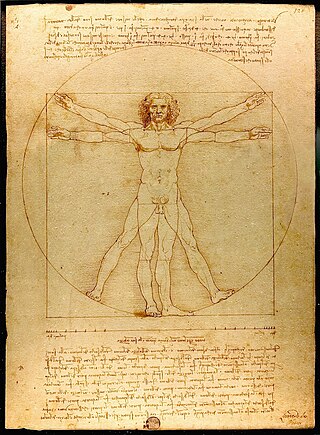
Secular humanism is a philosophy, belief system, or life stance that embraces human reason, logic, secular ethics, and philosophical naturalism, while specifically rejecting religious dogma, supernaturalism, and superstition as the basis of morality and decision-making.

Thomas Stearns Eliot was a poet, essayist, publisher, playwright, literary critic and editor. He is considered to be one of the 20th century's greatest poets, as well as a central figure in English-language Modernist poetry. His use of language, writing style, and verse structure reinvigorated English poetry. He is also noted for his critical essays, which often reevaluated long-held cultural beliefs.

Thomas Ernest Hulme was an English critic and poet who, through his writings on art, literature and politics, had a notable influence upon modernism. He was an aesthetic philosopher and the 'father of imagism'.
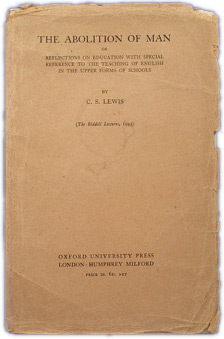
The Abolition of Man is a 1943 book by C. S. Lewis. Subtitled "Reflections on education with special reference to the teaching of English in the upper forms of schools", it uses that as a starting point for a defense of objective value and natural law as well as a warning about the consequences of doing away with them. It defends "man's power over nature" as something worth pursuing but criticizes the use of it to debunk values, the value of science itself being among them. The book was first delivered as a series of three evening lectures at King's College, Newcastle, part of the University of Durham, as the Riddell Memorial Lectures on 24–26 February 1943.

Irving Babbitt was an American academic and literary critic, noted for his founding role in a movement that became known as the New Humanism, a significant influence on literary discussion and conservative thought in the period between 1910 and 1930. He was a cultural critic in the tradition of Matthew Arnold and a consistent opponent of romanticism, as represented by the writings of Jean-Jacques Rousseau. Politically he can, without serious distortion, be called a follower of Aristotle and Edmund Burke. He was an advocate of classical humanism but also offered an ecumenical defense of religion. His humanism implied a broad knowledge of various moral and religious traditions. His book Democracy and Leadership (1924) is regarded as a classic text of political conservatism. Babbitt is regarded as a major influence over American cultural and political conservatism.
Antitheism, also spelled anti-theism, is the philosophical position that theism should be opposed. The term has had a range of applications. In secular contexts, it typically refers to direct opposition to the belief in any deity.
Norman Leo Geisler was an American Christian systematic theologian, philosopher, and apologist. He was the co-founder of two non-denominational evangelical seminaries.

God in the Dock is a collection of previously unpublished essays and speeches from C. S. Lewis, collected from many sources after his death. Its title implies "God on Trial" and the title is based on an analogy made by Lewis suggesting that modern human beings, rather than seeing themselves as standing before God in judgement, prefer to place God on trial while acting as his judge.
The Oxford Socratic Club was a student club that met from 1942 to 1972 dedicated to providing an open forum for the discussion of the intellectual difficulties connected with religion and with Christianity in particular.
Humanism is a philosophical stance that emphasizes the individual and social potential, and agency of human beings, whom it considers the starting point for serious moral and philosophical inquiry.
Post-theism is the belief that the belief in a god belongs to a previous stage of human development and, thus, a division of theism vs. atheism is obsolete. It is a variant of nontheism. The term appears in liberal Christianity and post-Christianity.
Secular morality is the aspect of philosophy that deals with morality outside of religious traditions. Modern examples include humanism, freethinking, and most versions of consequentialism. Additional philosophies with ancient roots include those such as skepticism and virtue ethics. Greg M. Epstein also states that, "much of ancient Far Eastern thought is deeply concerned with human goodness without placing much if any stock in the importance of gods or spirits." An example is the Kural text of Valluvar, an ancient Indian theistic poet-philosopher whose work remains secular and non-denominational. Other philosophers have proposed various ideas about how to determine right and wrong actions. An example is Immanuel Kant's categorical imperative.
Selected Essays, 1917–1932 is a collection of prose and literary criticism by T. S. Eliot. Eliot's work fundamentally changed literary thinking and Selected Essays provides both an overview and an in-depth examination of his theory. It was published in 1932 by his employers, Faber & Faber, costing 12/6.
Humanism is an approach in study, philosophy, or practice that focuses on human values and concerns. Articles related to humanism include:
Articles related to philosophy of religion include:
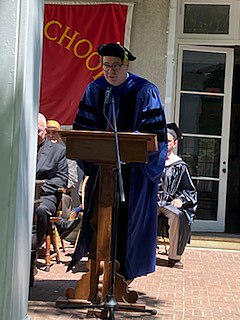
Lee Oser is a Christian humanist, novelist, and literary critic. He is a former president of the Association of Literary Scholars, Critics, and Writers. He teaches Religion and Literature at the College of the Holy Cross, in Worcester, Massachusetts.
References
- ↑ Eliot, T. Stearns Eliot. "Theism and Humanism. A. J. Balfour". Ethics. 26 (2): 284–289.
- ↑ Lewis, C. S. Most Influential Books.
 | This article about a philosophy-related book is a stub. You can help Wikipedia by expanding it. |