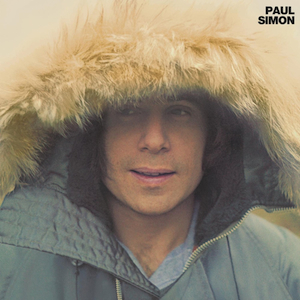
Paul Simon is the second solo studio album by American singer-songwriter Paul Simon. It was released in January 1972, nearly two years after he split up with longtime musical partner Art Garfunkel. His first solo album was recorded in England in 1965 but remained unreleased in the U.S. until 1981, when it appeared in the 5-LP Collected Works boxed set. Originally released on Columbia Records, Paul Simon was then issued under the Warner Bros. label and is now back with Columbia through Sony. The album topped the charts in the United Kingdom, Japan and Norway and reached No. 4 on the U.S. Billboard Pop Albums. In 1986 it was certified platinum.

Ralph Carney was an American multi-instrumentalist, singer and composer. While his primary instruments were various saxophones and clarinets, Carney also collected and played many instruments, often unusual or obscure ones.

Robert Thomas Christgau is an American music journalist and essayist. Among the most well-known, revered, and influential music critics, he began his career in the late 1960s as one of the earliest professional rock critics and later became an early proponent of musical movements such as hip hop, riot grrrl, and the import of African popular music in the West. Christgau spent 37 years as the chief music critic and senior editor for The Village Voice, during which time he created and oversaw the annual Pazz & Jop critics poll. He has also covered popular music for Esquire, Creem, Newsday, Playboy, Rolling Stone, Billboard, NPR, Blender, and MSN Music, and was a visiting arts teacher at New York University. CNN senior writer Jamie Allen has called Christgau "the E.F. Hutton of the music world – when he talks, people listen."

The Black Keys are an American rock band formed in Akron, Ohio, in 2001. The group consists of Dan Auerbach and Patrick Carney (drums). The duo began as an independent act, recording music in basements and self-producing their records, before they eventually emerged as one of the most popular garage rock artists during a second wave of the genre's revival in the 2000s. The band's raw blues rock sound draws heavily from Auerbach's blues influences, including Junior Kimbrough, R.L. Burnside, Howlin' Wolf, and Robert Johnson.

Small World is the fifth album by American rock band Huey Lewis and the News, released in 1988. It was also their last album release on Chrysalis Records in the USA.

Music of My Mind is the fourteenth studio album by American soul musician Stevie Wonder. It was released on March 3, 1972, by Tamla Records, and was Wonder's first to be recorded under his new contract with Motown, which allowed him full artistic control. For the album, Wonder recruited electronic music pioneers Malcolm Cecil and Robert Margouleff as co-producers, employing their custom TONTO synthesizer on several tracks. It was a modest commercial success, but critics found the record representative of Wonder's artistic growth, and is generally considered by contemporary critics to be the first album of his classic period.

Cool for Cats is the English new wave group Squeeze's second album, released in 1979. Cool for Cats contains four UK hit singles, more than any other album the band has issued. The album peaked at number 45 in the UK Albums Chart, spending 11 weeks in that listing.

The Genius of Ray Charles is a 1959 Ray Charles album, released in October by Atlantic Records, the seventh album since the debut Ray Charles in 1957. The album consists of swinging pop with big band arrangements. It comprises a first half of big band songs and a second half of string-backed ballads. The Genius of Ray Charles sold fewer than 500,000 copies and charted at number 17 on the Billboard 200. "Let the Good Times Roll" and "Don't Let the Sun Catch You Cryin'" were released as singles in 1959.
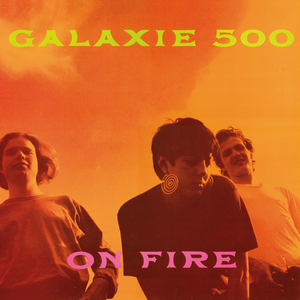
On Fire is the second studio album by American indie rock band Galaxie 500, released in 1989 on Rough Trade Records.

The Hoople is the seventh studio album by British rock band Mott the Hoople. The album peaked in the UK Albums Chart at No. 11, whilst its highest chart rating in the US was No. 28. A remastered and expanded version was released by Sony BMG on the Columbia Legacy label in Europe in 2006. It was the only album to feature guitarist Ariel Bender, and the last album to feature vocalist Ian Hunter before his departure for a solo career.
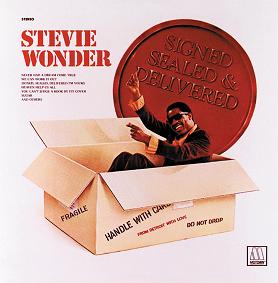
Signed, Sealed & Delivered is the 12th studio album by American recording artist Stevie Wonder, released on August 7, 1970, by Tamla Records. The album featured the hits "Signed, Sealed, Delivered I'm Yours," "Heaven Help Us All", "Never Had a Dream Come True" and Wonder's cover of The Beatles' "We Can Work It Out". The album hit #25 on the Billboard Pop Albums chart as well as #7 on the R&B Albums chart.

The Heat Is On is the thirteenth studio album by American soul and funk group The Isley Brothers, released June 7, 1975 on T-Neck Records and Epic Records. Written and produced entirely by the group, the album was recorded in 1975 at Kendum Recorders in Burbank, California. The group implemented many acoustic and electric instruments during its recording, including guitar, piano, and synthesizer. Primarily a funk and soul outing, The Heat Is On features musical elements of rock music, and it is divided between uptempo funk songs and subdued smooth soul-ballads.
Super Hits is a compilation album by American soul singer, songwriter, and producer Marvin Gaye. It was released in 1970 by Motown's subsidiary Tamla Records and compiles Gaye's pop-R&B singles recorded from 1962 to 1969.

Carney is Leon Russell's third solo studio album, released in 1972. It peaked at number 2 on the Billboard Hot 200 and was the first for Russell to contain a hit single — "Tight Rope" b/w "This Masquerade" — which reached number 11 on the Billboard Hot 100 chart.
Contents Dislodged During Shipment is an album by American rock band Tin Huey, released in 1979 by Warner Bros. Records. Most of it was written by the band's frontman, Chris Butler. Even though their cover of The Monkees' "I'm a Believer" was a minor hit, Contents Dislodged During Shipment was a commercial failure and Warner Bros. dropped the band in early 1980.
Disinformation is an album by the experimental rock and new wave band Tin Huey. It was released in 1999 through Future Fossil Records.

Power in the Darkness is the debut studio album by English punk band Tom Robinson Band, released in early 1978. The UK LP had ten tracks. It included inside the album cover a stencil similar to the cover art, but with the album title replaced by "Tom Robinson Band"; it held the warning, "This stencil is not meant for spraying on public property!!!". The US release was packaged with a seven-track bonus LP. The record sleeve of the bonus LP included the number to the Gay & Lesbian Switchboard of New York. The 1993 CD re-release included all 17 tracks. Two more tracks were included on a 2004 re-release.

Mott the Hoople is the self-titled debut studio album by the band of the same name. It was produced by Guy Stevens and released in 1969 by Island Records in the UK, and in 1970 by Atlantic Records in the US. It was re-issued by Angel Air in 2003 (SJPCD157).

Rootless Cosmopolitans is the debut solo album by American guitarist Marc Ribot, released by Antilles in 1990.
Mungo Jerry is the debut album by Mungo Jerry, released in 1970. The initial British release featured lettering on the front of the sleeve and a group photo inside which appeared to be three-dimensional when viewed through a pair of 3D red and green lenses included in the packaging. It reached No. 14 in the British charts that summer.


