Related Research Articles

John Payne Collier was an English Shakespearean critic and forger.

Giuseppe Ungaretti was an Italian modernist poet, journalist, essayist, critic, academic, and recipient of the inaugural 1970 Neustadt International Prize for Literature. A leading representative of the experimental trend known as Ermetismo ("Hermeticism"), he was one of the most prominent contributors to 20th century Italian literature. Influenced by symbolism, he was briefly aligned with futurism. Like many futurists, he took an irredentist position during World War I. Ungaretti debuted as a poet while fighting in the trenches, publishing one of his best-known pieces, L'allegria.

Max Payne 2: The Fall of Max Payne is a 2003 third-person shooter game developed by Remedy Entertainment and published by Rockstar Games. It is the sequel to 2001's Max Payne and the second game in the Max Payne series. Set two years after the events of the first game, the sequel finds Max Payne working again as a detective for the New York City Police Department (NYPD), while struggling with nightmares about his troubled past. After being unexpectedly reunited with contract killer Mona Sax, Max must work with her to resolve a conspiracy filled with death and betrayal, which will test where his true loyalties lie.

Constantine Alexander Payne is an American film director, screenwriter and producer. He is noted for his satirical depictions of contemporary American society. Payne has received numerous accolades, including two Academy Awards, a BAFTA Award and two Golden Globe Awards as well as a nomination for a Grammy Award.

Frank Bridge was an English composer, violist and conductor.

Arthur Christopher Benson, was an English essayist, poet and academic, and the 28th Master of Magdalene College, Cambridge. He wrote the lyrics of Edward Elgar’s Coronation Ode, including the words of the patriotic song "Land of Hope and Glory" (1902). His literary criticism, poems, and volumes of essays were highly regarded. He was also noted as an author of ghost stories.

John Howard Payne was an American actor, poet, playwright, and author who had nearly two decades of a theatrical career and success in London. He is today most remembered as the creator of "Home! Sweet Home!", a song he wrote in 1822 that became widely popular in the United States and the English-speaking world. Its popularity was revived during the American Civil War, as troops on both sides embraced it.

Sami Antero Järvi, better known by his pen name Sam Lake, is a Finnish video game writer and director. He is the creative director at Remedy Entertainment, known for his writing on the popular Max Payne video game series, and Alan Wake.

John Howard Payne was an American film actor who is mainly remembered from film noir crime stories and 20th Century Fox musical films, and for his leading roles in Miracle on 34th Street and the NBC Western television series The Restless Gun.

John Payne was an English poet and translator. Initially he pursued a legal career and had associated with Dante Gabriel Rossetti. Later he became involved with limited edition publishing and the Villon Society.
The Payne Whitney Psychiatric Clinic (PWC) was a hospital in the Upper East Side of Manhattan, New York City, which was founded by an endowment bestowed by Payne Whitney upon his death. Whitney was an American businessman and member of the influential Whitney family. An eight-story free-standing hospital was constructed, and was affiliated with Cornell University's medical school, now called Weill Cornell Medicine, and with New York Hospital, now New York–Presbyterian Hospital (NYP), before its opening.

Tales of St. Austin's is a collection of short stories and essays, all with a school theme, by P. G. Wodehouse. It was first published on 10 November 1903 by Adam & Charles Black, London, all except one item having previously appeared in the schoolboy magazines, The Captain and Public School Magazine.
Joseph Payne Brennan was an American writer of fantasy and horror fiction, and also a poet. Of Irish ancestry, he was born in Bridgeport, Connecticut and he lived most of his life in New Haven, Connecticut, and worked as an Acquisitions Assistant at the Sterling Memorial Library of Yale University for over 40 years. Brennan published several hundred short stories, two novellas and reputedly thousands of poems. His stories appeared in over 200 anthologies and have been translated into German, French, Dutch, Italian and Spanish. He was an early bibliographer of the work of H. P. Lovecraft.

Dona nobis pacem is a cantata written by Ralph Vaughan Williams in 1936 and first performed on 2 October of that year. The work was commissioned to mark the centenary of the Huddersfield Choral Society. Vaughan Williams produced his plea for peace by referring to recent wars during the growing fears of a new one. His texts were taken from the Mass, three poems by Walt Whitman, a political speech, and sections of the Bible. A.V. Butcher has analysed Vaughan Williams' use of the Whitman poems in this composition.
Humfry Gilbert Garth Payne was an English archaeologist, director of the British School of Archaeology in Athens from 1929 to his death.
Leonidas Warren Payne Jr. was an American linguist and professor of English at the University of Texas. He was a co-founder of the Texas Folklore Society along with John Lomax, edited the first anthology of Texas literature, and was one of the first to recognize the talent of e.e. cummings.
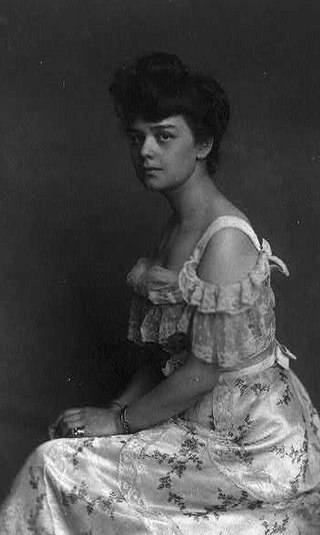
Helen Julia Hay Whitney was an American poet, writer, racehorse owner/breeder, socialite, and philanthropist. She was a member by marriage of the prominent Whitney family of New York.
Edward Leslie Mayo was an American poet, English professor, and author.
An epistolary poem, also called a verse letter or letter poem, is a poem in the form of an epistle or letter.
The Wind at Your Door (1959) is a one-poem volume by Australian poet R. D. Fitzgerald. The poem was originally published in The Bulletin on 17 December 1958, and later in this 275 copy Talkarra Press limited edition, signed by the author. It won the Grace Leven Prize for Poetry in 1959.
References
- ↑ Bailey, George Henry (1974). The Poetry of John Payne. University of Wisconsin--Madison. pp. 150–152.
