Nadia is a female name. Variations include Nadja, Nadya, Nadine, Nadiya, and Nadiia. Most variations of the name are derived from Arabic, Slavic languages, or both.
Slow may refer to various basic dictionary-related meanings:

Yasmin is usually a feminine given name, sometimes also a surname. Variant forms and spellings include Yasemin, Yasmeen, Yasmina, Yasmine, and Yassmin.

Samantha is a feminine given name.
Caitlin is a feminine given name of Irish origin. Historically, the Irish name Caitlín was anglicized as Cathleen or Kathleen. In the 1970s, however, non-Irish speakers began pronouncing the name according to English spelling rules as KAYT-lin, which led to many variations in spelling such as Caitlin, Ceitlin, Catelynn, Caitlyn, Katlyn, Kaitlin, Kaitlyn, Katelyn and Katelynn.
Aisha is an Arabic female given name. It originated from Aisha, the third wife of the Islamic prophet, Muhammad, and is a very popular name among Muslim women.
Colleen is an English-language name of Irish origin. It derives from the Irish word cailín "girl/woman", the diminutive of caile "woman, countrywoman".
Debbie is a feminine given name, commonly but not always short for Deborah.
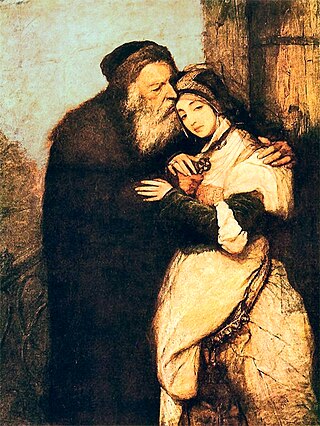
Jessica is a female given name.
Katrina or Katrine is a feminine given name. It is a derivative of Katherine. People with this name include:
Leanne, LeAnne, Leann, LeAnn, Lee-Anne, Lee Anne, Lee-Ann, Lee Ann, Li-Anne, etc. are female given names and may refer to one of the following people:
Niki is a first given unisex name. It is a variant of the male Nikias and female Nicole, a female form of Nicholas (French).
Ngaire is a name most often found in New Zealand. Its specific origins are unclear, except that it originated in New Zealand, where the pronunciation of the name follows Māori rather than English phonetics. An indication on a possible origin is the 19th century spelling of the Taranaki town Ngaere, meaning "flaxen flower", the spelling of which was corrected from Ngaire to Ngaere in 1909.

Stephanie is a female name that comes from the Greek name Στέφανος (Stephanos) meaning "crown, wreath, garland". The male form is Stephen. Forms of Stephanie in other languages include the German "Stefanie", the Italian, Czech, Polish, and Russian "Stefania", the Portuguese Estefânia, and the Spanish Estefanía. The form Stéphanie is from the French language, but Stephanie is now widely used both in English- and Spanish-speaking cultures.
The name Brooke is a female given name and less commonly a male given name, also used as a surname. Other forms include Brook. The name "Brooke" is of English origin.
Nikita is a common name in Eastern Europe and Greece. The Russian variant originated as a Greek name, and subsequently Russian name. The Ukrainian and Belarusian variants are Mykyta, and Mikita, respectively. The Romanian variant is Nichita. The name is derived from the Greek Nicetas. The Greek name entered Slavic onomastics by way of the veneration of Saint Nicetas the Goth in the Russian Orthodox Church.
Gilda is a 1946 film noir starring Rita Hayworth as the title character.
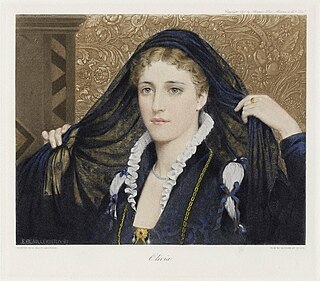
Olivia is a feminine given name in the English language. It is derived from Latin oliva, olive. Both Oliva and Olivia were Latinate forms in use in English-speaking countries as early as the 13th century. Olive was in common use as a vernacular form. Though not invented by William Shakespeare, the name was popularized by a character in Twelfth Night.
This page is based on this
Wikipedia article Text is available under the
CC BY-SA 4.0 license; additional terms may apply.
Images, videos and audio are available under their respective licenses.

