Related Research Articles
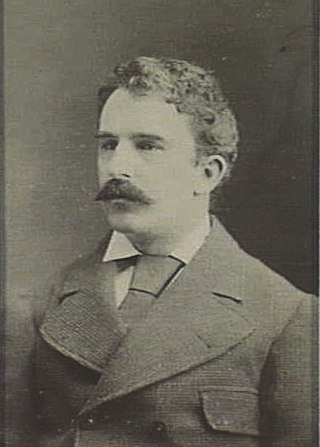
Alfred Dampier was an English-born actor-manager and playwright, active in Australia.

The Romantic Story of Margaret Catchpole, generally referred to as Margaret Catchpole, is a 1911 Australian silent film directed by Raymond Longford and starring Lottie Lyell. It is based on the true story of Margaret Catchpole, an adventurer and convict.

Alfred Rolfe, real name Alfred Roker, was an Australian stage and film director and actor, best known for being the son-in-law of the celebrated actor-manager Alfred Dampier, with whom he appeared frequently on stage, and for his prolific output as a director during Australia's silent era, including Captain Midnight, the Bush King (1911), Captain Starlight, or Gentleman of the Road (1911) and The Hero of the Dardanelles (1915). Only one of his films as director survives today.

Captain Midnight, the Bush King is a 1911 Australian silent Western film about the fictitious bushranger Captain Midnight. It was the directorial debut of actor Alfred Rolfe. The film is based on the play of same name by W. J. Lincoln and Alfred Dampier. Captain Midnight, the Bush King is now considered lost.
The Life of Rufus Dawes is a 1911 Australian silent film based on Alfred Dampier's stage adaptation of the 1874 novel For the Term of His Natural Life produced by Charles Cozens Spencer.

Dan Morgan is a 1911 Australian film from Charles Cozens Spencer about the bushranger Daniel Morgan. It was said to be starring "Alfred Rolfe and company". Rolfe directed three movies for Spencer, all starring himself and his wife Lily Dampier so there is a chance he may have directed this one and that it starred his wife. A prospectus for the Australian Photo Play Company said he directed it. It is considered a lost film.

Major-General James Alexander Kenneth Mackay,, usually known as Kenneth Mackay, was an Australian soldier and politician.

Katherine Annabel Lily Dampier, known as Lily Dampier, was an Australian actress of stage and screen. She was the daughter of Alfred Dampier and married to Alfred Rolfe.
The Kelly Gang; or the Career of the Outlaw, Ned Kelly, the Iron-clad Bushranger of Australia is an 1899 Australian play about bushranger Ned Kelly. It is attributed to Arnold Denham but it is likely a number of other writers worked on it.
Frank Harvey was the nom de plume of John Ainsworth Hilton, born Jean François de Soissons de Latanac, actor and playwright, who was born and died in Manchester, England. His plays were popular in Australia.

The Royal Standard Theatre, often referred to as the Standard Theatre was a small playhouse in Sydney, Australia, situated at 223 Castlereagh Street, near the Bathurst Street corner between Bathurst and Liverpool streets, and next to the fire station. It was later known as the Little Theatre and The Playhouse, and was demolished in the early 1920s.
For the Term of His Natural Life is an 1886 Australian stage play adaptation of the novel For the Term of His Natural Life.
All for Gold, or Fifty Millions of Money is a 1877 Australian stage play by F. R. C. Hopkins written for Alfred Dampier. It was the first play of Australian origin to be licensed for performance in Australia.
Only a Fool, or Chico the Jester is a 1880 Australian play by F. R. C. Hopkins. It was produced by Alfred Dampier as a vehicle for Dampier and his daughters.
£SD, or One of the Crowd is a 1882 Australian play by F. R. C. Hopkins.
Thou Shalt Not Steal is a 1896 Australian stage play by Alfred Dampier. It enabled Lily Dampier to play a dual role.
Fortune's Fool is a 1897 Australian play by Alfred Dampier. It depicted "the Strange and Adventurous Career of a Vagabond Wanderer and his Daughter."
Marvellous Melbourne is a 1889 Australian stage play by Alfred Dampier and J.H. Wrangham. It was hugely popular in Melbourne and is one of Dampier's most iconic plays.
An English Lass is a 1887 Australian play by Alfred Dampier and C.H. Krieger about Margaret Catchpole, based on a book by Reverend Cobbold. Lily Dampier played Catchpole and Alfred Dampier played Bob the Bosun.
Shamus O'Brien is a 1887 Australian stage play by Alfred Dampier and Percy Kehoe based on a poem about the Irish rebellion of 1798 by Sheridan Le Fanu. It was one of Dampier's most popular plays and was often revived.
References
- ↑ "Advertising". The Daily Telegraph . No. 5185. New South Wales, Australia. 1 February 1896. p. 2. Retrieved 8 May 2024– via National Library of Australia.
- ↑ "MR. ALFRED DAMPIER". The Daily News . Vol. XIV, no. 6, 757. Western Australia. 17 April 1897. p. 5. Retrieved 7 May 2024– via National Library of Australia.
- ↑ ""TO THE WEST."". The Burrowa News . New South Wales, Australia. 21 February 1896. p. 2. Retrieved 7 May 2024– via National Library of Australia.
- ↑ "A FEW MINUTES WITH MR. ALFRED DAMPIER". The Daily News . Vol. XIV, no. 6, 895. Western Australia. 2 October 1897. p. 6. Retrieved 7 May 2024– via National Library of Australia.
- ↑ "AMUSEMENTS". Evening News. No. 8950. New South Wales, Australia. 10 February 1896. p. 6. Retrieved 8 May 2024– via National Library of Australia.
- ↑ "Before the CURTAIN". Sunday Times. No. 531. New South Wales, Australia. 2 February 1896. p. 7. Retrieved 8 May 2024– via National Library of Australia.
- ↑ "HER MAJESTY'S THEATRE". The Sydney Morning Herald . No. 18, 064. New South Wales, Australia. 8 February 1896. p. 10. Retrieved 8 May 2024– via National Library of Australia.
- ↑ "AMUSEMENTS. HER MAJESTY'S.—" TO THE WEST."". The Sydney Morning Herald . No. 18, 065. New South Wales, Australia. 10 February 1896. p. 7. Retrieved 7 May 2024– via National Library of Australia.
- ↑ "HER MAJESTY'S THEATRE". The Sydney Morning Herald . No. 18, 070. New South Wales, Australia. 15 February 1896. p. 10. Retrieved 8 May 2024– via National Library of Australia.
- ↑ "Before the CURTAIN". Sunday Times. No. 533. New South Wales, Australia. 16 February 1896. p. 7. Retrieved 7 May 2024– via National Library of Australia.
- ↑ "Sydney and Sydneyites". Table Talk . No. 556. Victoria, Australia. 21 February 1896. p. 4. Retrieved 8 May 2024– via National Library of Australia.
- ↑ "STAGE AND STAGE PEOPLE". The Bird O' Freedom . No. 262. New South Wales, Australia. 15 February 1896. p. 5. Retrieved 8 May 2024– via National Library of Australia.
- ↑ "AN AUSTRALIAN DRAMA". Freeman's Journal . Vol. XLVII, no. 2801. New South Wales, Australia. 22 February 1896. p. 20. Retrieved 8 May 2024– via National Library of Australia.
- ↑ Rees, Leslie (1953). Towards an Australian Drama. p. 25.
 | This article on a play from the 1890s is a stub. You can help Wikipedia by expanding it. |