
Ibn Sina, commonly known in the West as Avicenna, was a preeminent philosopher and physician of the Muslim world, flourishing during the Islamic Golden Age, serving in the courts of various Iranian rulers. He is often described as the father of early modern medicine. His philosophy was of the Peripatetic school derived from Aristotelianism.
Occam or Ockham may refer to:

The problem of universals is an ancient question from metaphysics that has inspired a range of philosophical topics and disputes: "Should the properties an object has in common with other objects, such as color and shape, be considered to exist beyond those objects? And if a property exists separately from objects, what is the nature of that existence?"

William of Ockham or Occam was an English Franciscan friar, scholastic philosopher, apologist, and Catholic theologian, who is believed to have been born in Ockham, a small village in Surrey. He is considered to be one of the major figures of medieval thought and was at the centre of the major intellectual and political controversies of the 14th century. He is commonly known for Occam's razor, the methodological principle that bears his name, and also produced significant works on logic, physics and theology. William is remembered in the Church of England with a commemoration on the 10th of April.
The history of logic deals with the study of the development of the science of valid inference (logic). Formal logics developed in ancient times in India, China, and Greece. Greek methods, particularly Aristotelian logic as found in the Organon, found wide application and acceptance in Western science and mathematics for millennia. The Stoics, especially Chrysippus, began the development of predicate logic.
The Summa Logicae is a textbook on logic by William of Ockham. It was written around 1323.
A singular term is a paradigmatic referring device in a language. Singular terms are defined as expressions that purport to denote or designate particular individual people, places, or other objects. They contrast with general terms which can apply to more than one thing.

The Organon is the standard collection of Aristotle's six works on logical analysis and dialectic. The name Organon was given by Aristotle's followers, the Peripatetics, who maintained against the Stoics that Logic was "an instrument" of Philosophy.
Ernest Addison Moody (1903–1975) was a noted philosopher, medievalist, and logician as well as a musician and scientist. He served as professor of philosophy at University of California, Los Angeles (UCLA), where he also served as department chair, and Columbia University. He has an annual memorial conference in his name on the subject of medieval philosophy. He was president of the American Philosophical Association from 1963 to 1964.
Dominicus Gundissalinus, also known as Domingo Gundisalvi or Gundisalvo, was a philosopher and translator of Arabic to Medieval Latin active in Toledo, Spain. Among his translations, Gundissalinus worked on Avicenna's Liber de philosophia prima and De anima, Ibn Gabirol's Fons vitae, and al-Ghazali's Summa theoricae philosophiae, in collaboration with the Jewish philosopher Abraham Ibn Daud and Johannes Hispanus. As a philosopher, Gundissalinus crucially contributed to the Latin assimilation of Arabic philosophy, being the first Latin thinker in receiving and developing doctrines, such as Avicenna's modal ontology or Ibn Gabirol's universal hylomorphism, that would soon be integrated into the thirteenth-century philosophical debate.

Robert Sanderson was an English theologian and casuist.

GiacomoZabarella was an Italian Aristotelian philosopher and logician.
William of Sherwood or William Sherwood, with numerous variant spellings, was a medieval English scholastic philosopher, logician, and teacher. Little is known of his life, but he is thought to have studied in Paris, was a master at Oxford in 1252, treasurer of Lincoln from 1254/1258 onwards, and a rector of Aylesbury.

Walter Burley was an English scholastic philosopher and logician with at least 50 works attributed to him. He studied under Thomas Wilton and received his Master of Arts degree in 1301, and was a fellow of Merton College, Oxford until about 1310. He then spent sixteen years in Paris, becoming a fellow of the Sorbonne by 1324, before spending 17 years as a clerical courtier in England and Avignon. Burley disagreed with William of Ockham on a number of points concerning logic and natural philosophy. He was known as the Doctor Planus et Perspicuus.
Risala or risalah or risalat, also spelled resala/resalah/resalat, plural rasa'il, is an Arabic word (رِسالة) meaning "letter", "epistle", "treatise", or "message". It may refer to:
John of Dumbleton was a member of the Dumbleton village community in Gloucestershire, a southwestern county in England. Although obscure, he is considered a significant English fourteenth-century philosopher for his contributions to logic, natural philosophy, and physics. Dumbleton’s masterwork is his Summa Logicae et Philosophiae Naturalis, likely to have been composed just before the time of his death.
The Isagoge or "Introduction" to Aristotle's "Categories", written by Porphyry in Greek and translated into Latin by Boethius, was the standard textbook on logic for at least a millennium after his death. It was composed by Porphyry in Sicily during the years 268–270, and sent to Chrysaorium, according to all the ancient commentators Ammonius, Elias, and David. The work includes the highly influential hierarchical classification of genera and species from substance in general down to individuals, known as the Tree of Porphyry, and an introduction which mentions the problem of universals.

British philosophy refers to the philosophical tradition of the British people. "The native characteristics of British philosophy are these: common sense, dislike of complication, a strong preference for the concrete over the abstract and a certain awkward honesty of method in which an occasional pearl of poetry is embedded".
Obligationes or disputations de obligationibus were a medieval disputation format common in the 13th and 14th centuries. Despite the name, they had nothing to do with ethics or morals but rather dealt with logical formalisms; the name comes from the fact that the participants were "obliged" to follow the rules. Typically, there were two disputants, one Opponens and one Respondens. At the start of a debate, both the disputants would agree on a ‘positum’, usually a false statement. The task of Respondens was to answer rationally to the questions from the Opponens, assuming the truth of the positum and without contradicting himself. On the opposite, the task of the Opponens was to try to force the Respondens into contradictions.
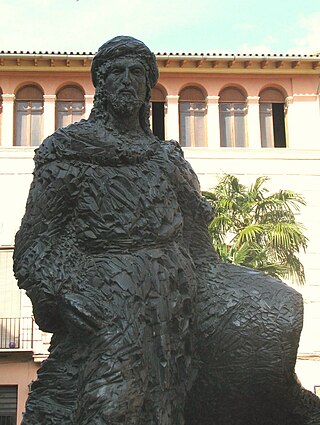
Ibn Ṭumlūs (1164-1223) was a Valencian scholar whose interests ranged over medicine, philosophy, grammar and poetry. He is mainly known today for his work in logic. Ibn Ṭumlūs is known by his biographers under the name of Abū al-Ḥajjāj or Abū Isḥāq Yūsuf ibn Muhammed ibn Ṭumlūs. In Latin sources, he is known as Alhagiag Bin Thalmus.
