Trees 4 Children

Last updated
Trees 4 Children volunteers plant melia trees in Kenya. Trees4children.jpg
Trees 4 Children volunteers plant melia trees in Kenya.

Trees 4 Children is a cooperative charitable effort between the Make A Mark Foundation and the University of Wisconsin-Stevens Point, in which forestry principles are utilized to provide an investible model for economic growth through land development.

University of Wisconsin–Stevens Point public university in Stevens Point, Wisconsin, USA

The University of Wisconsin–Stevens Point is a public university in Stevens Point, Wisconsin, United States. It is part of the University of Wisconsin System. It grants associate, baccalaureate and master's degrees, as well as doctoral degrees in audiology.

Forestry economic sector

Forestry is the science and craft of creating, managing, using, conserving, and repairing forests, woodlands, and associated resources for human and environmental benefits. Forestry is practiced in plantations and natural stands. The science of forestry has elements that belong to the biological, physical, social, political and managerial sciences.

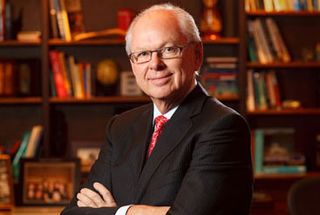
The organization is the brainchild of American entrepreneur and philanthropist John M. Noel. In 2006, Noel’s Make A Mark Foundation partnered with the UWSP College of Natural Resources in an attempt to apply business solutions to sustainability and subsistence problems in Kenya. [1]
John M. Noel American businessman

John M. Noel is an American entrepreneur and philanthropist best known for founding Travel Guard International, the world’s largest travel insurer and a division of the American International Group subsidiary, Chartis.

Kenya republic in East Africa

Kenya, officially the Republic of Kenya, is a country in Africa with 47 semiautonomous counties governed by elected governors. At 580,367 square kilometres (224,081 sq mi), Kenya is the world's 48th largest country by total area. With a population of more than 52.2 million people, Kenya is the 27th most populous country. Kenya's capital and largest city is Nairobi while its oldest city and first capital is the coastal city of Mombasa. Kisumu City is the third largest city and a critical inland port at Lake Victoria. Other important urban centres include Nakuru and Eldoret.

Since its inception, the non-profit organization has been focused on growing and processing trees for lumber to help contribute to the financial self-sustainability of the Nyumbani Village in Kitui, Kenya, a village which supports more than 1,000 HIV/AIDS-affected children and elders. [2] Noel worked in conjunction with local officials to persuade the Kenyan government to donate land to the village in which to plant. Trees 4 Children works with villagers and students and faculty from the UWSP College of Natural Resources to produce innovative crop planning and planting strategies. The students and teachers analyze each year’s results and can then suggest changes to the crop selection, planting frequency, and planting and harvesting techniques for maximum yield.

HIV/AIDS Spectrum of conditions caused by HIV infection

Human immunodeficiency virus infection and acquired immune deficiency syndrome (HIV/AIDS) is a spectrum of conditions caused by infection with the human immunodeficiency virus (HIV). Following initial infection, a person may not notice any symptoms or may experience a brief period of influenza-like illness. Typically, this is followed by a prolonged period with no symptoms. As the infection progresses, it interferes more with the immune system, increasing the risk of developing common infections such as tuberculosis, as well as other opportunistic infections, and tumors that rarely affect people who have uncompromised immune systems. These late symptoms of infection are referred to as acquired immunodeficiency syndrome (AIDS). This stage is often also associated with unintended weight loss.

In Nyumbani, Trees 4 Children has helped the villagers plant more than 50,000 trees on the village’s 700 acres. [3] The goal is to plant 600 trees per acre, with 75 percent of the trees being melia, [4] a fast-growing relative of mahogany. Senna, leucaena, and several species of acacia are planted for timber, nitrogen fixation and fuel, while sapota, java plum, tamarind, and guava are planted for fruit.

<i>Melia</i> (plant) genus of plants

Melia is a genus of flowering trees in the mahogany family, Meliaceae. The name is derived from μηλια, the Greek name used by Theophrastus for Fraxinus ornus, which has similar leaves.

<i>Senna</i> (plant) genus of plants

Senna, the sennas, is a large genus of flowering plants in the legume family Fabaceae, and the subfamily Caesalpinioideae and the tribe Cassieae. This diverse genus is native throughout the tropics, with a small number of species in temperate regions. The number of species is estimated to be from about 260 to 350. The type species for the genus is Senna alexandrina. About 50 species of Senna are known in cultivation.

<i>Acacia</i> genus of plants

Acacia, commonly known as the wattles or acacias, is a large genus of shrubs and trees in the subfamily Mimosoideae of the pea family Fabaceae. Initially it comprised a group of plant species native to Africa and Australia, with the first species A. nilotica described by Linnaeus. Controversy erupted in the early 2000s when it became evident that the genus as it stood was not monophyletic, and that several divergent lineages needed to be placed in separate genera. It turned out that one lineage comprising over 900 species mainly native to Australia was not closely related to the mainly African lineage that contained A. nilotica—the first and type species. This meant that the Australian lineage would need to be renamed. Botanist Les Pedley named this group Racosperma, which was inconsistently adopted. Australian botanists proposed that this would be more disruptive than setting a different type species and allowing this large number of species to remain Acacia, resulting in the two African lineages being renamed Vachellia and Senegalia, and the two New World lineages renamed Acaciella and Mariosousa. This was officially adopted, but many botanists from Africa and elsewhere disagreed that this was necessary.

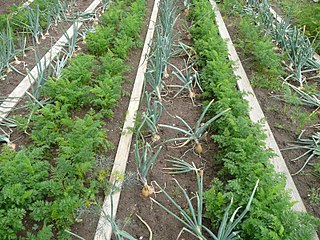
In 2012 and 2013 UWSP students worked with villagers on the development of food forests. In the food forest, manure and daily irrigation are utilized to grow vegetables and encourage tree growth, while the partial shade and windbreak provided by the trees boosts yields of kale, carrots, onions, cilantro, peppers, pumpkins, passionfruit, and papayas.

Kale form of cabbage with green or purple leaves

Kale or leaf cabbage are certain cultivars of cabbage grown for their edible leaves. A kale plant has green or purple leaves and the central leaves do not form a head. Kales are considered to be closer to wild cabbage than most domesticated forms of Brassica oleracea.

Bell pepper group of fruits of Capsicum annuum

The bell pepper is a cultivar group of the species Capsicum annuum. Cultivars of the plant produce fruits in different colours, including red, yellow, orange, green, white, and purple. Bell peppers are sometimes grouped with less pungent pepper varieties as "sweet peppers".

Pumpkin fruit

A pumpkin is a cultivar of a squash plant, most commonly of Cucurbita pepo, that is round, with smooth, slightly ribbed skin, and most often deep yellow to orange in coloration. The thick shell contains the seeds and pulp. Some exceptionally large cultivars of squash with similar appearance have also been derived from Cucurbita maxima. Specific cultivars of winter squash derived from other species, including C. argyrosperma, and C. moschata, are also sometimes called "pumpkin".

Food and wood not used by the village can be sold, and the proceeds used for village improvements.

Rows of trees and crops planted by Trees 4 Children volunteers. Plantedtrees.jpg
Rows of trees and crops planted by Trees 4 Children volunteers.

Each year, Trees 4 Children plants 30,000 new Melia trees at Nyumbani. Once mature, these trees will generate an annual profit of over $700,000 (based on current monetary value) through harvesting and selling the lumber, which will exceed the operating costs of village. The first crop of trees was planted in 2008, and will be ready for harvest in 2018. Until then, villagers will sell the seedlings of the trees to neighboring villages to raise money and awareness for the project.

With the initial harvest of Melia trees several years away, Trees 4 Children is also working in Nyumbani on the Sunflower Project. Sunflowers are being grown for cooking oil to eliminate villagers’ dependence on purchased oil, and to generate revenue from sales of excess oil.

For the next phase of the project, Trees 4 Children will help villagers teach residents of surrounding areas how to replicate the agroforestry initiative. Long-term goals are to standardize processes and techniques and to expand the initiative across Africa and Asia.

Related Research Articles

Monoculture The agricultural practice of producing a single crop at a time

Monoculture is the agricultural practice of producing or growing a single crop, plant, or livestock species, variety, or breed in a field or farming system at a time. Polyculture, where more than one crop is grown in the same space at the same time, is the alternative to monoculture. Monoculture is widely used in both industrial farming and organic farming and has allowed increased efficiency in planting and harvest.

Permaculture agriculture practices using few energy resources and human intervention

Permaculture is a set of design principles centered around whole systems thinking simulating or directly utilizing the patterns and resilient features observed in natural ecosystems. It uses these principles in a growing number of fields from regenerative agriculture, rewilding, community, and organizational design and development.

Never Ending Gardens

Never Ending Gardens is a division of Dream for Africa, a religious-based non-profit organization based in Gainesville, Georgia, USA, and in Johannesburg, Gauteng, South Africa, that seeks to alleviate hunger in Africa by building sustainable vegetable gardens in communities to improve their diet.

The Green Belt Movement (GBM) is an indigenous, grassroots, non-governmental organization based in Nairobi, Kenya that takes a holistic approach to a development by focusing on environmental conservation, community development and capacity building. Professor Wangari Maathai established the organization in 1977, under the auspices of the National Council of Women of Kenya.

Agroforestry land use management system in which trees or shrubs are grown around or among crops or pastureland

Agroforestry is a land use management system in which trees or shrubs are grown around or among crops or pastureland. This intentional combination of agriculture and forestry has varied benefits, including increased biodiversity and reduced erosion. Agroforestry practices have been successful in sub-Saharan Africa and in parts of the United States.

Nyumbani Orphanage

The Nyumbani Children's Home was founded by Father Angelo D'Agostino and Sister Mary Owens in 1992 to serve mostly abandoned children created by the AIDS pandemic. Since then, three more programs have been added to the organization.

Project Mercy, Inc. is a Christian, non profit organization located in Yetebon, Ethiopia, founded in 1977 by Marta Gabre-Tsadick and Deme Tekle-Wold. Over the past 18 years, Project Mercy's original mission has been expanded to include community development and self-help programs.

Social forestry in India

Social forestry means the management and protection of forest and afforestation of barren and deforested lands with the purpose of helping environmental, social and rural development.

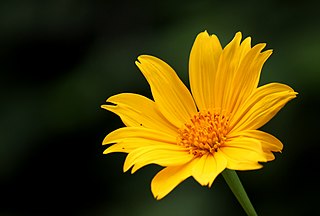
<i>Tithonia diversifolia</i> species of plant

Tithonia diversifolia is a species of flowering plant in the Asteraceae family that is commonly known as the tree marigold, Mexican tournesol, Mexican sunflower, Japanese sunflower or Nitobe chrysanthemum. It is native to Mexico and Central America but has a nearly pantropical distribution as an introduced species. Depending on the area they may be either annual or perennial. It has shown great potential in raising the soil fertility in soils depleted in nutrients. Originating in Mexico; research has shown its potential in benefiting poor African farmers. This plant is a weed that grows quickly and has become an option as an affordable alternative to expensive synthetic fertilizers. It has shown to increase plant yields and the soil nutrients of nitrogen (N), phosphorus (P), and potassium (K).

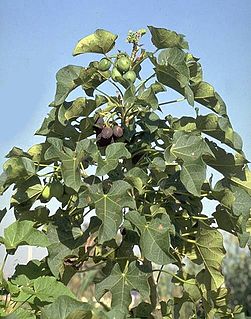
<i>Jatropha curcas</i> species of plant

Jatropha curcas is a species of flowering plant in the spurge family, Euphorbiaceae, that is native to the American tropics, most likely Mexico and Central America. It is originally native to the tropical areas of the Americas from Mexico to Argentina, and has been spread throughout the world in tropical and subtropical regions around the world, becoming naturalized or invasive in many areas. The specific epithet, "curcas", was first used by Portuguese doctor Garcia de Orta more than 400 years ago. Common names in English include physic nut, Barbados nut, poison nut, bubble bush or purging nut. In parts of Africa and areas in Asia such as India it is often known as "castor oil plant" or "hedge castor oil plant", but it is not the same as the usual castor oil plant, Ricinus communis.

Forest farming is the cultivation of high-value specialty crops under a forest canopy that is intentionally modified or maintained to provide shade levels and habitat that favor growth and enhance production levels. Forest farming encompasses a range of cultivated systems from introducing plants into the understory of a timber stand to modifying forest stands to enhance the marketability and sustainable production of existing plants.

Perennial sunflower

Perennial sunflower is a crop of sunflowers that are developed by crossing wild perennial and domestic annual sunflower species.

Njangsa species of plant

The term njangsa refers to an oily seeds tree, Ricinodendron heudelotii, found in tropical West Africa. It is also known as munguella (Angola), essessang (Cameroon), bofeko (Zaire), wama (Ghana), okhuen (Nigeria), kishongo (Uganda), akpi, djansang, essang, ezezang and njasang. Two varieties of the tree species are recognized R. heudelotii var. heudelotii in Ghana and R. heudelotii var. africanum in Nigeria and Westwards.

<i>Parinari curatellifolia</i> species of plant

Parinari curatellifolia is an evergreen tropical tree of Africa, found in various kinds of deciduous woodland most frequently in poorly drained areas and inland at moderate altitudes. It is also known as mupundu or mobola plum after the fruit, which is considered tasty and causes the tree to be spared when woodland is cleared for cultivation.

Crop diversity

Crop diversity is the variance in genetic and phenotypic characteristics of plants used in agriculture. Over the past 50 years, there has been a major decline in two components of crop diversity; genetic diversity within each crop and the number of species commonly grown.

<i>Erythrina edulis</i> species of plant

Erythrina edulis (Basul) is a nitrogen fixing tree that is native to the Andean region from western Venezuela to southern Bolivia. Nowadays it is known in Venezuela as “Frijol mompás”, in Bolivia, Peru and Argentina as “Pisonay”, “Pajuro”, “Sachaporoto del basul” or “Poroto del sacha”, in Colombia as “Chachafruto”, “Balú”, “Baluy” or “Sachaporoto” and in Ecuador as “Guato”. Although it is widely known, it is not commonly cultivated. Future research is needed, especially in agroforestry. Basul is a legume and so it produces protein-rich beans covered in pods which can be used for human or animal nutrition. The leaves and branches can be used as fodder. Besides the agricultural aspects, Erythrina edulis can also be used as a fence plant.

Trees for the Future non-profit organisation in the USA

Trees for the Future is a Maryland-based nonprofit organization founded in 1989 that helps communities around the world plant trees. Through seed distribution, agroforestry training, and in-country technical assistance, it has empowered rural groups to restore tree cover to their lands, protect the environment and help to preserve traditional livelihoods and cultures for generations.

Eden Reforestation Projects (Eden) is a nonprofit organization that works in developing countries to rebuild natural landscapes destroyed by deforestation. Eden works directly with villages and communities suffering from extreme poverty resulting from the deforestation and destruction of the land that sustains them. The organization employs thousands of local villagers and provides them with the education and tools necessary to plant, grow, and protect to maturity, millions of trees each year. Eden plants over 3,000,000 additional trees a month and in 2018 reached over 200,000,000 trees planted. This model, developed by founder Steve Fitch, has proven to be very successful and resulted in poverty alleviation for thousands of people in Eden’s first 10 years of operation and beyond.

Allanblackia oil is a vegetable oil that comes from the seeds of the Allanblackia tree. This tree can be found in the wet tropical belt of Africa. Because of its unique blend of fatty acids, the oil from Allanblackia seeds has melting properties that make it excellent to use as structuring fat in food products, e.g. margarines.

References

  1. "Trees 4 Children: Using Sustainable Agroforestry to Battle African HIV/AIDS Pandemic". dogoodtripping.com. Retrieved September 13, 2010.
  2. https://www.youtube.com/watch?v=NQk-alykjQc
  3. "Trees 4 Children Project Empowers a Kenyan Village of AIDS Survivors to Become Self-Sufficient". Yahoo! Finance. Retrieved September 18, 2012.
  4. https://www.youtube.com/watch?v=X_J0y6p_9XM