This page is based on this
Wikipedia article Text is available under the
CC BY-SA 4.0 license; additional terms may apply.
Images, videos and audio are available under their respective licenses.

The 31 federal states of Mexico ranked according to population, size, population density, and GDP.
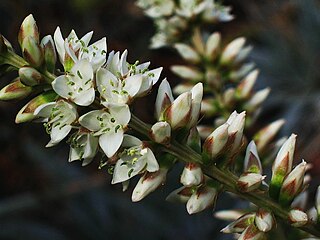
Hechtia is a genus of the botanical family Bromeliaceae, subfamily Pitcairnioideae. Its species are native to Mexico, Central America, and Texas.

The emergence of metallurgy in pre-Columbian Mesoamerica occurred relatively late in the region's history, with distinctive works of metal apparent in West Mexico by roughly AD 800, and perhaps as early as AD 600. Metallurgical techniques likely diffused northward from regions in Central or South America via maritime trade routes; recipients of these metallurgical technologies apparently exploited a wide range of material, including alloys of copper-silver, copper-arsenic, copper-tin and copper-arsenic-tin.
Country Code: +52
International Call Prefix: 469
Trunk Prefix: 01655
Lagunillas may refer to the following places:

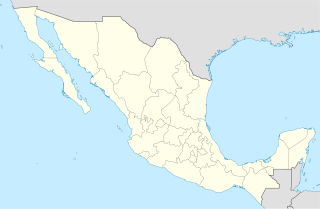
Jalisco, officially the Free and Sovereign State of Jalisco, is one of the 31 states which, with the Federal District, comprise the 32 Federal Entities of Mexico. It is located in Western Mexico and is bordered by six states which are Nayarit, Zacatecas, Aguascalientes, Guanajuato, Michoacán and Colima. Jalisco is divided into 125 municipalities, and its capital city is Guadalajara. Jalisco is one of the most important states in Mexico because of its natural resources as well as its history. Many of the characteristic traits of Mexican culture, particularly outside Mexico City, are originally from Jalisco, such as mariachi, ranchera music, birria, tequila, jaripeo, etc., hence the state's motto: "Jalisco es México." Economically, it is ranked third in the country, with industries centered in the Guadalajara metropolitan area, the second largest metropolitan area in Mexico.
The state is home to two significant indigenous populations, the Huichols and the Nahuas. There is also a significant foreign population, mostly retirees from the United States and Canada, living in the Lake Chapala and Puerto Vallarta areas.
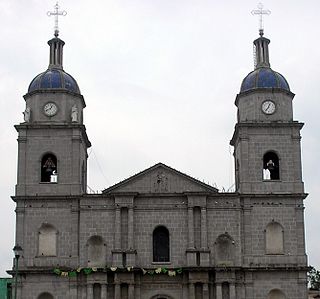
Tuxpan is a town and municipality in the Mexican state of Jalisco. The name "Tuxpan" comes from the Nahuatl word tochpan, a word used to describe where rabbits live or possibly place of abundant rabbits. Some others translate it as a location above the river.
Decachaeta is a genus of Mesoamerican flowering plants in the sunflower family.
- Decachaeta haenkeana DC. - Chihuahua, Sonora, Sinaloa, Colima, Guerrero, Michoacán, Nayarit, Oaxaca, Jalisco
- Decachaeta incompta (DC.) R.M.King & H.Rob. - Chiapas, Oaxaca, Colima, Guerrero, Michoacán, México State, Jalisco, Puebla
- Decachaeta ovandensis (Grashoff & Beaman) R.M.King & H.Rob. - Chiapas
- Decachaeta ovatifolia (DC.) R.M.King & H.Rob. - Guerrero, Michoacán, México State, Jalisco, Nayarit
- Decachaeta perornata (Klatt) R.M.King & H.Rob. - Chiapas, Oaxaca, Michoacán, México State, Jalisco, Puebla, Veracruz, Hidalgo
- Decachaeta scabrella (B.L.Rob.) R.M.King & H.Rob. - Chihuahua, Sinaloa, Colima, Michoacán, Nayarit, Jalisco, Durango, Sonora, Guerrero
- Decachaeta thieleana (Klatt ex Klatt) R.M.King & H.Rob. - Costa Rica, Panama, Honduras
Jaegeria is a genus of Latin American flowering plants in the daisy family.
- Jaegeria axillaris S.F.Blake - Colombia
- Jaegeria bellidiflora (Moc. & Sessé ex DC.) A.M.Torres & Beaman - Michoacán, Puebla, México State, D.F., Hidalgo
- Jaegeria glabra (S.Watson) B.L.Rob. - Chihuahua, Durango, Guanajuato, Jalisco, Michoacán, Nayarit, México State, Querétaro
- Jaegeria gracilis Hook.f. - Ecuador including Galápagos
- Jaegeria hirta (Lag.) Less. - widespread from Chihuahua to Uruguay
- Jaegeria macrocephala Less. - Veracruz, México State, Michoacán, Nayarit, Jalisco
- Jaegeria pedunculata Hook. & Arn. - Michoacán, Nayarit, Jalisco
- Jaegeria purpurascens B.L.Rob. - Durango
- Jaegeria standleyi (Steyerm.) B.L.Turner - Chiapas, Guatemala
- Jaegeria sterilis McVaugh - Jalisco

Lasianthaea is a genus of flowering plants in the daisy family. The species are native primarily to Mexico, with one species extending just over the border into the United States and another south to northwestern South America.
- Lasianthaea aurea (D.Don) K.M.Becker - México State
- Lasianthaea beckeri B.L.Turner - Jalisco
- Lasianthaea ceanothifolia (Willd.) K.M.Becker - central Mexico
- Lasianthaea crocea (A.Gray) K.M.Becker - Oaxaca, Jalisco, Morelos, Nayarit, Michoacán, México State
- Lasianthaea fruticosa (L.) K.M.Becker - Mexico, Central America, Colombia, Venezuela
- Lasianthaea gentryi B.L.Turner - Sinaloa
- Lasianthaea helianthoides Zucc. ex DC. - Oaxaca, Jalisco, Morelos, Nayarit, Michoacán, México State
- Lasianthaea machucana B.L.Turner - Jalisco
- Lasianthaea macrocephala (Hook. & Arn.) K.M.Becker - Oaxaca, Jalisco, Morelos, Nayarit, Michoacán, México State, Colima, Sinaloa
- Lasianthaea palmeri (Greenm.) K.M.Becker - Jalisco, Chihuahua, Nayarit, Zacatecas
- Lasianthaea podocephala (A.Gray) K.M.Becker - Chihuahua, Sonora, Sinaloa, Arizona, New Mexico
- Lasianthaea ritovegana B.L.Turner - Sinaloa
- Lasianthaea rosei (Greenm.) McVaugh - Nayarit
- Lasianthaea seemannii (A.Gray) K.M.Becker - Nayarit, Sonora
- Lasianthaea squarrosa (Greenm. ex Greenm.) K.M.Becker - Guerrero
- Lasianthaea zinnioides (Hemsl.) K.M.Becker - Nayarit
Otopappus is a genus of flowering plants in the sunflower tribe within the daisy family, primarily Mesoamerican but with one species from Jamaica.
- Otopappus acuminatus S.Watson - Jalisco
- Otopappus brevipes B.L.Rob. - from Chiapas to Nicaragua
- Otopappus calarcanus S.Díaz - Colombia
- Otopappus curviflorus (R.Br.) Hemsl. - from Veracruz to Nicaragua
- Otopappus epaleaceus Hemsl. - from Puebla to Guatemala
- Otopappus glabratus (J.M.Coult.) S.F.Blake - Guatemala, Honduras, El Salvador
- Otopappus guatemalensis (Urb.) R.L.Hartm. & Stuessy - Guatemala, Belize, Yucatán
- Otopappus hirsutus (Sw.) R.L.Hartm. & Stuessy - Jamaica
- Otopappus imbricatus (Sch.Bip.) S.F.Blake - Puebla, Morelos, Michoacán, Guerrero
- Otopappus koelzii McVaugh - Michoacán, Colima, Jalisco
- Otopappus mexicanus (Rzed.) H.Rob. - Guerrero, Oaxaca
- Otopappus microcephalus S.F.Blake - Colima, Jalisco, Guerrero, Oaxaca
- Otopappus robustus Hemsl. - Veracruz
- Otopappus scaber S.F.Blake - Guatemala, Belize, Yucatán, Chiapas
- Otopappus syncephalus Donn.Sm. - Guatemala
- Otopappus tequilanus (A.Gray) B.L.Rob. - Sinaloa, Jalisco, Nayarit, Michoacán, Guerrero, Oaxaca
- Otopappus verbesinoides Benth. - from Oaxaca to Nicaragua

Perymenium is a genus of South American and Mesoamerican plants in the sunflower tribe within the daisy family.
Echeandia is a genus of New World plants in the century plant subfamily within the asparagus family. It is named for Spanish botanist Pedro Gregorio Echeandía (1746–1817). Species in the genus are distributed from the Southwestern United States south to Northwestern Argentina, Southern Bolivia, and Southern Peru. They are herbaceous perennials with corms and enlarged storage roots. The narrow leaves are held in basal rosettes. Flowers are in loose racemes and may be yellow, orange, white or cream.

Televisa Regional is a unit of Televisa which owns and operates television stations across Mexico. The stations rebroadcast programming from Televisa's other networks, and they engage in the local production of newscasts and other programs. Televisa Regional stations all have their own distinct branding, except for those that are Nu9ve affiliates and brand as "Nu9ve <city/state name>".
Dictyanthus is a genus of plant in family Apocynaceae, first described as a genus in 1844. It is native to Mexico and Central America
Each of the 31 states of Mexico and Mexico City has a separate coat of arms. Each Mexican state flag contains the respective state arms, typically on a white background.