Tōkyūjutsu

Last updated
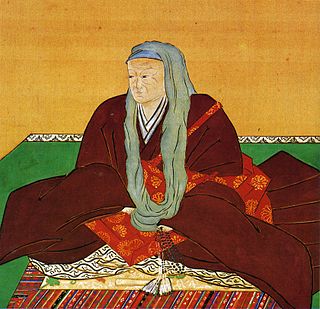
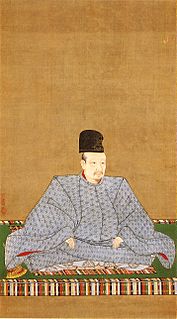
Yokoyama Marumitsu, founder of Tokyujutsu Yokoyama Marumitsu.jpg
Yokoyama Marumitsu, founder of Tōkyūjutsu

Tōkyūjutsu(淘宮術) or Tōdō (淘道) is a Japanese divination (fortune telling) method, created by Yokoyama Marumitsu in the 1830s (Edo period). It was developed from tengenjutsu, a system with origins in China and was well established at the time. Tōkyūjutsu teaches that ones personality and character can be determined by factors such as the date of birth and facial features. Good fortune is allegedly achieved by finding and understanding this inner self that has been obscured. [1] [2] [3]

Divination attempt to gain insight into a question or situation by way of an occultic, standardized process or ritual

Divination is the attempt to gain insight into a question or situation by way of an occultic, standardized process or ritual. Used in various forms throughout history, diviners ascertain their interpretations of how a querent should proceed by reading signs, events, or omens, or through alleged contact with a supernatural agency.

Yokoyama Marumitsu samurai

横山 丸三 1780–1854 was a Japanese late Edo period samurai and founder of the Tōkyūjutsu divination and self-improvement method. He lived in Edo. His real name was Yokoyama Okitaka, and he was also known as Sannosuke, Shunkisai, Kiosanjin, 淘山人, 百田楼, 小晌庵等 and other pen names.
Edo period period of Japanese history

The Edo period or Tokugawa period (徳川時代) is the period between 1603 and 1868 in the history of Japan, when Japanese society was under the rule of the Tokugawa shogunate and the country's 300 regional daimyō. The period was characterized by economic growth, strict social order, isolationist foreign policies, a stable population, "no more wars", and popular enjoyment of arts and culture. The shogunate was officially established in Edo on March 24, 1603, by Tokugawa Ieyasu. The period came to an end with the Meiji Restoration on May 3, 1868, after the fall of Edo.

Marumitsu gained many followers from the upper and middle classes of Edo. In 1848 they were forbidden from taking disciples and holding meetings by the Tokugawa shogunate, but Marumitsu was not exiled like many other leaders of groups outside the Shinto and Buddhist institutions. The group survived underground and revived after the Meiji Restoration. Today Tōkyūjutsu is practiced by an organization called Tōdōkai. [1]

Tokugawa shogunate Last feudal Japanese military government which existed between 1600 and 1868

The Tokugawa Shogunate, also known as the Tokugawa Bakufu (徳川幕府) and the Edo Bakufu (江戸幕府), was the last feudal Japanese military government, which existed between 1603 and 1867. The head of government was the shōgun, and each was a member of the Tokugawa clan. The Tokugawa shogunate ruled from Edo Castle and the years of the shogunate became known as the Edo period. This time is also called the Tokugawa period or pre-modern.
Shinto Japanese traditional folk religion

Shinto or kami-no-michi is the traditional religion of Japan that focuses on ritual practices to be carried out diligently to establish a connection between present-day Japan and its ancient past.
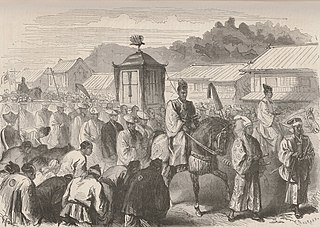
Meiji Restoration restoration of imperial rule in Japan

The Meiji Restoration, also known as the Meiji Renovation, Revolution, Reform, or Renewal, was an event that restored practical imperial rule to the Empire of Japan in 1868 under Emperor Meiji. Although there were ruling Emperors before the Meiji Restoration, the events restored practical abilities and consolidated the political system under the Emperor of Japan.

Related Research Articles

Kenjutsu

Kenjutsu (剣術) is the umbrella term for all (koryū) schools of the Japanese swordsmanship, in particular those that predate the Meiji Restoration. The modern styles of kendo and iaido that were established in the 20th century included modern form of kenjutsu in their curriculum, too. Kenjutsu, which originated with the samurai class of feudal Japan, means "the method, technique or the art of the sword." This is opposed to kendo, which means "the way of the sword" and uses bamboo swords (shinai) and protective armour (bōgu).

Emperor Go-Yōzei emperor of Japan

Emperor Go-Yōzei was the 107th Emperor of Japan, according to the traditional order of succession. Go-Yōzei's reign spanned the years 1586 through to his abdication in 1611, corresponding to the transition between the Azuchi–Momoyama period and the Edo period.

Emperor Go-Sai emperor of Japan

Emperor Go-Sai, also known as Emperor Go-Saiin, was the 111th emperor of Japan, according to the traditional order of succession.

Emperor Reigen emperor of Japan

Emperor Reigen was the 112th emperor of Japan, according to the traditional order of succession. Reigen's reign spanned the years from 1663 through 1687.

Emperor Nakamikado emperor of Japan

Emperor Nakamikado was the 114th emperor of Japan, according to the traditional order of succession. The years of Nakamikado's reign spanned from 1709 through to his abdication in 1735.

Emperor Higashiyama emperor of Japan

Emperor Higashiyama was the 113th emperor of Japan, according to the traditional order of succession.

Tokyo Imperial Palace main residence of the Emperor of Japan

The Tokyo Imperial Palace is the primary residence of the Emperor of Japan. It is a large park-like area located in the Chiyoda ward of Tokyo and contains buildings including the main palace, the private residences of the Imperial Family, an archive, museums and administrative offices.

Ise, Mie City in Kansai, Japan

Ise, formerly called Ujiyamada (宇治山田), is a city located on the eastern tip of Kii Peninsula, in central Mie Prefecture, on the island of Honshū, Japan, facing Ise Bay. Ise is home to Ise Grand Shrine, the most sacred Shintō shrine in Japan, and is thus a very popular destination for tourists. The city has a long-standing title – Shinto (神都) – that roughly means "the Holy City", and literally means "the Capital of the Kami". Most of the city is within the geographic limits of Ise-Shima National Park.

Ninomiya, Kanagawa Town in Kantō, Japan

Ninomiya is a town located in Kanagawa Prefecture, Japan. As of June 2012, the town had an estimated population of 29,350, and a density of 3,230 persons per km2. The total area is 9.08 km2.

Ueno Park park in Tokyo, Japan

Ueno Park is a spacious public park in the Ueno district of Taitō, Tokyo, Japan. The park was established in 1873 on lands formerly belonging to the temple of Kan'ei-ji. Amongst the country's first public parks, it was founded following the western example as part of the borrowing and assimilation of international practices that characterizes the early Meiji period. The home of a number of major museums, Ueno Park is also celebrated in spring for its cherry blossoms and hanami. In recent times the park and its attractions have drawn over ten million visitors a year, making it Japan's most popular city park.

Fushimi Inari-taisha Shinto shrines in Kyoto, Japan

Fushimi Inari Taisha (伏見稲荷大社) is the head shrine of the god Inari, located in Fushimi Ward in Kyoto, Japan. The shrine sits at the base of a mountain also named Inari which is 233 metres (764 ft) above sea level, and includes trails up the mountain to many smaller shrines which span 4 kilometres (2.5 mi) and take approximately 2 hours to walk up.

Todo may refer to:

<i>Sasumata</i> Japanese Samurai weapon

The sasumata is a pole weapon used by the samurai class and their retainers in feudal Japan.

Traditional Japanese music

Traditional Japanese music is the folk or traditional music of Japan. There are three types of traditional music in Japan: theatrical, court music, and instrumental.

<i>Ko-Shintō</i> original animism of Japan which is the alleged basis of modern Shinto

Ko-Shintō (古神道) refers to the original animism of Jōmon period Japan which is the alleged basis of modern Shinto. The search for traces of Koshintō began with Restoration Shinto in the Edo period. Some movements which claim to have discovered this primeval way of thought are Oomoto, Izumo-taishakyo, and Shinrikyō.

Nissaka-shuku

Nissaka-shuku was the twenty-fifth of the fifty-three stations of the Tōkaidō. It is located in what is now part of the city of Kakegawa, Shizuoka Prefecture, Japan.

Jujutsu self-defence

Jujutsu, also known as Jujitsu or Jiu-jitsu, is a Japanese martial art and a method of close combat for defeating an opponent in which one uses either a short weapon or none.

Tengen-jutsu (天源術) is a Japanese fortune telling method. It is based on yin and yang and the five elements, and uses a persons birth date in the sexagenary cycle and physical appearance to predict ones fate. Tengen-jutsu originated in various Chinese practices, but was first systemized by the early Edo period monk Tenkai. It is also the origin of Tōkyūjutsu.

Yashima no Hage-tanuki

Yashima no Hage-tanuki (屋島の禿狸) is a Bake-danuki, who appears in the legends of Yashima, Takamatsu, Kagawa Prefecture. He is also called Tasaburō-tanuki (太三郎狸), Yashima no Hage, and Yashima no Kamuro (屋島の禿). He is counted as one of the "three famous tanuki of Japan", along with Danzaburou-danuki of Sado and Shibaemon-tanuki of Awaji. He is also famous due to his appearance in the Studio Ghibli animated movie, Heisei Tanuki Gassen Ponpoko.

References

  1. 1 2 3 Sawada, Janine Anderson Tasca (2004). Practical pursuits: religion, politics, and personal cultivation in nineteenth-century Japan. University of Hawai'i Press. pp. 30–42, 202. ISBN   0-8248-2752-X . Retrieved 2009-12-20.
  2. 淘宮術 from Shogakukan Digital Daijisen
  3. Hashimoto, Atsuo (July 1967). "Kaiun-Tokyujutsu and its modern interpretation". Journal of the History of the Behavioral Sciences. Wiley Periodicals. 3 (3): 236–255. doi:10.1002/1520-6696(196707)3:3<236::AID-JHBS2300030303>3.0.CO;2-V.