
Mormons are a religious and cultural group related to Mormonism, the principal branch of the Latter Day Saint movement of Restorationist Christianity, initiated by Joseph Smith in upstate New York during the 1820s. After Smith's death in 1844, the Mormons followed Brigham Young to what would become the Utah Territory. Today, most Mormons are understood to be members of The Church of Jesus Christ of Latter-day Saints. Other Mormons may be independently religious, secular and non-practicing, or belong to another denomination. The center of Mormon cultural influence is in Utah, and North America has more Mormons than any other continent, though the majority of Mormons live outside the United States.
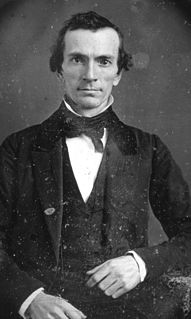
Oliver H. P. Cowdery was, with Joseph Smith, an important participant in the formative period of the Latter Day Saint movement between 1829 and 1836. He was the first baptized Latter Day Saint, one of the Three Witnesses of the Book of Mormon's golden plates, one of the first Latter Day Saint apostles, and the Second Elder of the church.

The Latter Day Saint movement is the collection of independent church groups that trace their origins to a Christian primitivist movement founded by Joseph Smith in the late 1820s. Collectively, these churches have over 16 million members, although the vast majority of these—about 98%—belong to The Church of Jesus Christ of Latter-day Saints. The predominant theology of the churches in the movement is Mormonism, a form of Christianity usually categorized as Restorationist. A minority of Latter Day Saint adherents, such as members of the Community of Christ, believe in traditional Protestant theology, and have distanced themselves from some of the distinctive doctrines of the LDS Church. Other groups include the Remnant Church of Jesus Christ of Latter Day Saints, which supports lineal succession of leadership from Smith's descendants, and the more controversial Fundamentalist Church of Jesus Christ of Latter-Day Saints, which defends the practice of polygamy.

Emma Hale Smith Bidamon was the first wife of Joseph Smith and a leader in the early days of the Latter Day Saint movement, both during Joseph's lifetime and afterward as a member of the Reorganized Church of Jesus Christ of Latter Day Saints. In 1842, when the Ladies' Relief Society of Nauvoo was formed as a women's service organization, she was elected by its members as the organization's first president.

The Latter Day Saint movement is a religious movement within Christianity that arose during the Second Great Awakening in the early 19th century and that led to the set of doctrines, practices, and cultures called Mormonism, and to the existence of numerous Latter Day Saint churches. Its history is characterized by intense controversy and persecution in reaction to some of the movement's doctrines and practices and their relationship to mainstream Christianity. The purpose of this article is to give an overview of the different groups, beliefs, and denominations that began with the influence of Joseph Smith.

William Marks was a leader in the early days of the Latter Day Saint movement and was a member of the First Presidency in the Reorganized Church of Jesus Christ of Latter Day Saints. Marks is mentioned in the Doctrine and Covenants in sections 117 and 124 of The Church of Jesus Christ of Latter-day Saints edition and in section 115 of the Community of Christ edition.

The salt sermon was an oration delivered on 17 June 1838 by Sidney Rigdon, then First Counselor in the First Presidency of the Church of Jesus Christ of Latter Day Saints, and frequent spokesman for Joseph Smith, the founder of the Latter Day Saint movement, against church dissenters, including Book of Mormon witnesses Oliver Cowdery, David Whitmer, and John Whitmer, and other leaders including William Wines Phelps. The Salt Sermon is often confused with Rigdon's July 4th oration.

The Three Witnesses is the collective name for three men connected with the early Latter Day Saint movement who stated that an angel had shown them the golden plates from which Joseph Smith, Jr. translated the Book of Mormon; they also stated that they had heard God's voice, informing them that the book had been translated by divine power. The Three are part of twelve Book of Mormon witnesses, who also include Smith and the Eight Witnesses.
The succession crisis in the Latter Day Saint movement occurred after the death of Joseph Smith, the movement's founder, on June 27, 1844.
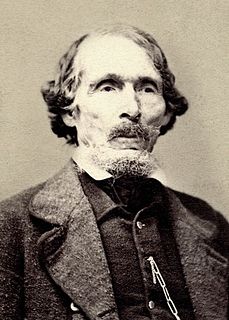
William Wines Phelps was an early leader of the Latter Day Saint movement. He printed the first edition of the Book of Commandments that became a standard work of the church and wrote numerous hymns, some of which are included in the current version of The Church of Jesus Christ of Latter-day Saints' hymnal. He was at times both close to and at odds with church leadership. He testified against Joseph Smith, providing evidence that helped persuade authorities to arrest Smith. He was excommunicated three times and rejoined the church each time. He was a ghost writer for Smith, was called by Smith to serve as assistant president of the church in Missouri, and served on the Council of Fifty. After the Smith's martyrdom, he supported Brigham Young as the church's new president.

Polygamy, or plural marriage, in the Church of Jesus Christ of Latter Day Saints is generally believed to have originated with the founder of Mormonism, Joseph Smith. According to several of his associates, Smith taught that polygamy was a divine commandment and practiced it personally, by some accounts marrying more than 30 women, some of whom had existing marriages to other men. Evidence for Smith's polygamy is provided by the church's "sealing" records, affidavits, letters, journals, and diaries. However, until his death, Smith and the leading church quorums denied that he preached or practiced polygamy. Smith's son Joseph Smith III, his widow Emma Smith, and the Reorganized Church of Jesus Christ of Latter Day Saints challenged the evidence and taught that Joseph Smith had opposed polygamy. They instead claimed that Brigham Young, the head of The Church of Jesus Christ of Latter-day Saints, introduced plural marriage after Smith's death. In 1852, leaders of the Utah-based LDS Church publicly announced the doctrine of polygamy.
Frances Ward ("Fanny") Alger Custer was possibly the first plural wife of Joseph Smith, the founder of the Latter Day Saint movement, although scholars have disagreed about whether Smith's relationship with Alger was an early plural marriage or simply a sexual indiscretion.

Zina Diantha Huntington Jacobs Smith Young was an American social activist and religious leader who served as the third general president of the Relief Society of The Church of Jesus Christ of Latter-day Saints from 1888 until her death. She practiced polyandry as the wife of Joseph Smith, and later Brigham Young, each of whom she married while she was still married to her first husband, Henry Jacobs.

The life of Joseph Smith from 1838 to 1839, when he was 33–34 years old, covers a period beginning when Smith left Ohio in January 1838 until he left Missouri and moved to Nauvoo, Illinois in 1839.
The life of Joseph Smith from 1839 to 1844, when he was 34–38 years old, covers the period of Smith's life when he lived in Nauvoo, an eventful and highly controversial period of the Latter Day Saint movement. After Smith was imprisoned in Carthage, Illinois, the church members slipped him and his brother guns into the jail. He was planning on breaking out. After giving up on being broke out by his legion troups he shot three men and killed them before his gun jammed. The mob broke down the door as he was trying to jump out a window. His brother was shot first then him. He fell out the window and was killed in 1844 when a mob stormed the jailhouse.
In the theology of the Latter Day Saint movement, an endowment refers to a gift of "power from on high", typically associated with Latter Day Saint temples. The purpose and meaning of the endowment varied during the life of movement founder Joseph Smith. The term has referred to many such gifts of heavenly power, including the confirmation ritual, the institution of the High Priesthood in 1831, events and rituals occurring in the Kirtland Temple in the mid-1830s, and an elaborate ritual performed in the Nauvoo Temple in the 1840s.
This is a chronology of Mormonism. In the late 1820s, founder Joseph Smith, founder of the Latter Day Saint movement, announced that an angel had given him a set of golden plates engraved with a chronicle of ancient American peoples, which he had a unique gift to translate. In 1830, he published the resulting narratives as the Book of Mormon and founded the Church of Christ in western New York, claiming it to be a restoration of early Christianity.
Joseph Smith, the founder of the Latter Day Saint movement, was "subjected to approximately thirty criminal actions" during his life. Another source reports Smith was arrested at least 42 times. Smith was killed by a mob while in jail awaiting trial on charges of treason against Illinois.
The following outline is provided as an overview of and topical guide to the life and influence of Joseph Smith:


